PRODUCTS
- Home
- Coupling
- Flexible couplings
- Shaft coupling
- Universal joints
- Support
CONTACT US
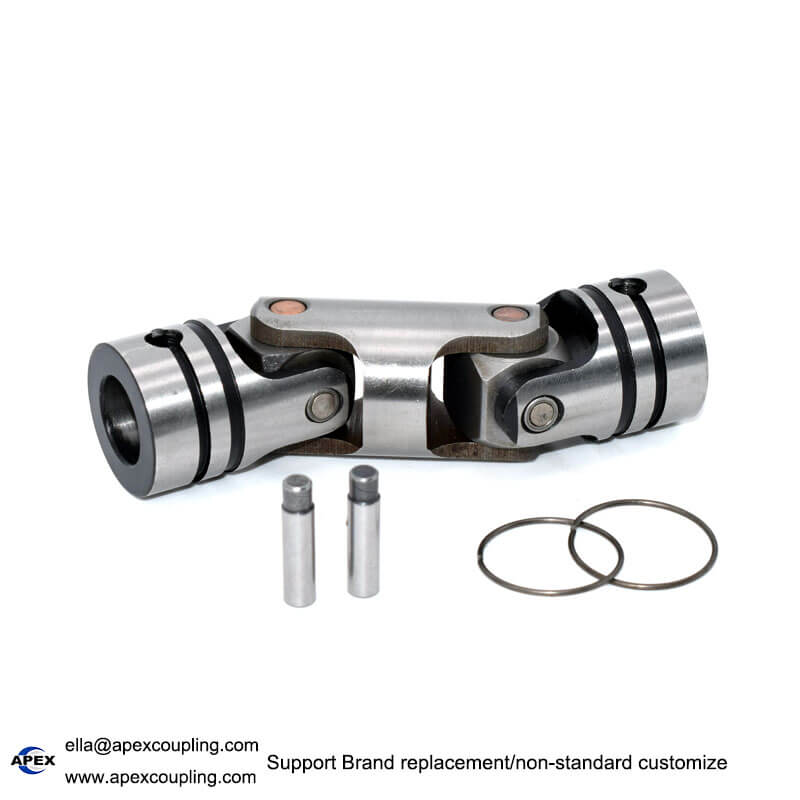
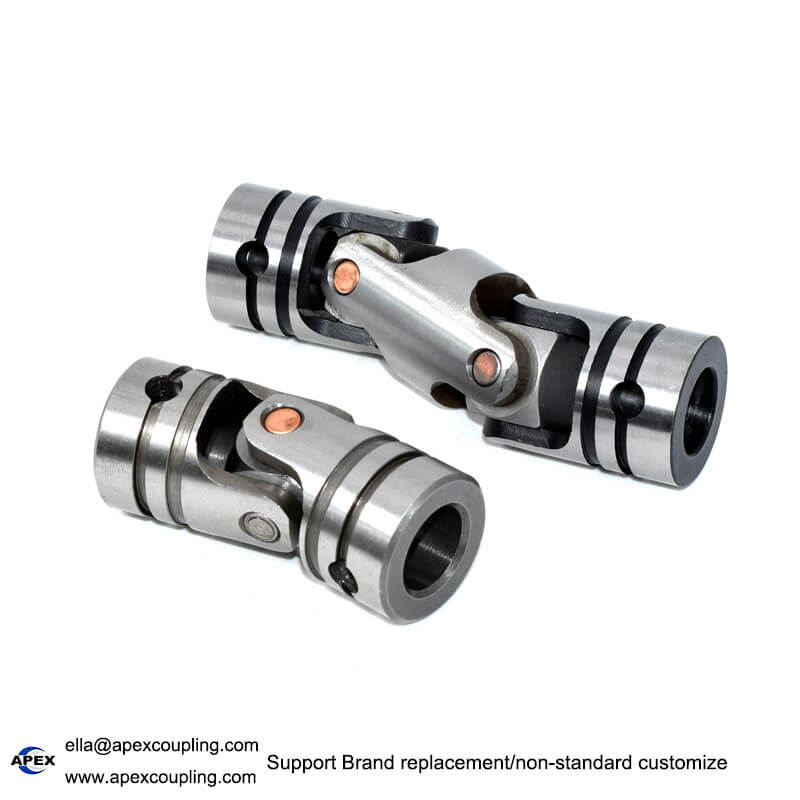
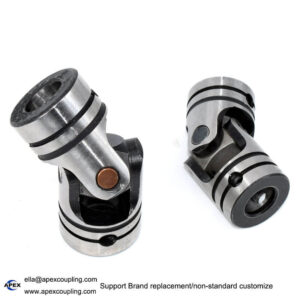
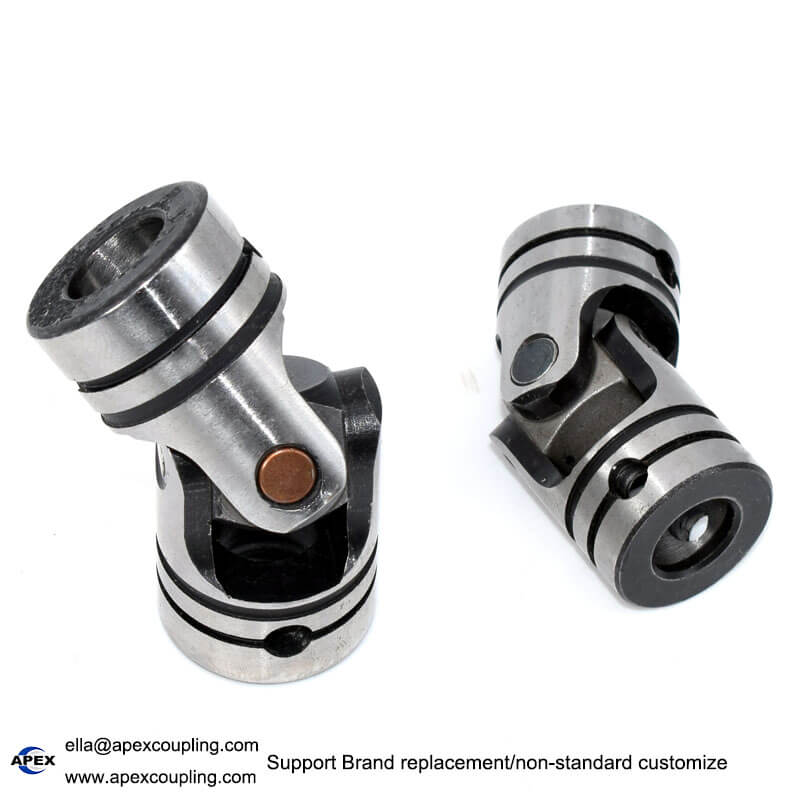
CScA/CScW Fixed Pin Universal Joint Couplings
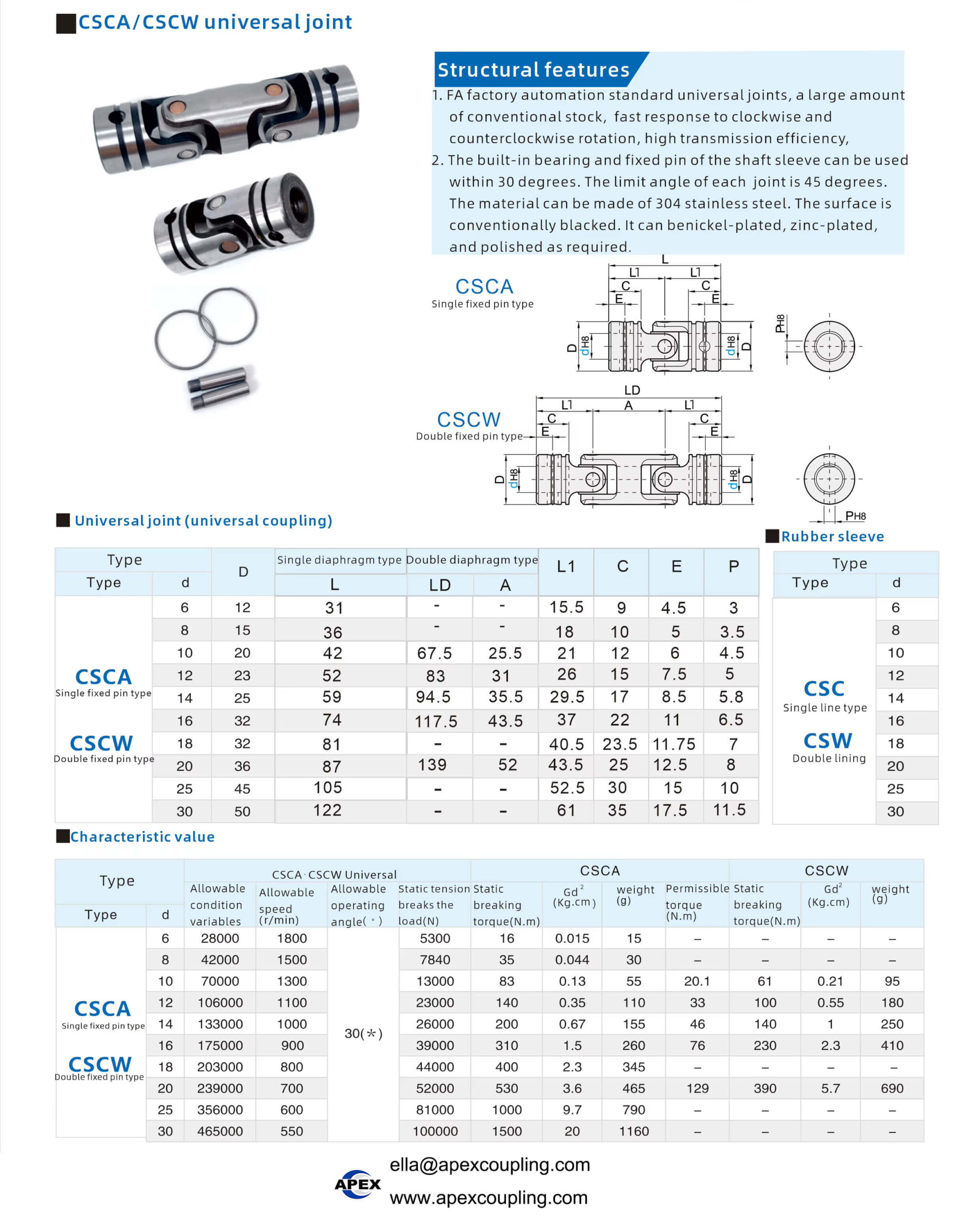
Model Number
Check below, custom
D12-L31
D20-L42
D23-L52
D25-L59
D32-L74
D36-L87
D20-L67.5
D23-L83
D25-L94.5
D32-L117.5
D36-L139
- Phone : +86 13431039760
- Wechat : +86 13431039760
- Whatsapp : +86 13431039760
- Email : ella@apexcoupling.com
Product Description
CScA/CScW Fixed Pin Universal Joint Couplings
Product Overview
Apex Coupling CScA/CScW fixed pin universal joint couplings are designed to transmit rotational motion and torque between shafts operating at an angle. The series is intended for industrial power transmission applications where a compact joint structure and angular flexibility are required.
The supplied product specifications identify an alloy steel construction and a fixed-pin joint design. The standard surface finish is blackened, while nickel plating, zinc plating and polishing may be available upon request. A 304 stainless steel material option can also be discussed for suitable configurations.
The recommended working angle is specified as up to 30°, with a maximum articulation angle of 45° per joint. Actual allowable angles and operating limits must be confirmed for the selected model and application.
Apex Coupling supports OEM and ODM inquiries for customized material, dimensions and surface finish requirements, subject to technical feasibility.
Key Features
Fixed-pin construction: Designed for angular shaft transmission.
Alloy steel body: Standard material listed in the supplied product information; confirm the exact grade for the ordered model.
Angular flexibility: Recommended working angle up to 30°, subject to model-specific operating conditions.
Defined articulation limit: Maximum angle listed as 45° per joint; not necessarily suitable for continuous operation at that limit.
Bidirectional rotation: Suitable for clockwise and counterclockwise operation within specified limits.
Surface finish options: Standard blackening, with optional nickel plating, zinc plating or polishing subject to availability.
Alternative material option: 304 stainless steel may be available for selected configurations.
OEM/ODM service: Custom requirements can be reviewed against drawings and application conditions.
Technical Specifications
| Parameter | Specification |
|---|---|
| Product Series | CScA / CScW |
| Product Type | Fixed Pin Universal Joint Coupling |
| Joint Structure | Fixed pin |
| Standard Material | Alloy steel; confirm exact grade |
| Optional Material | 304 stainless steel, subject to confirmation |
| Recommended Working Angle | Up to 30°, subject to model and operating conditions |
| Maximum Articulation Angle | 45° per joint, as specified in the supplied information |
| Rotation Direction | Clockwise and counterclockwise |
| Standard Surface Finish | Blackened |
| Optional Surface Finish | Nickel plating, zinc plating or polishing, subject to availability |
| Bore Diameter | Confirm according to selected model |
| Rated Torque | Confirm according to selected model |
| Rated Speed | Confirm according to selected model |
| Customization | OEM / ODM |
| Origin | Guangdong, China, as supplied |
| Warranty | 1 year, subject to applicable terms |
Technical note: The supplied information does not include a complete model-by-model table for bore dimensions, torque and rotational speed. These values should be confirmed before ordering. The maximum articulation angle should not be treated as a recommended continuous working angle without manufacturer confirmation.
How the Fixed-Pin Design Works
A universal joint connects rotating shafts whose centerlines operate at an angle. The joint components articulate as the shafts rotate, allowing torque to pass from the driving shaft to the driven shaft while accommodating the specified angular relationship.
The joint’s operating behavior depends on its geometry, working angle, speed, torque and mounting arrangement. A single Cardan-type joint operating at an angle generally produces instantaneous output-speed variation. Applications with stricter motion requirements may need a different overall transmission arrangement.
Correct sizing, alignment, installation and maintenance are important for reliable operation.
Typical Applications
Depending on the selected model and its rated limits, the CScA/CScW series may be considered for:
Industrial power transmission systems
Motor-driven mechanical equipment
Selected stepper motor applications
Factory automation machinery
Packaging and processing equipment
General machinery requiring angular shaft transmission
Always verify compatibility with the equipment’s torque, speed, working angle and mounting requirements.
Material and Surface Treatment
The standard material is listed as alloy steel. The supplied product information also identifies 304 stainless steel as a possible alternative.
Material selection should consider mechanical loads, operating temperature, corrosion exposure and maintenance requirements. Confirm the exact material grade and documentation for the chosen model.
The standard surface finish is blackened. Nickel plating, zinc plating and polishing may be available upon request. The final finish should be selected according to the operating environment and confirmed with the manufacturer.
How to Select the Correct Model
1. Confirm Shaft Dimensions
Measure the connected shaft diameters and determine the required bore dimensions and mounting interface. Provide a drawing if the two ends require different dimensions.
2. Check the Working Angle
Measure the actual shaft angle during operation. Confirm the recommended angle and maximum articulation limit for the selected model.
3. Verify Torque and Speed
Provide continuous torque, peak loads, rotational speed and duty cycle. Request model-specific ratings instead of relying on general product-family values.
4. Choose Material and Finish
Specify alloy steel or discuss the availability of 304 stainless steel. Identify any corrosion, temperature or surface finish requirements.
5. Review the Installation
Confirm overall dimensions, clearance, alignment, lubrication and maintenance access. Follow the manufacturer’s installation instructions.
OEM and ODM Customization
Apex Coupling welcomes inquiries for customized joint configurations. Depending on product design and technical feasibility, requests may include:
Special dimensions and mounting interfaces
Alternative material requirements
Blackened, nickel-plated, zinc-plated or polished finishes
Application-specific configurations
Manufacturing based on customer drawings
For an accurate quotation, provide shaft diameters, working angle, operating torque, rotational speed, environment, quantity and drawings if available.
Request a Quote
Contact Apex Coupling to discuss the CScA/CScW series, confirm model-specific specifications and request a quotation.
Email: ella@apexcoupling.com
WhatsApp: +86 13437856962
Please include your shaft dimensions and operating conditions so the appropriate configuration can be reviewed.
Frequently Asked Questions
What is the recommended working angle?
The supplied information lists up to 30° as the recommended working angle and 45° per joint as the maximum articulation angle. Confirm the applicable limits for the exact model.
Which materials are available?
Alloy steel is listed as the standard material, with 304 stainless steel identified as an option subject to confirmation.
Which surface finishes can be requested?
The standard finish is blackening. Nickel plating, zinc plating and polishing may be available for selected configurations.
Can these joints rotate in both directions?
The supplied product information identifies clockwise and counterclockwise rotation. Confirm the allowable speed and load for the intended duty cycle.
Can Apex Coupling manufacture customized versions?
OEM and ODM inquiries are welcome. Custom dimensions, materials and finishes are subject to technical review and confirmation.
Rotex Equivalent Coupling, Jaw Coupling Spider, Steel Motor Coupling, Elastic Flexible Coupling, Polyurethane Spider Coupling, GR/GRS Coupling.
Product Show
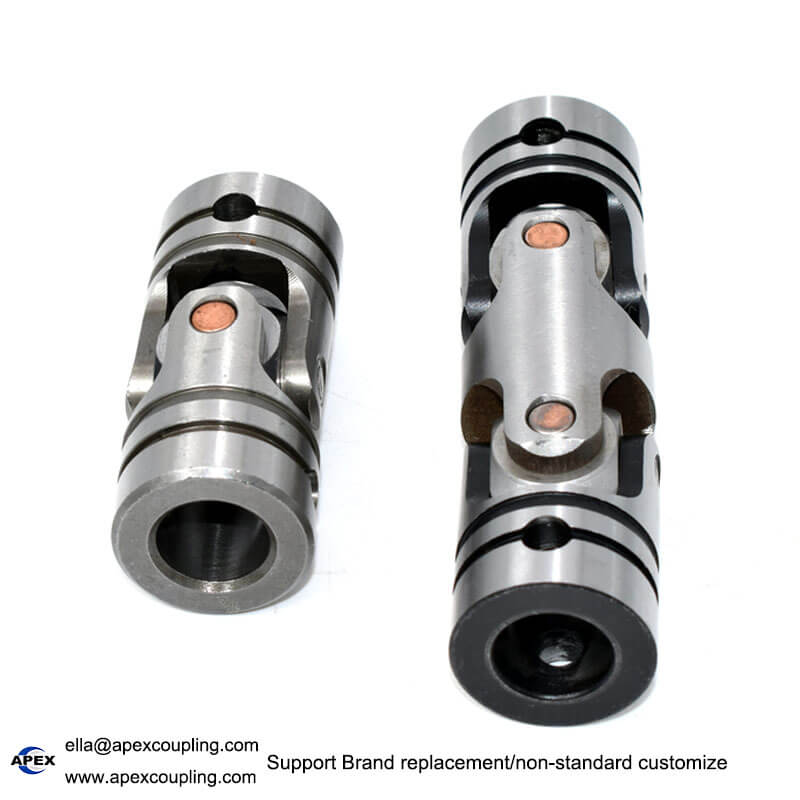
universal joint couplings