How a Telescopic Universal Shaft Works
How a Telescopic Universal Shaft Works
Industrial machinery sometimes needs to transmit rotation between shafts that are not perfectly aligned and whose separation may change during operation. A telescopic universal shaft can help address both requirements through a combination of angular articulation and axial movement.
Understanding its structure and operating limits helps engineers evaluate whether this type of transmission assembly is suitable for their equipment.
What Is a Telescopic Universal Shaft?
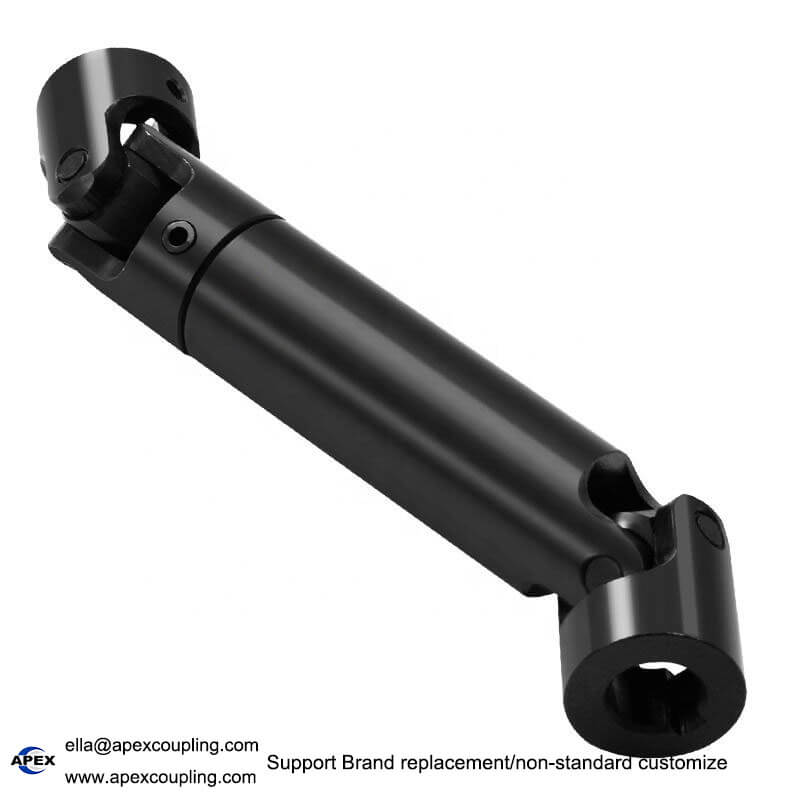
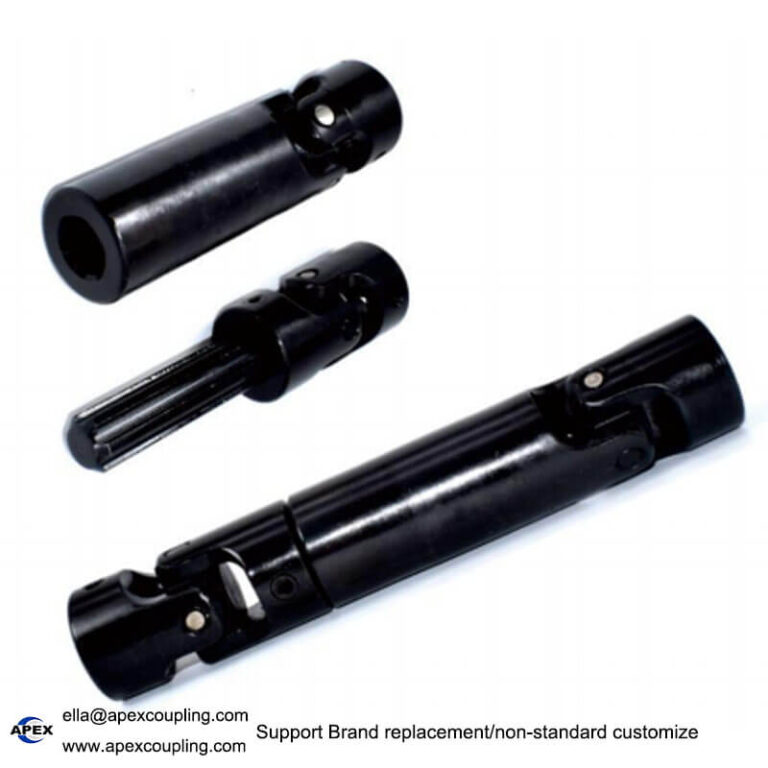
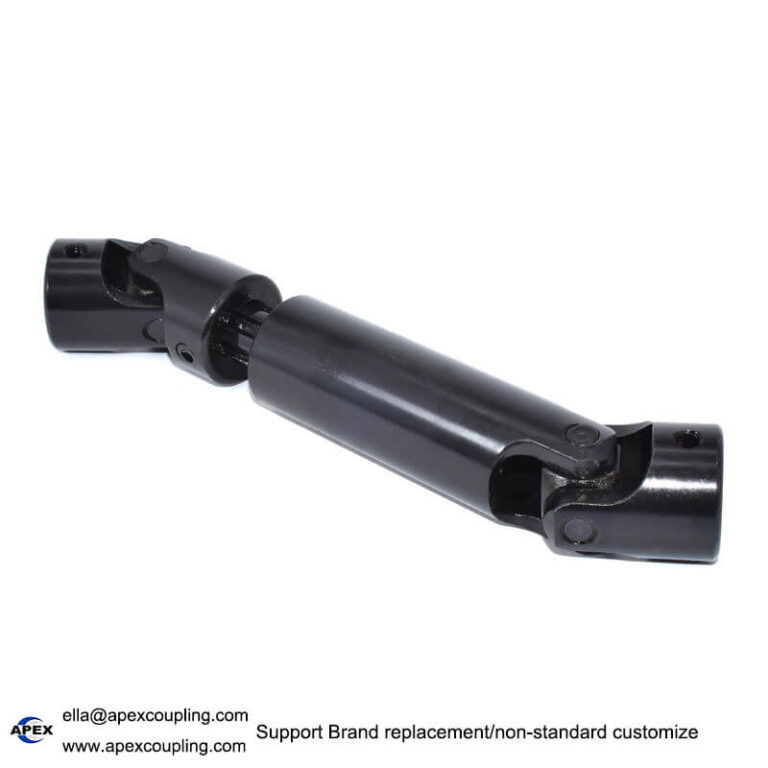
A telescopic universal shaft is a transmission assembly that combines a universal joint mechanism with a section designed to change length axially within a defined range.
The universal joint accommodates a specified angle between connected shafts. The telescopic section allows the assembly to adjust its effective length without requiring the entire transmission to remain at one fixed axial dimension.
The exact construction varies by product design. Buyers should confirm the joint type, sliding mechanism, connection method and available axial travel for the selected model.
How Does the Telescopic Section Work?
The telescopic section allows relative axial movement between connected components. This movement helps the transmission accommodate changes in shaft separation or installation geometry within the assembly’s designed travel.
The available travel is limited. If the assembly reaches the end of its designed range, the resulting loads may damage components or interfere with operation.
For this reason, engineers should specify the required installed length and the full range of axial movement rather than providing only one overall length measurement.
How Does the Universal Joint Section Work?
The universal joint section transfers rotational motion between shafts operating at an angle.
Its angular capability depends on the joint design and dimensions. The recommended working angle may be lower than the maximum articulation angle, particularly under demanding torque or speed conditions.
A single Cardan-type joint operating at an angle generally produces instantaneous output-speed variation. Applications that require controlled motion should consider the complete transmission arrangement, including joint geometry and phasing where relevant.
Why Combine Angular and Axial Movement?
Some equipment layouts require both functions. For example, the shaft separation may change while the connected components also operate at an angle.
A telescopic universal shaft can provide a compact solution for such layouts, provided its torque, speed, angle and travel ratings meet the actual operating requirements.
It should not be assumed that every telescopic assembly can handle every combination of angle, axial travel and load.
Important Selection Factors
Before choosing a model, confirm:
Input and output shaft diameters
Required installed length
Minimum and maximum operating length
Usable telescopic travel
Continuous and peak torque
Rotational speed and duty cycle
Recommended working angle
Material, surface treatment and maintenance requirements
A technical drawing and complete operating information help the manufacturer assess the application more accurately.
CPSP Telescopic Designs from Apex Coupling
Apex Coupling’s CPSP series is specified with a telescopic structure and 42CrMo alloy steel construction. The supplied information lists customizable shaft holes and several model options, including CPSP-03GA, CPSP-04GA, CPSP-05GA and CPSP-1GA through CPSP-11GA.
The available data does not specify the usable telescopic travel or the complete torque and speed ratings for every model. These details should be confirmed before selecting the assembly.
For technical review, provide the required length range, shaft dimensions, working angle, torque and rotational speed.
Email: ella@apexcoupling.com
WhatsApp: +86 13437856962
Frequently Asked Questions
What is the difference between a telescopic shaft and a universal joint?
A telescopic shaft accommodates axial length changes, while a universal joint accommodates angular movement. A combined assembly can provide both functions.
Can a telescopic shaft extend indefinitely?
No. It has a designed travel range that must be confirmed for the selected model.
Does a larger working angle always mean better performance?
No. The allowable angle depends on joint design, torque, speed and operating conditions. The maximum articulation angle may not be suitable for continuous operation.
What information is needed to select a telescopic assembly?
Provide the shaft dimensions, required length range, axial travel, working angle, torque, rotational speed and application environment.
Inquiry now:
ella@apexcoupling.com
steel vs cast iron jaw coupling, rotex spider hardness guide, flexible coupling for motor, elastic coupling maintenance.