42CrMo Alloy Steel for Industrial Shaft Components
Material selection plays an important role in industrial shaft and transmission components. Engineers must consider mechanical loads, operating conditions, dimensions and manufacturing requirements when specifying a component for a particular machine.
42CrMo is an alloy steel grade used in mechanical engineering applications. Its suitability for a particular shaft or joint depends on the material condition, heat treatment, design and required operating performance.
What Is 42CrMo Alloy Steel?
42CrMo is a chromium-molybdenum alloy steel grade used in a range of mechanical components. Its properties depend on the applicable material standard, chemical composition, heat treatment and manufacturing process.
For shaft-related applications, the grade name alone does not establish the final strength, toughness, hardness or fatigue performance of a finished component.
Buyers should confirm the exact material specification and any required heat treatment when these properties are important to the application.
Why Is Material Specification Important?
A transmission component may experience continuous torque, starting loads, reversing, vibration and other dynamic forces.
Material selection must be considered together with the component’s geometry, dimensions, manufacturing quality and operating conditions. A material that is suitable for one design may not provide the same performance in a different configuration.
For this reason, product selection should be based on the complete technical specification rather than the material name alone.
What Should Buyers Verify?
1. Material Grade and Documentation
Confirm the exact material designation and the applicable material standard. If a material certificate is required, state this in the purchase specification.
2. Heat Treatment
Ask whether the component has a specified heat-treatment condition. Do not assume a particular hardness or strength without supporting product documentation.
3. Component Dimensions
Verify shaft diameter, bore dimensions, overall length, mounting interface and any required tolerances.
4. Operating Loads
Provide continuous torque, peak loads, rotational speed, working angle and duty cycle. The finished component must meet the requirements of the complete application.
5. Surface Protection
Where corrosion or environmental exposure is a concern, confirm the available surface treatment and maintenance requirements.
42CrMo in Telescopic Transmission Assemblies
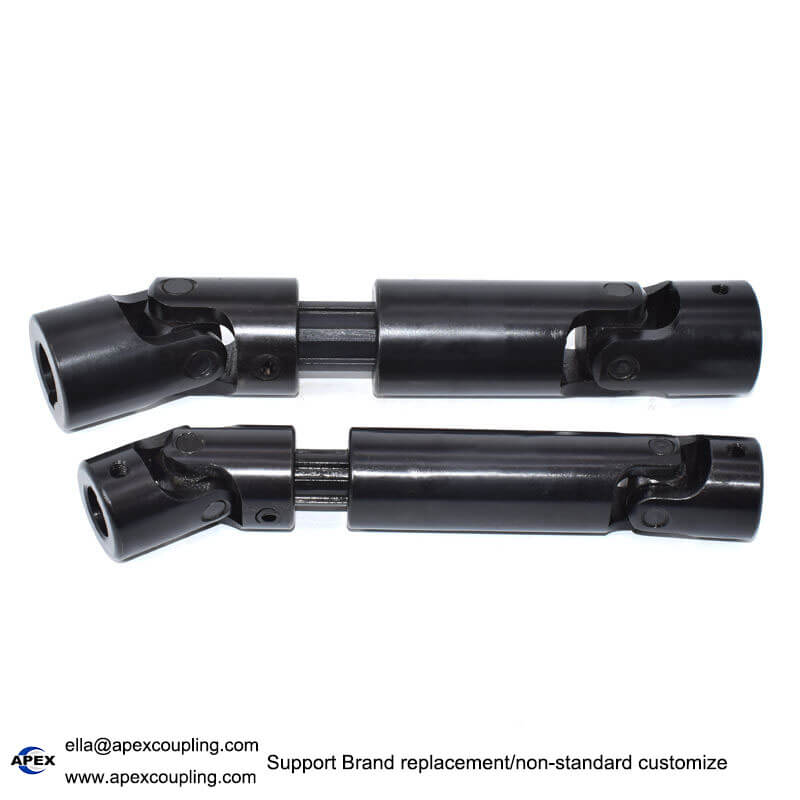
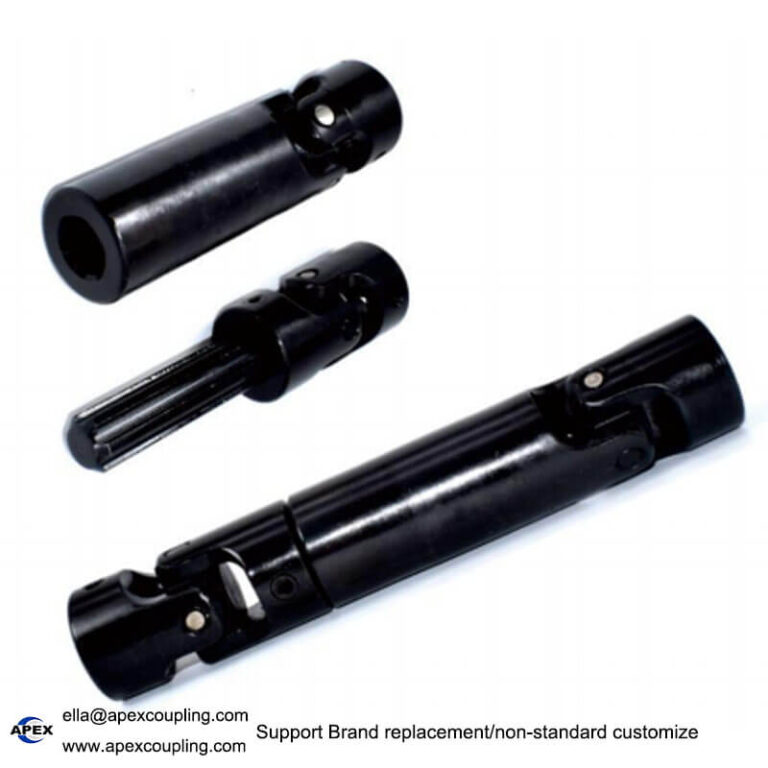
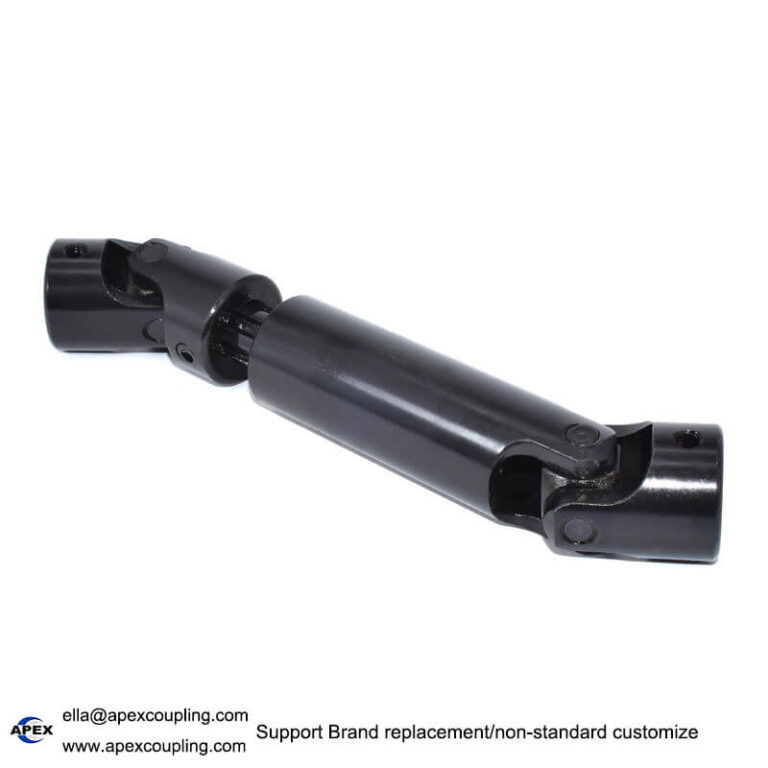
The Apex Coupling CPSP series is listed with 42CrMo alloy steel construction and a telescopic structure. The series is designed for applications requiring angular articulation and axial length adjustment within a specified travel range.
The supplied specifications identify customizable shaft holes and multiple model options. However, the exact dimensions, usable telescopic travel, torque capacity and speed limits must be confirmed for the selected model.
Material selection should therefore be reviewed alongside the complete assembly design and operating conditions.
How to Specify a Custom Shaft Component
When requesting a quotation, include:
Required material grade
Shaft-hole dimensions
Overall length and required axial travel
Mounting interface and tolerances
Torque and rotational speed
Working angle
Operating environment
Quantity and required documentation
A technical drawing helps the manufacturer evaluate dimensional requirements and identify any missing information.
Discuss CPSP Material and Design Requirements with Apex Coupling
Apex Coupling supports OEM/ODM inquiries for the CPSP telescopic series. The supplied information identifies 42CrMo alloy steel and customizable shaft holes, subject to confirmation of the final configuration.
Send your technical drawing and operating conditions to discuss material specifications and product requirements.
Email: ella@apexcoupling.com
WhatsApp: +86 13437856962
Frequently Asked Questions
Does 42CrMo automatically guarantee a particular hardness?
No. Hardness depends on the material condition and heat treatment. Confirm the required value against the supplier’s technical documentation.
Is 42CrMo suitable for every industrial shaft application?
No single material is suitable for every application. Selection depends on load, design, operating environment and required properties.
Can a 42CrMo component be customized?
Selected dimensions and configurations may be available through OEM/ODM arrangements. Confirm technical feasibility with the manufacturer.
What should I check before ordering?
Verify the material specification, dimensions, heat treatment if required, torque, speed, working angle and environmental conditions.
Inquiry now:
ella@apexcoupling.com
steel vs cast iron jaw coupling, rotex spider hardness guide, flexible coupling for motor, elastic coupling maintenance.