Alloy Steel vs. Stainless Steel Universal Joints
Alloy Steel vs. Stainless Steel Universal Joints
Choosing the right material for an industrial universal joint involves more than comparing material names. Mechanical loads, corrosion exposure, temperature, heat treatment and surface finish all influence suitability.
Alloy steel and stainless steel can both be used in mechanical components, but their properties vary by grade and manufacturing process. This guide explains the main considerations for selecting a material for angular shaft transmission.
Why Material Selection Matters
A universal joint transfers rotational motion and torque between shafts operating at an angle. Its components must withstand the loads and operating conditions specified for the application.
The material affects mechanical properties and corrosion behavior, while the joint design and dimensions determine much of its load capacity and operating limits.
The material name alone cannot establish the allowable torque, rotational speed or service life. These values must be confirmed for the complete product.
Alloy Steel: Key Considerations
Alloy steel is used in many mechanical transmission components. Depending on the grade and heat treatment, it can provide a combination of strength, toughness and wear-related properties suitable for industrial applications.
However, alloy steels differ considerably. Buyers should confirm the exact grade, heat treatment and material documentation rather than assuming that every alloy steel component has the same properties.
For applications exposed to moisture or corrosive conditions, the surface protection and maintenance requirements should also be reviewed.
Stainless Steel: Key Considerations
Stainless steel includes several grades with different mechanical and corrosion-resistance properties. It is often considered where corrosion exposure is an important design factor.
The actual performance depends on the selected grade, the environment, surface condition and contact with other materials. Stainless steel should not automatically be assumed to meet every corrosion requirement.
The Apex Coupling CScA/CScW product information identifies 304 stainless steel as a possible material option. Confirm availability and the applicable technical rating for the requested model.
How to Compare the Materials
| Selection Factor | Alloy Steel | Stainless Steel |
|---|---|---|
| Mechanical properties | Depend on grade and heat treatment | Depend on grade and processing |
| Corrosion behavior | Surface protection may be needed | Often selected for improved corrosion resistance, depending on grade and environment |
| Surface treatment | Depends on material and application | Must be compatible with the selected grade and use |
| Best selection method | Evaluate load, material grade and treatment | Evaluate corrosion exposure and required mechanical properties |
| Verification | Confirm grade, heat treatment and product rating | Confirm grade, environment and product rating |
This table provides general guidance, not a substitute for the manufacturer’s material specification.
Surface Treatment Options
Surface treatment can influence corrosion protection, appearance and maintenance. The appropriate choice depends on the base material and intended environment.
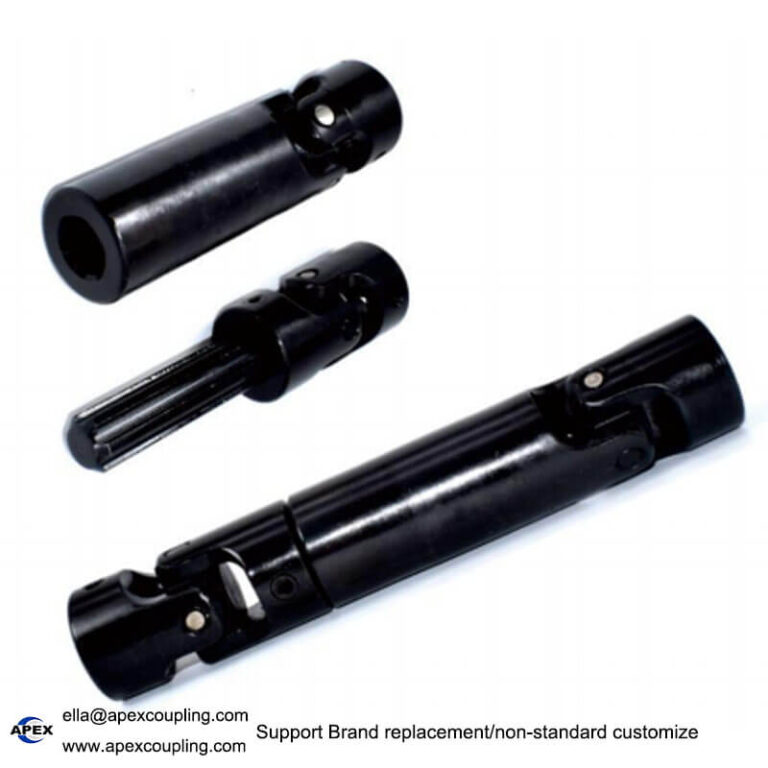
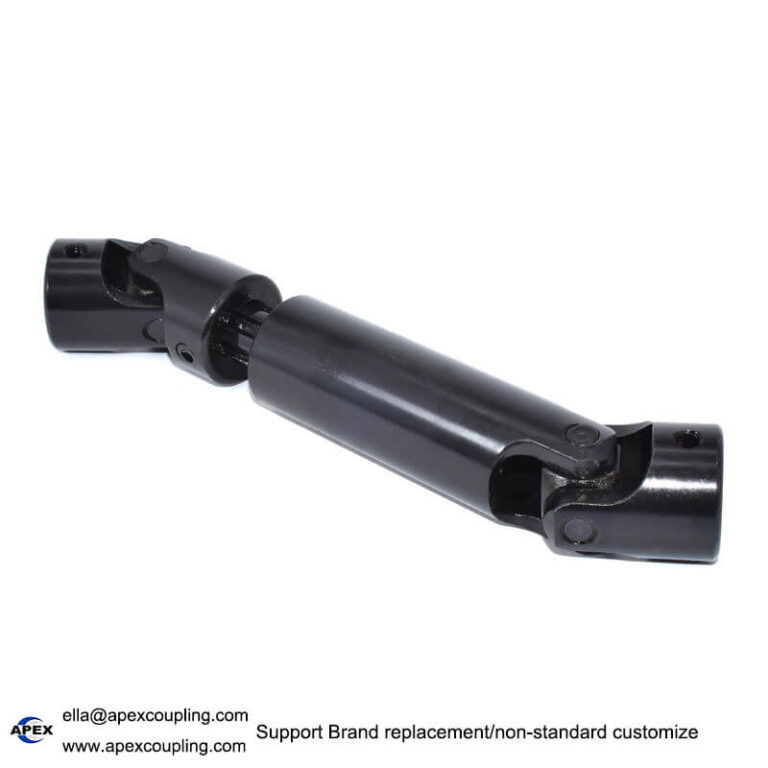
The CScA/CScW series is listed with a standard blackened finish. Nickel plating, zinc plating and polishing may be available upon request.
Before selecting a finish, confirm its compatibility with the base material and application. For demanding environments, assess the complete material and surface-treatment specification rather than relying on appearance alone.
Five Questions to Ask Before Ordering
1. What is the operating environment?
Identify moisture, cleaning chemicals, outdoor exposure, temperature and other conditions that could affect material performance.
2. What loads will the joint transmit?
Provide continuous torque, peak loads, rotational speed and working angle. Material selection cannot replace checking the rating of the complete joint design.
3. Is a particular material grade required?
If your purchasing specification requires a named grade or material certificate, state this clearly in the inquiry.
4. Is a special surface finish needed?
Explain the corrosion or appearance requirements and ask the manufacturer to confirm available finishes.
5. Does the alternative material retain the same rating?
Do not assume that changing the material preserves the same torque or speed limits. The manufacturer should confirm the rating for the final configuration.
Material Options for Apex Coupling CScA/CScW
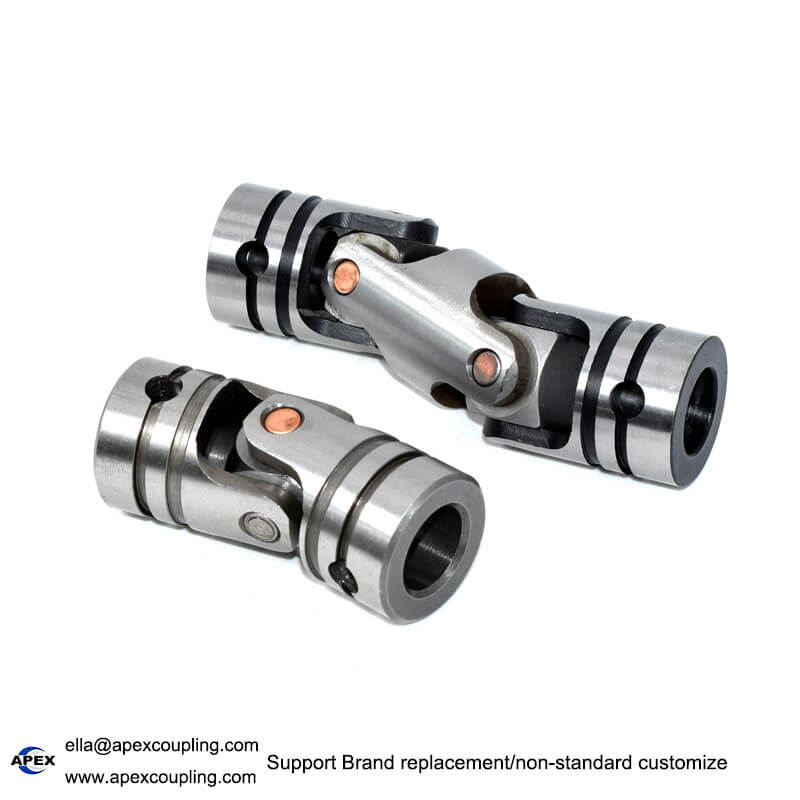
Apex Coupling’s CScA/CScW series is listed with alloy steel construction and a standard blackened finish. A 304 stainless steel option, as well as nickel plating, zinc plating and polishing, may be available subject to confirmation.
For material-related inquiries, provide the application environment, required material grade, shaft dimensions, torque, speed and working angle.
Email: ella@apexcoupling.com
WhatsApp: +86 13437856962
Contact Apex Coupling to discuss material requirements and request a quotation.
Frequently Asked Questions
Is stainless steel always better than alloy steel?
No. The better choice depends on the required mechanical properties, corrosion exposure, temperature and application.
Can alloy steel be used in a humid environment?
It may be suitable with appropriate material selection, surface protection and maintenance. Confirm the conditions with the manufacturer.
Is 304 stainless steel available for every size?
The supplied information identifies 304 stainless steel as an option, but availability for each model should be confirmed.
Does surface plating guarantee corrosion resistance?
No. Performance depends on the material, coating process, coating condition and operating environment.
What should I provide for a material quotation?
Specify the material grade, operating environment, dimensions, torque, speed, working angle and quantity. Include drawings or purchasing standards if available.
Inquiry now:
ella@apexcoupling.com
steel vs cast iron jaw coupling, rotex spider hardness guide, flexible coupling for motor, elastic coupling maintenance.