How to Choose a KC Chain Coupling
Choosing the right KC chain coupling is important for reliable industrial power transmission. Although a coupling may appear to fit the shaft, its torque capacity, operating speed, sprocket dimensions and chain specification must also match the application.
A KC chain coupling uses two sprockets and a roller chain to transmit rotation between connected shafts. This guide explains the main factors to consider before purchasing a coupling for new equipment or replacement applications.
1. Understand the Application
Start by identifying the driving equipment and the machine being driven. Determine whether the system operates continuously or intermittently and whether it experiences frequent starts, stops, reversing or shock loads.
Important information includes the required torque, rotational speed, shaft diameters, available installation space and operating environment.
Providing these details helps narrow down suitable coupling configurations before comparing prices or delivery options.
2. Check the Required Torque
Torque is one of the main parameters used to select a chain coupling. The selected model must be able to handle the normal operating load and the additional demands created by starting, stopping or shock loading.
Do not assume that every KC chain coupling has the same torque rating. Capacity depends on the exact model, sprocket design, chain specification and operating conditions.
Ask the supplier to confirm the rated torque and any applicable service factor for the proposed configuration.
3. Confirm the Operating Speed
The required rotational speed must fall within the permitted operating range of the selected coupling.
Chain speed, sprocket size, lubrication, alignment and operating conditions can affect performance. Higher-speed applications may require additional technical review.
Provide the actual operating RPM rather than relying on a general speed value for the entire product family.
4. Measure Both Shaft Bores
Measure the driving-side and driven-side shaft diameters. If the two shafts have different diameters, specify each bore separately.
Also confirm the required bore tolerance, keyway dimensions, shaft-end length and fastening arrangement. The available bore range depends on the selected model and may require customization.
A technical drawing is especially useful when replacing an existing coupling.
5. Check Sprocket and Chain Compatibility
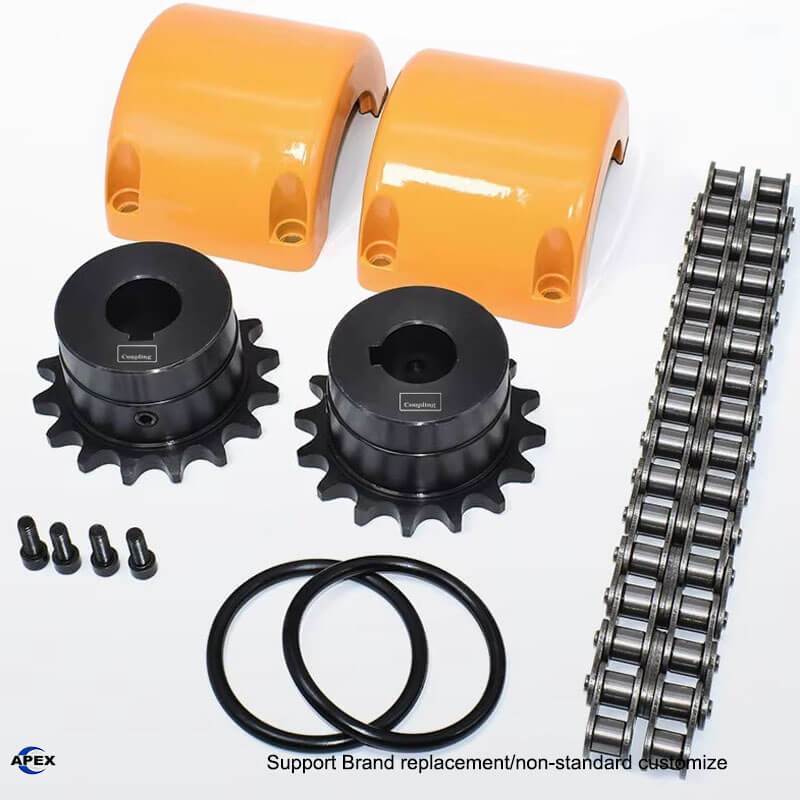
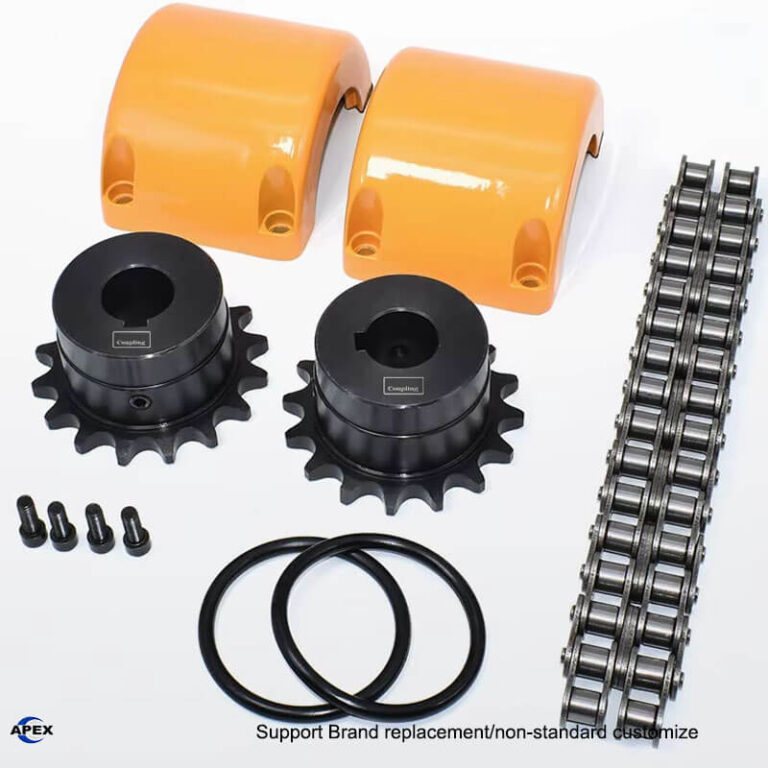
The roller chain must match the sprockets. Chain pitch, sprocket tooth configuration and other dimensions should be confirmed from the relevant technical specifications.
Do not combine an unverified chain and sprocket simply because their external dimensions look similar. Incompatible components may cause poor engagement, abnormal wear or transmission problems.
When replacing an existing assembly, provide the model number or clear dimensional drawings.
6. Decide Whether a Protective Cover Is Needed
A cover can help shield the chain assembly from external contamination and reduce direct access to moving components.
Before choosing a covered model, check the installation space and make sure that the cover does not interfere with the chain or sprockets. The cover should also allow appropriate inspection and maintenance.
Suitable guarding and safe maintenance procedures remain essential.
7. Consider the Operating Environment
Dust, moisture, temperature and other environmental conditions may affect the coupling’s service requirements.
Tell the supplier whether the equipment operates indoors or outdoors, whether contaminants are present, and whether the application involves continuous operation or frequent load changes.
The material and surface treatment should be verified against the actual environment rather than assumed suitable for every application.
8. Review Maintenance Requirements
Regular inspection can help identify chain wear, sprocket damage, loose fasteners or other problems before they cause downtime.
Follow the manufacturer’s maintenance instructions for the exact model. Before inspection or repair, isolate the equipment and prevent unexpected startup.
If abnormal wear occurs repeatedly, investigate the chain compatibility, alignment, loading and installation instead of replacing individual components without identifying the cause.
9. KC Chain Coupling Selection Checklist
Before requesting a quotation, prepare the following information:
KC series and exact model
Driving-side and driven-side shaft bores
Required torque
Operating speed in RPM
Sprocket dimensions and chain specification
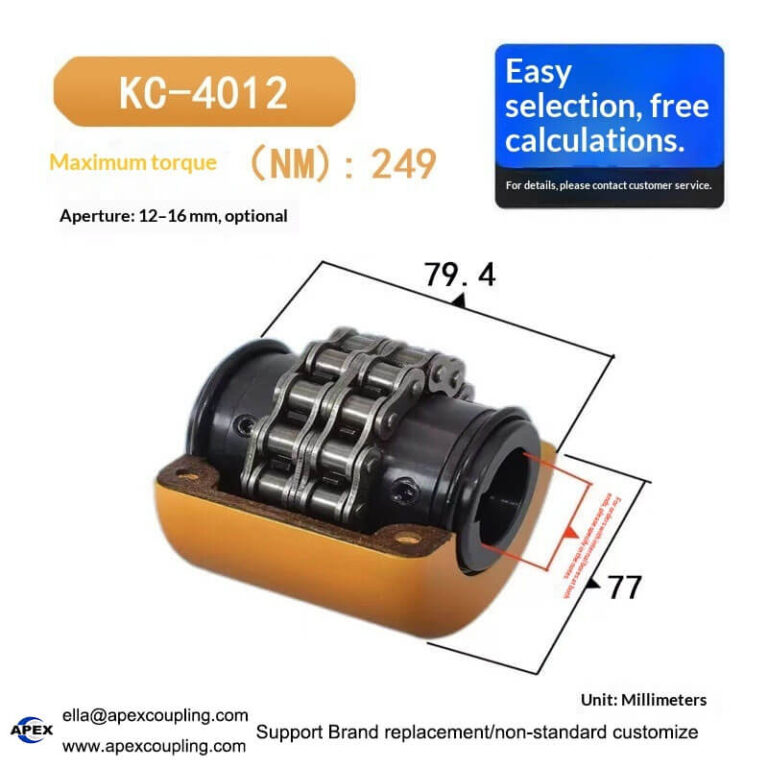
Overall installation dimensions
Protective cover requirement
Working environment and duty cycle
Quantity and customization requirements
The more complete the technical information, the easier it is to confirm a compatible configuration.
10. KC Chain Couplings from Apex Coupling
Apex Coupling supplies industrial coupling products for OEMs, distributors and maintenance buyers. Standard configurations and non-standard dimensions can be reviewed according to the application.
Visit our KC chain coupling product page to review the product information. When requesting a quotation, provide the shaft dimensions, required torque, operating speed and installation drawing.
Conclusion
Selecting a KC chain coupling requires more than matching the shaft diameter. Torque, speed, sprocket and chain compatibility, installation space and maintenance requirements all influence the final choice.
Confirm the specifications for the exact model before ordering to help ensure compatibility with your industrial transmission system.
Inquiry now:
ella@apexcoupling.com
steel vs cast iron jaw coupling, rotex spider hardness guide, flexible coupling for motor, elastic coupling maintenance.