How a Roller Chain Coupling Works
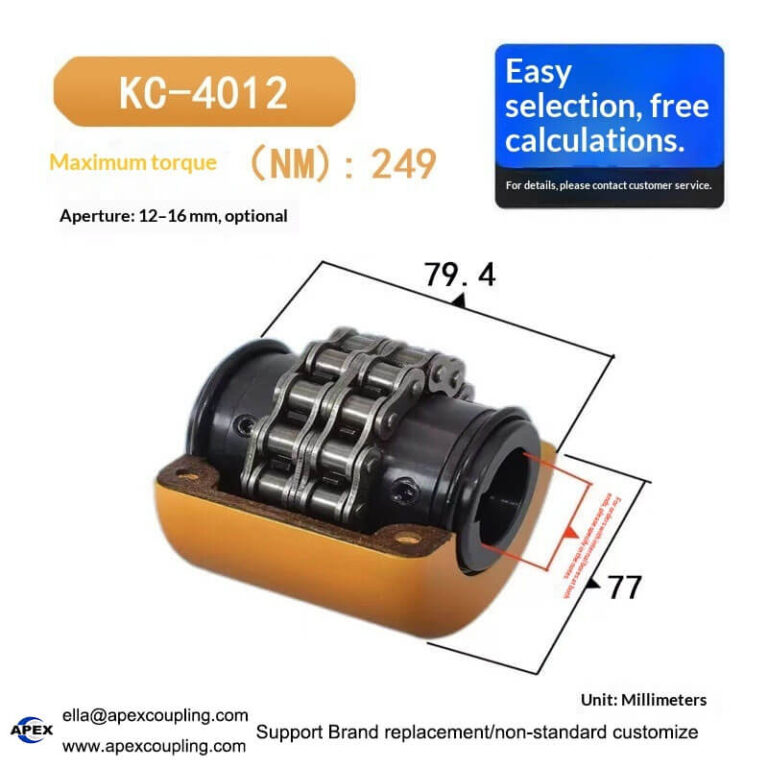
A roller chain coupling is a mechanical component used to transmit rotation between two connected shafts. It typically consists of two sprockets connected by a roller chain. This simple arrangement makes it a practical option for compatible industrial power transmission systems.
Understanding how a roller chain coupling works can help engineers, maintenance teams and purchasing professionals select the correct model and maintain it appropriately.
1. Main Components of a Roller Chain Coupling
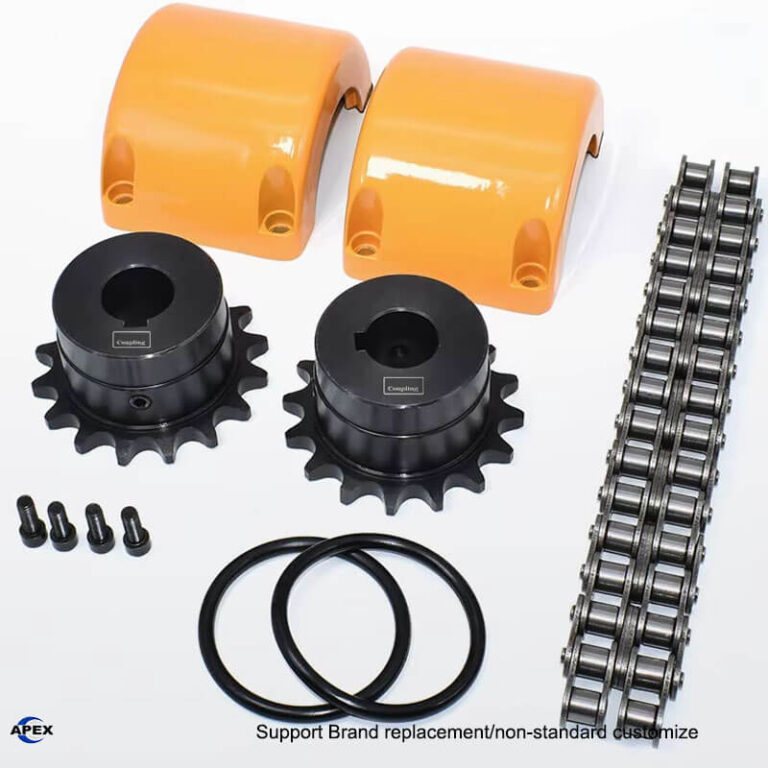
A typical roller chain coupling contains the following components.
Two Sprockets
One sprocket is mounted on the driving shaft and the other on the driven shaft. Their dimensions and tooth configuration must match the selected chain and coupling design.
Roller Chain
The roller chain engages with both sprockets. As the driving sprocket rotates, the chain transfers motion to the driven sprocket.
Shaft Connections
The sprockets must be securely mounted to the shafts using the specified bore and fastening arrangement. Bore size, keyway and tolerance requirements depend on the model.
Protective Cover
Some configurations include a cover around the chain and sprockets. A compatible cover can help limit contamination and reduce access to moving parts.
2. How Does Torque Transfer?
When the driving shaft rotates, its sprocket moves the roller chain. The chain engages with the second sprocket and causes the driven shaft to rotate.
This creates a mechanical connection between the two shafts. The amount of torque that can be transmitted depends on the selected coupling, chain and sprocket specifications, as well as the actual operating conditions.
For this reason, model-specific torque and speed ratings should be confirmed before use.
3. Key Characteristics of Roller Chain Couplings
Straightforward Construction
The chain-and-sprocket design is mechanically straightforward and can be convenient to inspect and maintain when installed correctly.
Serviceability
Depending on the configuration and available clearance, the chain may be removed for maintenance without moving the connected shafts. The actual procedure depends on the installation.
Multiple Size Options
Different coupling models may offer different shaft bore and sprocket dimensions. Customized configurations may be possible when the standard sizes do not match the application.
Protective Cover Options
A cover can help protect the chain assembly from contaminants and reduce exposure to moving components. It must be compatible with the selected coupling and installation space.
4. What Affects Coupling Performance?
Several factors influence the performance and service life of a roller chain coupling.
Torque: Excessive loading can accelerate wear or damage components.
Rotational speed: The coupling must be suitable for the required RPM.
Chain compatibility: The chain must match the sprocket geometry and specifications.
Alignment: Incorrect installation can contribute to abnormal loading and wear.
Lubrication and maintenance: Follow the manufacturer’s instructions for the exact chain and coupling configuration.
Environment: Dust, moisture and other contaminants may affect service requirements.
These factors should be considered together rather than evaluating the coupling by one specification alone.
5. Why Are Sprocket Material and Heat Treatment Important?
Steel sprockets are used in many industrial chain coupling designs. Appropriate material selection and heat treatment can contribute to the required mechanical properties and wear resistance.
Some product configurations specify high-frequency quenching of the sprocket teeth. The actual benefit depends on the material, treatment process and component design.
Confirm the material grade and heat treatment for the exact model if these properties are important to your application.
6. Common Applications
Roller chain couplings may be used in compatible equipment such as:
Industrial machinery
Conveyor systems
Gear motor drives
Packaging equipment
Material-handling machinery
General mechanical power transmission systems
OEM machinery with specific shaft interfaces
The coupling must be sized for the load, speed and installation conditions of the actual equipment.
7. Basic Installation Considerations
Before installing a roller chain coupling, verify the shaft dimensions, sprocket mounting arrangement, chain compatibility and available clearance.
Follow the manufacturer’s instructions for mounting and alignment. Ensure that the chain engages correctly with both sprockets and that the protective cover, if supplied, does not interfere with moving components.
Never install, inspect or adjust the coupling while the machine is running. Isolate the equipment and prevent unexpected startup before performing maintenance.
8. Inspection and Maintenance
Inspect the chain, sprockets and mounting components at intervals appropriate to the application.
Look for visible damage, abnormal wear, loose fasteners and other signs of deterioration. Follow the manufacturer’s maintenance instructions for lubrication and component replacement.
If the coupling experiences repeated problems, review the loading, alignment, chain specification and operating environment to identify the underlying cause.
9. KC Chain Coupling from Apex Coupling
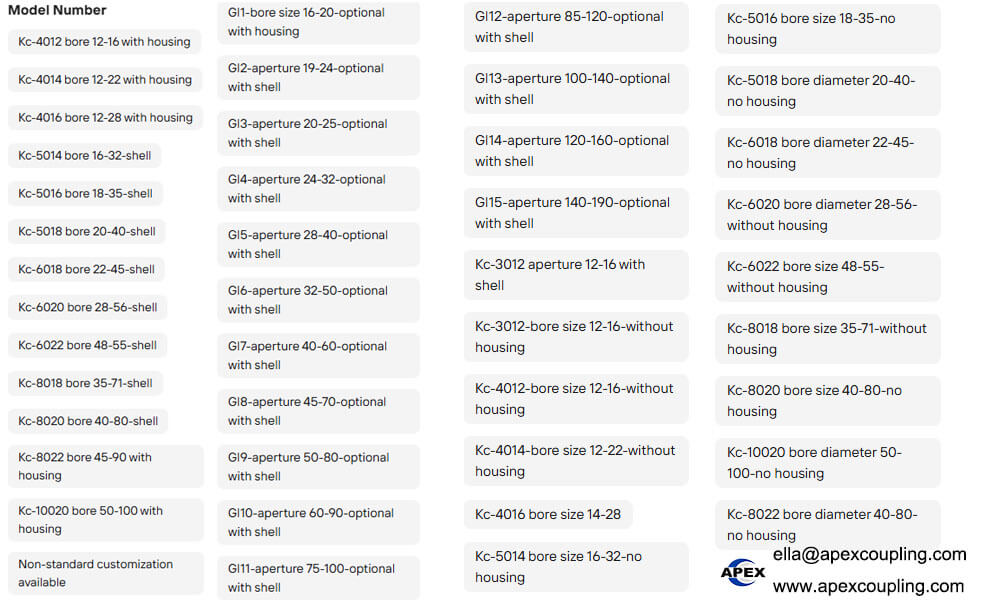
Apex Coupling supplies KC chain coupling products for industrial power transmission applications. Available models, dimensions and customization options depend on the selected configuration.
Visit our KC chain coupling product page for more information. Provide your shaft bores, torque, speed and installation requirements when requesting a quotation.
Conclusion
A roller chain coupling transfers rotation through the engagement of a roller chain with two sprockets. Its performance depends on correct component compatibility, suitable operating conditions and proper maintenance.
Understanding the structure and operating principles helps buyers and engineers make better-informed coupling selections.
Inquiry now:
ella@apexcoupling.com
steel vs cast iron jaw coupling, rotex spider hardness guide, flexible coupling for motor, elastic coupling maintenance.