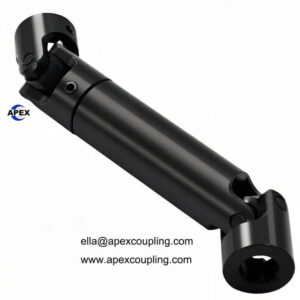
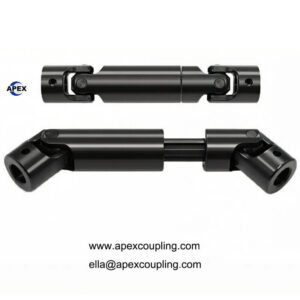
Introduction Edge banding machines are the heart of panel furniture production. However, the transmission joints—especially in brands like Homag and Nanxing—often fail due to the high-speed oscillation and wood dust. The WSP Precision Series is designed to eliminate these weak points by applying aerospace-grade materials to industrial woodworking.
1. The Secret to “1 Set Equals 5 Sets” The primary failure point of a universal joint is the pin. Most standard joints use soft steel pins that wear out quickly. We use HRC55-60 bearing steel for our pins, which is hard enough to resist the abrasive effects of wood dust and high-speed friction. This translates to fewer replacements and consistent machine uptime.
2. 42CrMo: Toughness Where It Counts A joint fork must be hard enough to resist wear but tough enough to handle shocks. By utilizing 42CrMo alloy steel, our WSP joints offer the high-tensile strength needed for “Super High Speed” applications (over 2000 RPM) without the risk of brittle fracture.
3. Customizable for Global Machinery Every edge banding line has different requirements. Whether you need a specific telescopic length or a specialized surface treatment like Dacromet for high-humidity environments, we provide factory-direct customization to match any German or Asian machine standard.
Conclusion For factories looking to optimize their production efficiency, upgrading to a German-quality WSP joint is a small investment that yields massive returns in durability.
edge bander maintenance, Homag machine repairs, woodworking coupling failure, benefits of 42CrMo in machinery, telescopic joint for wood processing.