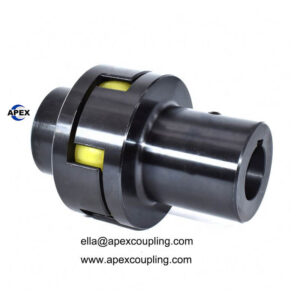
Introduction In a busy manufacturing plant or printing shop, downtime is the enemy. Standard jaw couplings often require you to move the motor or the load just to replace a worn-out elastic spider. The ML2 Double Flange Jaw Coupling eliminates this bottleneck, providing a flexible, high-torque solution that prioritizes maintenance efficiency.
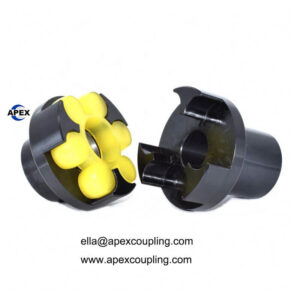
1. The “No-Movement” Maintenance Advantage The standout feature of the ML2 model is its double-flange structure. In standard setups, replacing the elastic component is a labor-intensive process. With the ML2, the flanges can be unbolted, allowing the spider to be swapped out without disturbing the precision alignment of your shafts. This is a critical advantage for Machinery Repair Shops and Manufacturing Plants.
2. Precision Engineering to GB/T 5272 Standards Our ML2 couplings are fully compliant with GB/T 5272-2002, the gold standard for plum blossom elastic couplings. This ensures that our 45# steel bodies meet strict safety and performance criteria, providing reliable torque transfer from 16 N·m to 25000 N·m across the entire series.
3. Damping for Frequent Positive and Negative Rotations Woodworking, printing, and automated machinery often involve frequent starts and direction changes. The polyurethane spider inside the ML2 joint acts as a high-performance buffer, absorbing the shock of these reversals and protecting your gearboxes and motor bearings from premature wear.
4. Built for the Toughest Applicable Industries Whether it’s the high-dust environment of Building Material Shops or the continuous operation of Energy & Mining equipment, the ML2’s rigid steel body and high-hardness spider (≥75) ensure it stands up to the task.
Conclusion The ML2 Double Flange coupling is the professional’s choice for medium-torque systems where reliability and serviceability cannot be compromised.
double flange coupling advantages, ML2 vs standard jaw coupling, GB/T 5272 standard guide, vibration damping in machinery, ease of maintenance couplings.