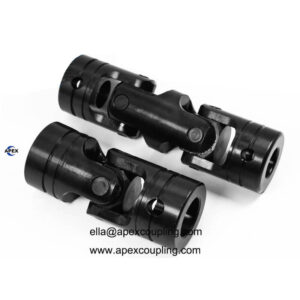
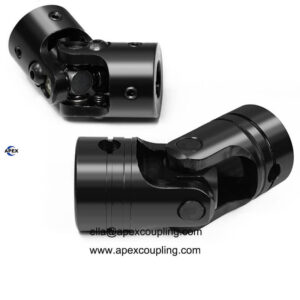
Introduction In the demanding environment of Factory Automation (FA), the smallest component can be the weakest link. Choosing the right universal joint isn’t just about size—it’s about material integrity and precision. Today, we look at why the CSCA series has become the go-to solution for engineers worldwide.
1. The Strength of 42CrMo Alloy Steel Unlike standard carbon steel, 42CrMo provides a unique balance of hardness and toughness. After professional heat treatment, these joints can withstand repeated high-impact loads without fatigue, significantly extending the lifespan of your drive system.
2. Why H7 Precision is Non-Negotiable A loose fit leads to vibration, noise, and eventual mechanical failure. Our CSCA joints feature internal bores machined to H7 tolerance. This “snug fit” ensures high concentricity, which is vital for high-speed rotations and precision positioning in automated assembly lines.
3. Solving Misalignment: The 45° Advantage Mechanical designs often face space constraints. The CSCA series allows for a maximum angular compensation of up to 45 degrees. This flexibility reduces the stress on the motor and driven components, preventing common alignment-related accidents.
4. Customization: Beyond the Catalog Every factory has unique needs. Whether you require a Telescopic (Extendable) shaft for variable distances or special Nickel Plating for corrosive environments, choosing a manufacturer that offers non-standard customization is key to project success.
Conclusion Ready to upgrade your machinery? The CSCA high-precision series offers the durability and accuracy your project deserves.
industrial universal joint guide, 42CrMo steel coupling benefits, H7 precision bore, universal joint selection, FA automation transmission