Stainless Steel vs Aluminum Spider Coupling – Which One Should You Choose?
Stainless Steel vs Aluminum Spider Coupling – Which One Should You Choose?
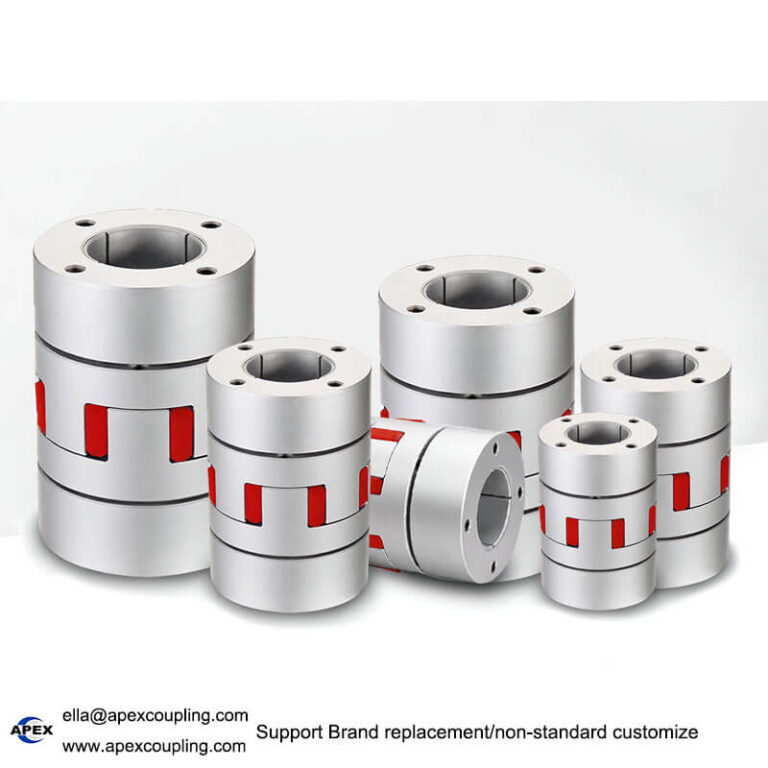
Spider couplings (curved jaw couplings) are essential for precision power transmission in servo motors, stepper motors, CNC machines, and automation equipment. But one critical decision is the hub material – stainless steel or aluminum?
This guide compares the DFCG stainless steel spider coupling with the DFC aluminum spider coupling, helping you choose the right material for your application based on environment, corrosion resistance, strength, and cost.
1. Quick Comparison: Stainless Steel (DFCG) vs Aluminum (DFC)
| Feature | DFCG – Stainless Steel | DFC – Aluminum |
|---|---|---|
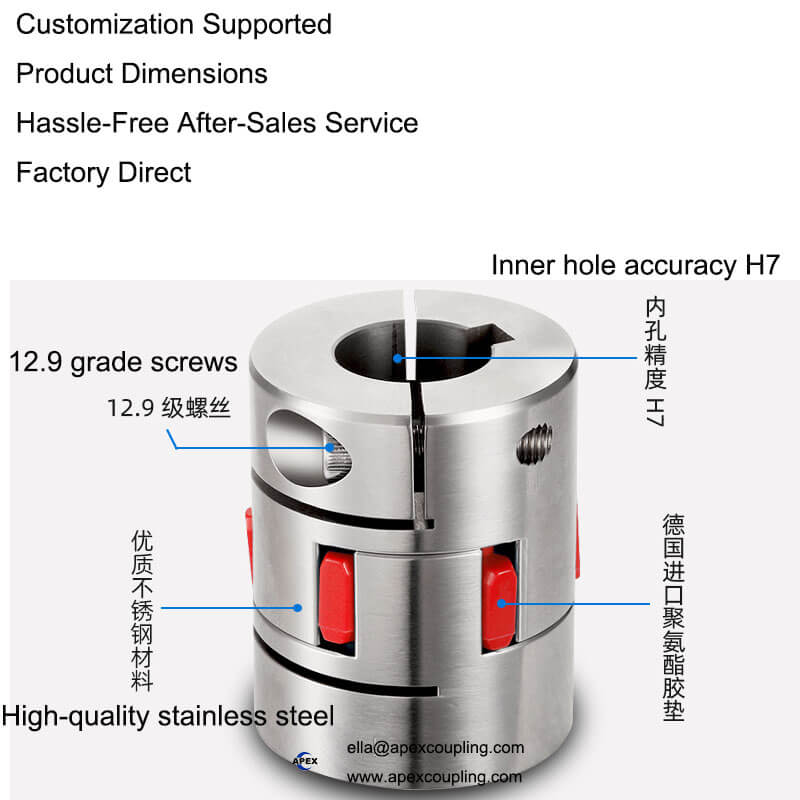
| Material | SUS304 stainless steel | High-strength aluminum alloy |
| Corrosion Resistance | Excellent | Good (needs coating) |
| Strength | Very high | High |
| Weight | Heavier | Lightweight |
| Surface Treatment | Polished (standard) | Anodizing (optional) |
| Best for | Harsh environments, food/chemical, outdoor | Lightweight applications, general industry |
| Cost | Higher | Lower |
| Zero Backlash | ✅ Yes | ✅ Yes |
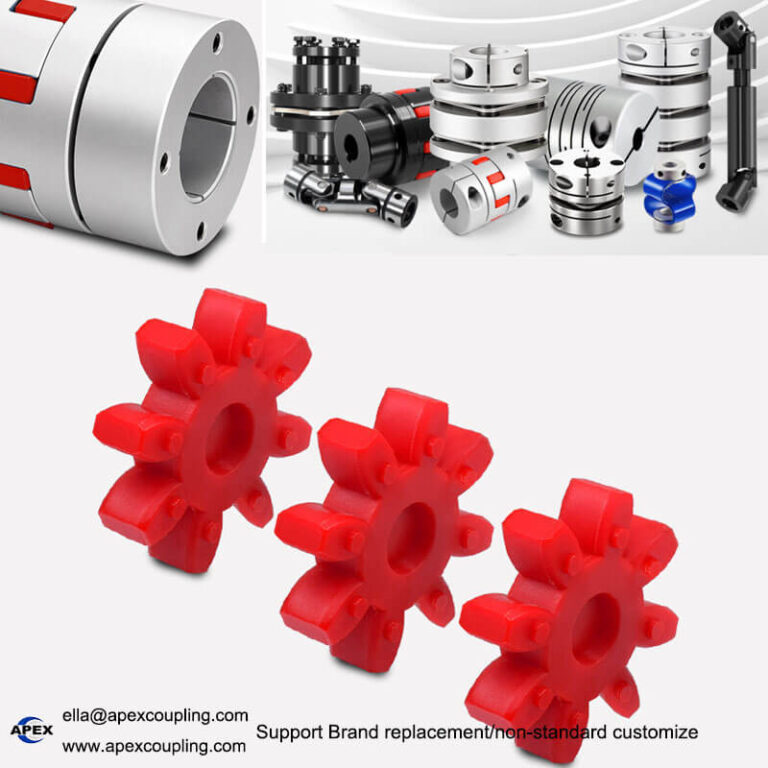
| Spider Material | German polyurethane | Urethane |
| Bore Tolerance | H7 | H7 |
| Screws | 12.9 grade | 12.9 grade |
2. Why Choose Stainless Steel (DFCG)?
DFCG stainless steel spider couplings are the right choice when:
Corrosion resistance is critical – Moisture, chemicals, washdown environments
Food processing or pharmaceutical – Hygienic stainless steel construction
Outdoor or marine applications – Exposure to rain, salt, and UV
High strength is required – Stainless steel offers excellent tensile strength
Clean room compatibility – No coating to flake or degrade
✅ DFCG is ideal for food packaging machinery, chemical plants, semiconductor facilities, and outdoor photovoltaic equipment.
3. Why Choose Aluminum (DFC)?
DFC aluminum spider couplings are the right choice when:
Weight reduction is important – Aluminum is approximately 1/3 the weight of steel
General industrial applications – No harsh chemicals or moisture exposure
Cost is a primary concern – Aluminum is more economical
Low inertia is required – Ideal for high-speed, low-torque applications
✅ DFC is ideal for general automation, light machinery, and applications where weight and cost are priorities.
4. The Spider – German Polyurethane vs Standard Urethane
Both DFCG and DFC series feature high-quality elastomer spiders, but DFCG uses German imported polyurethane:
| Feature | German Polyurethane (DFCG) | Standard Urethane (DFC) |
|---|---|---|
| Wear resistance | Excellent | Good |
| Oil resistance | Excellent | Good |
| Electrical insulation | Excellent | Good |
| Vibration absorption | Excellent | Good |
| Temperature range | -35°C to 80°C | -30°C to 80°C |
💡 The German polyurethane spider ensures superior performance and durability in demanding applications.
5. Zero Backlash – Critical for Servo & Stepper Motors
Both DFCG and DFC series feature zero rotational clearance (zero backlash). This is achieved through:
Curved jaw profile – Press-fit with the spider
Precision machining – H7 bore tolerance
High-quality materials – Consistent performance
Zero backlash is essential for:
Servo motors – Precise positioning and speed control
Stepper motors – No lost steps
CNC machines – Surface finish accuracy
Robotics – Repeatable motion
6. H7 Bore Precision – Why It Matters
Both series feature H7 bore tolerance, ensuring:
High concentricity – Reduced vibration
Accurate shaft fit – No wobble or fretting
Longer equipment life – Reduced bearing wear
7. 12.9 Grade Screws – Secure Fastening
Both DFCG and DFC series use 12.9 grade high-strength screws:
High tensile strength – Withstands vibration without loosening
Smooth, burr-free – No damage to shafts
Even clamping force – Secure shaft connection
8. Application Comparison
| Application | Recommended Coupling | Reason |
|---|---|---|
| Food processing machinery | ✅ DFCG (Stainless Steel) | Corrosion resistance, hygiene |
| Chemical plants | ✅ DFCG (Stainless Steel) | Chemical resistance |
| Outdoor photovoltaic | ✅ DFCG (Stainless Steel) | Weather resistance |
| Semiconductor clean room | ✅ DFCG (Stainless Steel) | No coating to flake |
| CNC machine tools | ✅ DFC (Aluminum) | Lightweight, high precision |
| Packaging machinery | ✅ DFC (Aluminum) | Cost-effective, reliable |
| General automation | ✅ DFC (Aluminum) | Lightweight, good performance |
| Woodworking equipment | ✅ DFC (Aluminum) | Vibration absorption |
9. Real-World Example – Food Packaging Upgrade
A food packaging machinery manufacturer was using aluminum couplings that corroded under frequent washdown procedures. They switched to Apex Coupling DFCG stainless steel couplings (SUS304, zero backlash, German polyurethane spider, H7 bore). Results:
Corrosion eliminated – 304SS withstood daily washdown
Zero backlash maintained – Precision positioning improved
Service life extended – No rust or degradation
Hygiene compliance – Stainless steel meets food industry standards
10. Installation & Maintenance Tips
Clean shaft and bore – Remove oil, grease, and debris
Check alignment – Even with misalignment compensation, keep within recommended limits
Tighten clamping screws evenly – Use a torque wrench to specification (star pattern)
No lubrication required – Polyurethane spider is self-lubricating
Inspect spider periodically – Replace if cracked or worn
Retighten after first operating hours – Normal bedding-in process
11. Selection Checklist
Environment: Harsh/corrosive → Stainless Steel (DFCG) | Clean/dry → Aluminum (DFC)
Weight: Lightweight requirement → Aluminum (DFC)
Cost: Budget priority → Aluminum (DFC)
Strength: High strength requirement → Stainless Steel (DFCG)
Temperature range: -35°C to 80°C → Both suitable
Bore size: Send us your shaft diameter – we will match
Application: Send us your torque and speed – we will size
12. Conclusion
Both DFCG stainless steel and DFC aluminum spider couplings offer zero backlash performance, H7 bore precision, and high-quality elastomer spiders. The choice depends on your application environment:
Choose DFCG (stainless steel) for corrosive, food, chemical, or outdoor applications where durability and corrosion resistance are critical.
Choose DFC (aluminum) for general industry, lightweight, and cost-sensitive applications.
Inquiry now:
ella@apexcoupling.com
stainless steel vs aluminum coupling
spider coupling material selection
DFCG vs DFC coupling
corrosion resistant coupling
zero backlash coupling guide
304SS coupling benefits