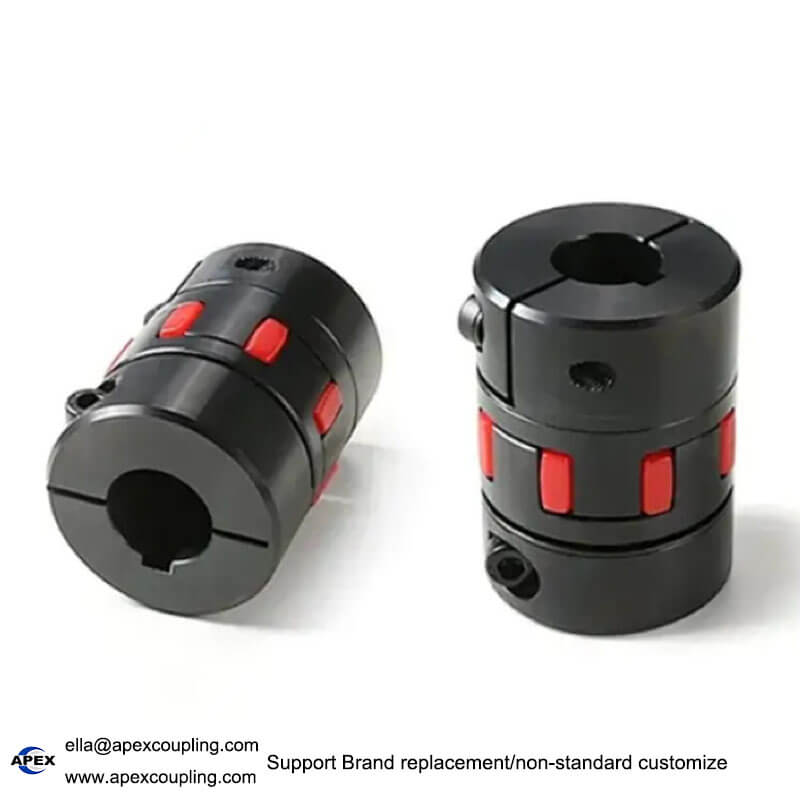
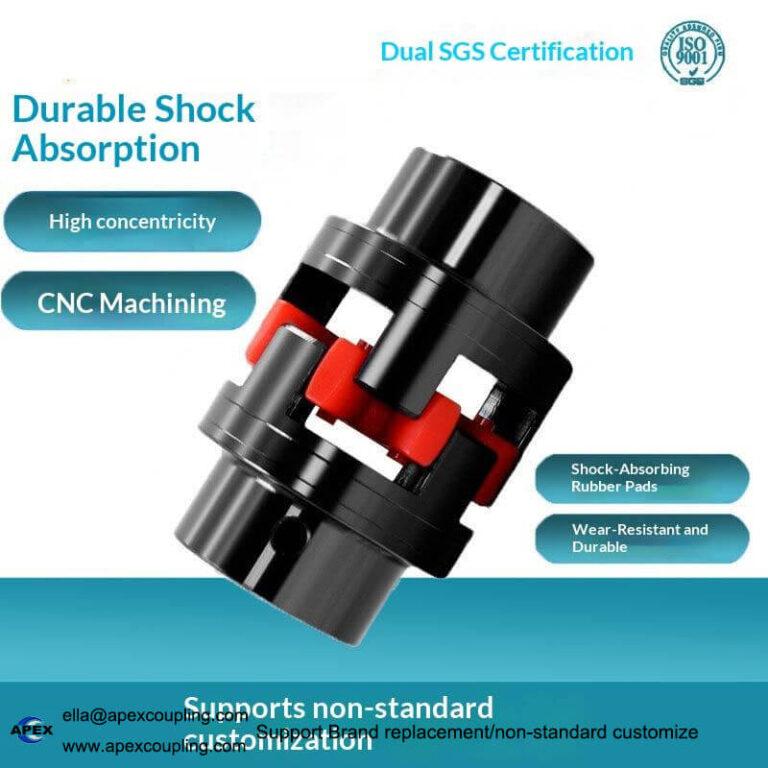
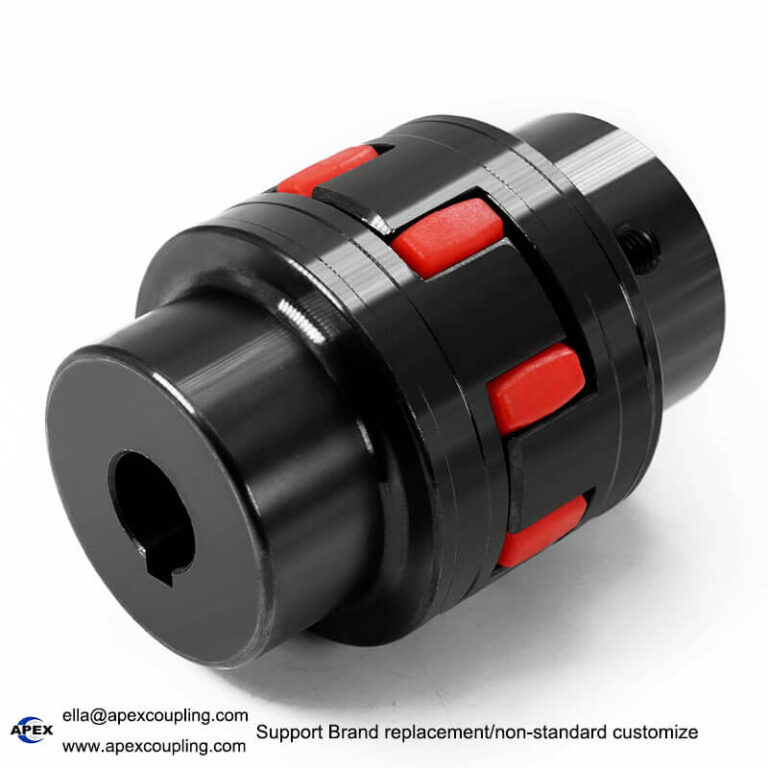
ROTEX-Compatible Coupling Replacement: A Buyer’s Guide
Choosing a replacement jaw coupling requires more than matching the model label. The replacement must fit the connected shafts, accommodate the installation space and meet the machine’s operating requirements.
This guide explains the main checks to make before ordering a ROTEX-compatible flexible jaw coupling.
1. Identify the Coupling Size
Start by checking the existing model marking. If it is unavailable, measure the outer diameter, overall length, hub dimensions and available installation space.
Use a dimensioned drawing whenever possible. A size designation alone does not confirm that every manufacturer’s product has identical dimensions.
2. Measure the Shaft Bores
Measure the driving and driven shaft diameters separately. They may require different bore sizes.
Also check the shaft connection. Depending on the design, the hubs may use a keyway, clamping screw or another fastening arrangement. Confirm the required connection before ordering.
3. Verify Torque and Speed
Provide continuous torque, peak torque, operating speed and duty cycle. Starting, stopping and reversing can create loads different from steady operation.
Do not assume that a rating for one coupling size applies to another. Ask the supplier to confirm the torque and speed ratings for the exact model and spider.
4. Check the Elastomeric Spider
The spider connects the two hubs and influences the coupling’s flexibility, damping and torsional behavior.
Confirm the spider’s dimensions, material and hardness. A replacement with a similar appearance may not be compatible with the existing hubs.
5. Review Temperature and Environment
Consider ambient temperature, heat from nearby machinery, oil, moisture, cleaning chemicals and other environmental conditions.
The supplied Apex Coupling description lists a temperature range of -35°C to +80°C for the stated elastomer specification. Confirm that the exact material and configuration are suitable before use.
6. Confirm Alignment and Installation
Check the manufacturer’s permitted angular, parallel and axial misalignment limits. Review the assembly instructions and available space for installation.
Excessive misalignment, overload or incorrect assembly can increase wear and reduce service life.
Replacement Checklist
Before requesting a quotation, prepare:
Existing coupling model or photographs
Outer diameter and overall length
Driving and driven shaft diameters
Keyway or fastening details
Continuous and peak torque
Operating speed and duty cycle
Operating temperature and environment
Required quantity and customization details
Apex Coupling Replacement Options
Apex Coupling supplies ROTEX-compatible flexible jaw coupling options, including a listed DJ-A type range. Customization requests can be reviewed against the application details and technical drawing.
For a quotation, provide your existing coupling dimensions and operating requirements.
Email: ella@apexcoupling.com
WhatsApp: +86 13437856962
Frequently Asked Questions
Can I select a replacement using only the coupling size?
The size is a useful starting point, but shaft bores, dimensions, torque, speed and spider compatibility must also be checked.
Can the shaft bores be customized?
Customization may be available depending on the model and manufacturing requirements. Provide both shaft diameters and the connection details.
Should I replace the spider at the same time as the hubs?
Inspect the hubs and spider. Replace worn or damaged parts, and confirm compatibility if reusing existing components.
What is the most useful information for a supplier?
A dimensioned drawing, shaft sizes, operating loads and speed provide a strong starting point for checking compatibility.
Inquiry now:
ella@apexcoupling.com
steel vs cast iron jaw coupling, rotex spider hardness guide, flexible coupling for motor, elastic coupling maintenance.