How a Universal Joint Works: Motion and Torque Explained
How a Universal Joint Works: Motion and Torque Explained
A universal joint is a mechanical component that transmits rotation between two shafts whose centerlines operate at an angle. It is useful in machinery where the driving and driven shafts cannot be placed along the same straight line.
Understanding how the joint works helps engineers evaluate operating angle, speed, torque and installation requirements before choosing a suitable design.
What Is a Universal Joint?
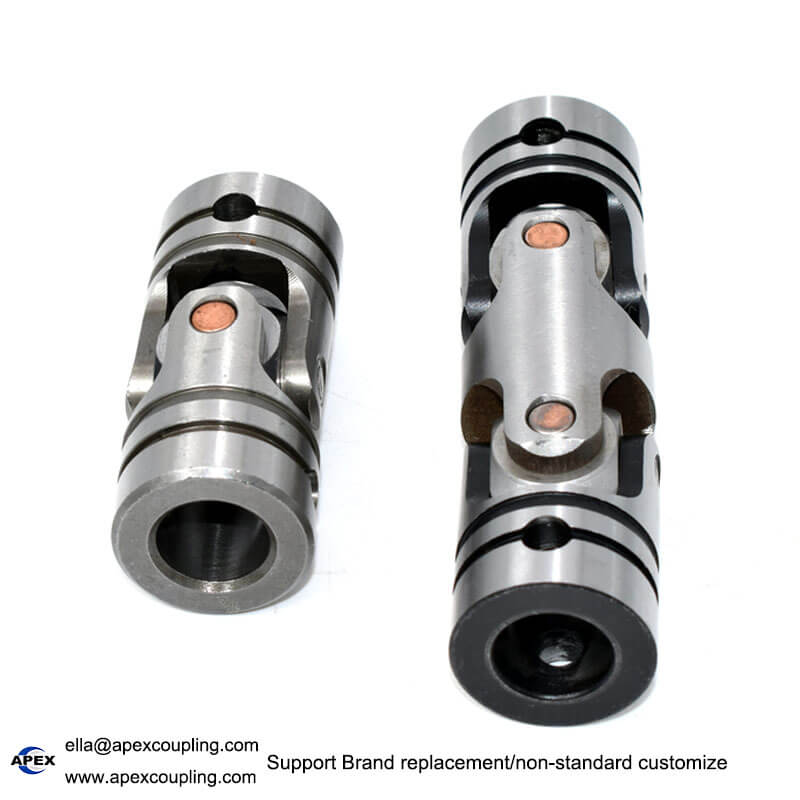
A universal joint, sometimes called a Cardan joint in a common design, connects two rotating shafts through an articulated mechanical structure.
Unlike a rigid connection that requires a suitable straight shaft arrangement, a universal joint allows a defined angle between the connected shafts. This makes it useful in many mechanical transmission layouts.
Different designs use different joint structures and bearing arrangements. Their load capacity, speed rating, allowable angle and maintenance requirements are not necessarily the same.
How Does It Transfer Torque?
The driving shaft applies rotational force to the input side of the joint. The joint’s articulated components transmit that movement to the output side, allowing the connected shafts to rotate while operating at an angle.
The joint does not remove every effect of angular misalignment. Its behavior depends on the design and the angle between the shafts.
A single Cardan-type joint operating at a non-zero angle generally creates instantaneous output-speed variation, even when the input shaft rotates at a constant speed. This is an important consideration in applications that require smooth or accurately controlled motion.
Why Does the Working Angle Matter?
The working angle affects the joint’s motion characteristics and operating loads. A larger angle may change the speed variation, contact forces and wear behavior.
The maximum articulation angle is not automatically the best continuous working angle. The permitted angle depends on the joint design and the operating speed, torque and duty cycle.
For this reason, engineers should distinguish between the maximum possible angle and the manufacturer’s recommended operating range.
Single and Double Joint Arrangements
A single joint uses one articulation point between the connected shafts. A double arrangement uses two joints connected through an intermediate member.
When correctly designed and phased, a double Cardan arrangement can reduce the output-speed variation associated with a single joint. The result depends on joint angles and geometry, so the benefit should not be assumed for every configuration.
The correct arrangement depends on the machine’s motion requirements, available space, torque, speed and installation conditions.
What Affects Service Life?
Several factors influence the service life of a universal joint:
Operating torque and shock loads
Rotational speed and working angle
Correct shaft alignment and installation
Joint construction and material
Lubrication and maintenance, where applicable
Dust, moisture and other environmental conditions
Operating outside the manufacturer’s limits or using an unsuitable joint can lead to excessive wear, vibration or premature failure.
How to Choose a Joint for Your Equipment
Begin by measuring the shaft diameters and determining the required working angle. Then establish the operating torque, rotational speed and duty cycle.
Check the mounting interface, overall dimensions, material and surface finish. For applications with demanding motion requirements, review the joint arrangement and output-speed behavior as part of the complete transmission design.
Always confirm the model-specific technical drawing and operating limits before installation.
CScA/CScW Designs from Apex Coupling
Apex Coupling’s CScA/CScW series is specified with a fixed-pin joint structure and alloy steel construction. The supplied product information lists a recommended working angle of up to 30° and a maximum articulation angle of 45° per joint.
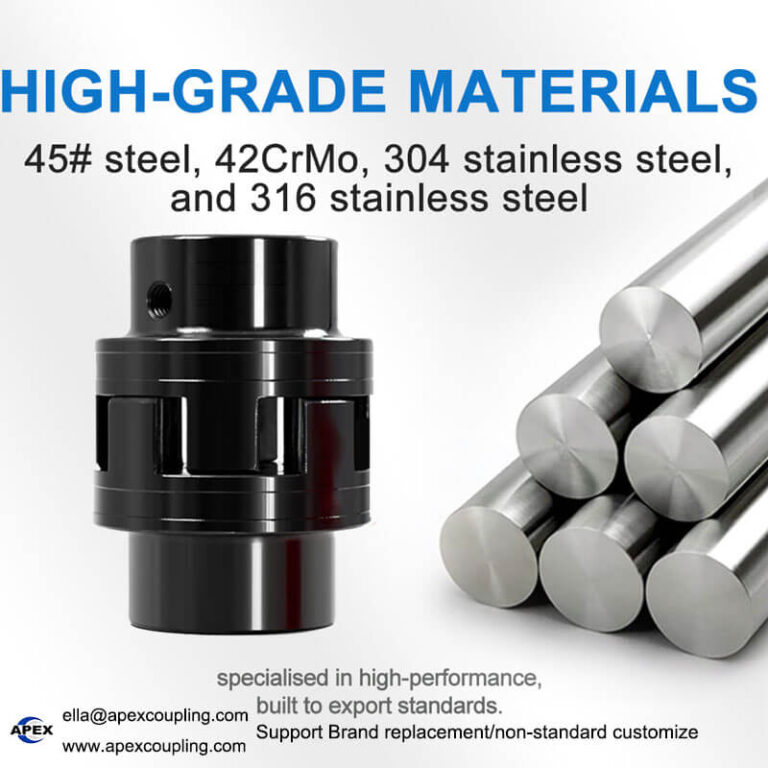
The standard surface finish is blackened, with selected optional finishes and a 304 stainless steel material option subject to confirmation.
If you are evaluating this series for a machine, provide the shaft dimensions, operating angle, torque and speed so the appropriate model can be reviewed.
Email: ella@apexcoupling.com
WhatsApp: +86 13437856962
Frequently Asked Questions
Does a universal joint allow angular movement?
Yes. It allows connected shafts to operate at a defined angle within the design’s specified limits.
Does a universal joint eliminate misalignment?
It accommodates a specified angular relationship. It should not be assumed to compensate for every type of parallel, axial or other misalignment.
Why can output speed vary?
A single Cardan-type joint operating at an angle generally produces instantaneous output-speed variation. The amount depends on the operating angle and joint geometry.
How can I reduce premature wear?
Select a suitable model, stay within the rated operating limits, install it correctly and follow the manufacturer’s maintenance requirements.