Sliding Block vs. Needle Roller Universal Joint
Sliding Block vs. Needle Roller Universal Joint: How to Choose
Choosing the right universal joint bearing structure is important for reliable industrial power transmission. Sliding-block and needle roller universal joints use different contact mechanisms, which can affect their operating characteristics, speed capability, maintenance requirements and suitability for specific machinery.
For engineers and purchasing teams, the best option depends on the complete operating conditions rather than bearing type alone. Torque, rotational speed, working angle, lubrication, duty cycle and the manufacturer’s specifications should all be considered.
What Is a Sliding-Block Universal Joint?
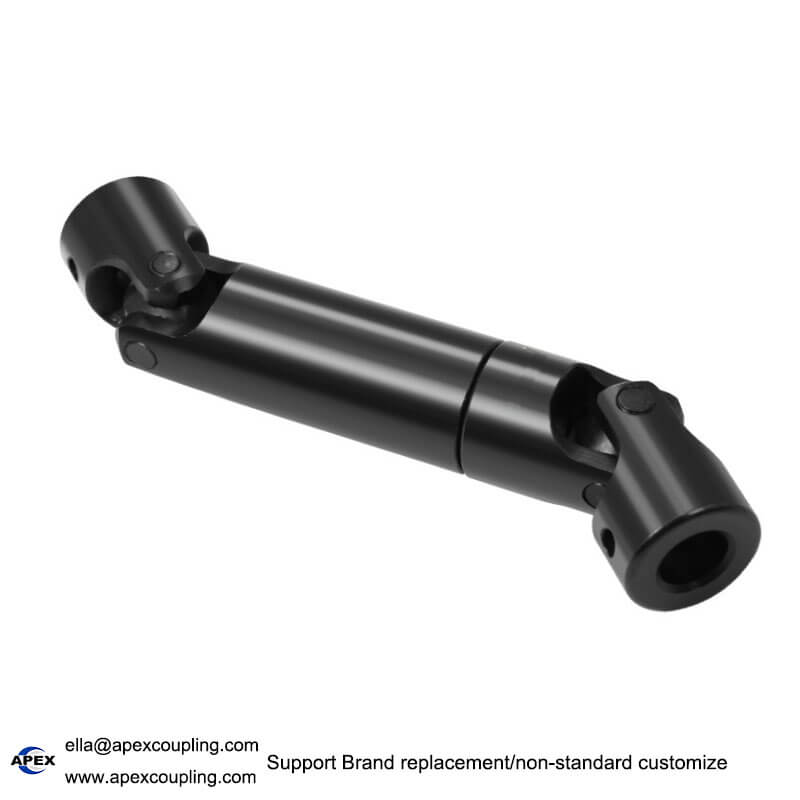
A sliding-block universal joint uses a sliding contact mechanism to accommodate articulation and transmit torque between angled shafts.
This type of structure may be suitable for applications where its rated speed, load capacity and maintenance requirements meet the equipment’s needs.
The WSS telescopic universal shaft information supplied by Apex Coupling lists a maximum speed of up to 1,000 RPM for the sliding-block configuration. This figure applies to the specified product configuration and should not be assumed to cover every sliding-block universal joint.
What Is a Needle Roller Universal Joint?
A needle roller universal joint uses needle-shaped rolling elements within its bearing assemblies. The rolling elements support relative movement between joint components.
Depending on the design, needle roller bearings can be suitable for higher-speed applications. However, their performance still depends on the bearing dimensions, load, lubrication, working angle and overall joint construction.
For selected WSS needle roller configurations, the supplied product information lists a maximum speed of up to 4,000 RPM. Buyers should verify the rating for the exact model before using this figure in equipment design.
Sliding Block vs. Needle Roller Universal Joint: Key Differences
| Comparison Factor | Sliding-Block Type | Needle Roller Type |
|---|---|---|
| Contact mechanism | Sliding contact | Rolling elements |
| Speed capability | Depends on design; WSS reference up to 1,000 RPM | Depends on design; selected WSS models up to 4,000 RPM |
| Torque capacity | Must be verified for the selected model | Must be verified for the selected model |
| Lubrication | Depends on joint design and supplier instructions | Depends on bearing and joint design |
| Maintenance | Follow specified inspection and lubrication requirements | Follow specified bearing and lubrication requirements |
| Best selection criteria | Actual load, speed, angle and service conditions | Actual load, speed, angle and service conditions |
These differences are general selection considerations, not a guarantee that one bearing structure will outperform the other in every application.
Which Universal Joint Is Better for High-Speed Applications?
If operating speed is a major requirement, a needle roller universal joint may be a suitable candidate because selected designs support higher speeds.
However, a higher published maximum speed does not automatically mean that the joint is appropriate for a particular machine.
Before selection, confirm:
Required continuous operating speed
Starting and transient speed
Operating torque and peak load
Joint angle at the specified speed
Lubrication and temperature requirements
Balance, vibration and installation conditions
Manufacturer’s recommended service limits
For the WSS series, the listed maximum speed is up to 1,000 RPM for the sliding-block configuration and up to 4,000 RPM for selected needle roller configurations. The actual allowable speed should be confirmed against the model-specific technical documentation.
How Torque and Working Angle Affect Selection
Bearing structure is only one part of universal joint selection.
A joint operating at a larger angle may experience different loading and motion characteristics than one operating at a small angle. Similarly, shock loads and frequent reversing can affect the stresses experienced by the joint components.
When evaluating a universal joint, determine the required torque, operating angle and speed together. Do not select a joint based solely on its advertised maximum RPM.
For telescopic universal shafts, also verify the installed length and required axial travel. The shaft must remain within its specified operating range throughout the machine’s movement.
Material and Maintenance Considerations
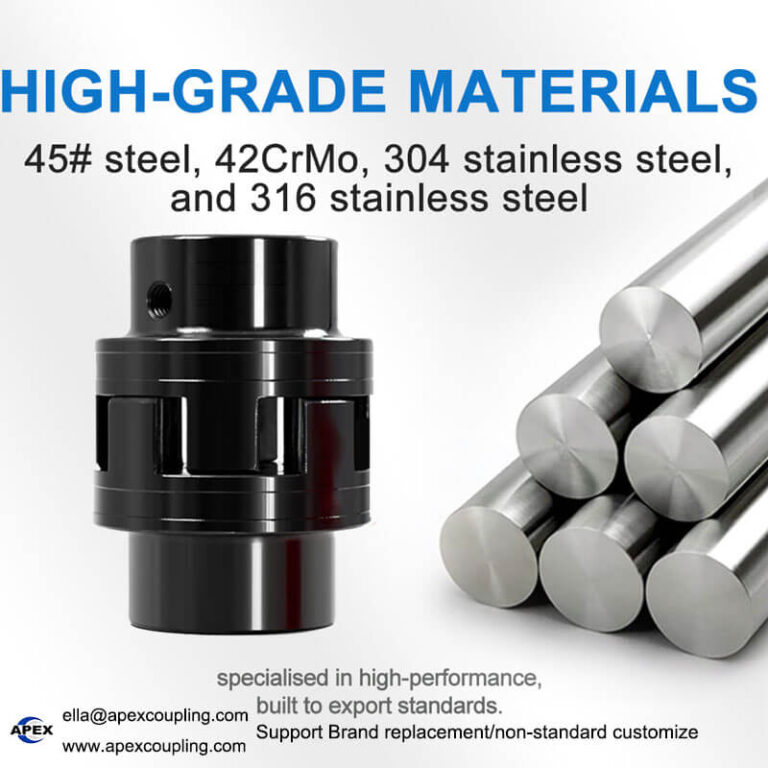
Material selection should match the application’s mechanical loads and environment. The WSS series is listed with 40Cr steel as the standard material, with selected alternative configurations potentially available in 304 or 316 stainless steel or 42CrMo alloy steel.
The material, heat treatment and surface finish should be confirmed for the exact model.
Maintenance requirements depend on the joint and bearing design. Follow the manufacturer’s instructions for lubrication, inspection, alignment and replacement intervals. Keep the joint protected from excessive contamination where required, and investigate unusual noise, vibration, temperature or looseness promptly.
How to Choose Between the Two Types
Use the following process when selecting a universal joint for industrial machinery.
Step 1: Define the operating conditions. Record continuous and peak speed, torque, working angle and duty cycle.
Step 2: Check the required dimensions. Confirm bore sizes, shaft length, telescopic travel and mounting interfaces.
Step 3: Compare model-specific ratings. Review the manufacturer’s maximum and recommended speeds, torque limits and allowable joint angle.
Step 4: Evaluate maintenance needs. Confirm lubrication, inspection and environmental protection requirements.
Step 5: Request technical confirmation. If the application operates near the stated limits or involves frequent reversing, shock loads or elevated temperatures, provide the complete operating conditions to the manufacturer.
WSS Telescopic Universal Shaft from Apex Coupling
Apex Coupling offers the WSS telescopic universal shaft with sliding-block and needle roller bearing configurations for different industrial transmission requirements.
Depending on the selected model, the shaft can be configured with different lengths and mounting interfaces. Material and surface treatment options should be confirmed according to the required design.
To identify a suitable configuration, provide the required torque, operating speed, working angle, shaft length, telescopic travel and bore dimensions.
Need help choosing between sliding-block and needle roller universal joints?
Contact Apex Coupling to discuss your application and request a quotation.
Email: ella@apexcoupling.com
WhatsApp: +86 13437856962
Frequently Asked Questions
What is the main difference between sliding-block and needle roller universal joints?
The primary difference is their contact mechanism. Sliding-block designs use sliding contact, while needle roller designs use rolling elements. Their performance depends on the complete joint design and operating conditions.
Which type supports higher rotational speed?
Selected needle roller universal joint designs can support higher rotational speeds than some sliding-block designs. Always compare the rated speed of the exact models being considered.
Can a needle roller universal joint handle more torque?
Not necessarily. Torque capacity depends on joint dimensions, materials, bearing design and other factors. Compare model-specific torque ratings instead of assuming one type always carries more torque.
How should I maintain a universal joint?
Follow the manufacturer’s lubrication and inspection instructions. Check for abnormal noise, vibration, excessive play, wear and other signs of deterioration.
How do I select a universal joint for my machine?
Provide the operating torque, rotational speed, working angle, shaft dimensions, required axial movement and operating environment. Use these details to confirm a suitable model with the manufacturer.
Inquiry now:
ella@apexcoupling.com
steel vs cast iron jaw coupling, rotex spider hardness guide, flexible coupling for motor, elastic coupling maintenance.