Telescopic Universal Shaft — Design, Benefits and Selection Guide
Telescopic Universal Shaft: Design, Benefits and Selection Guide
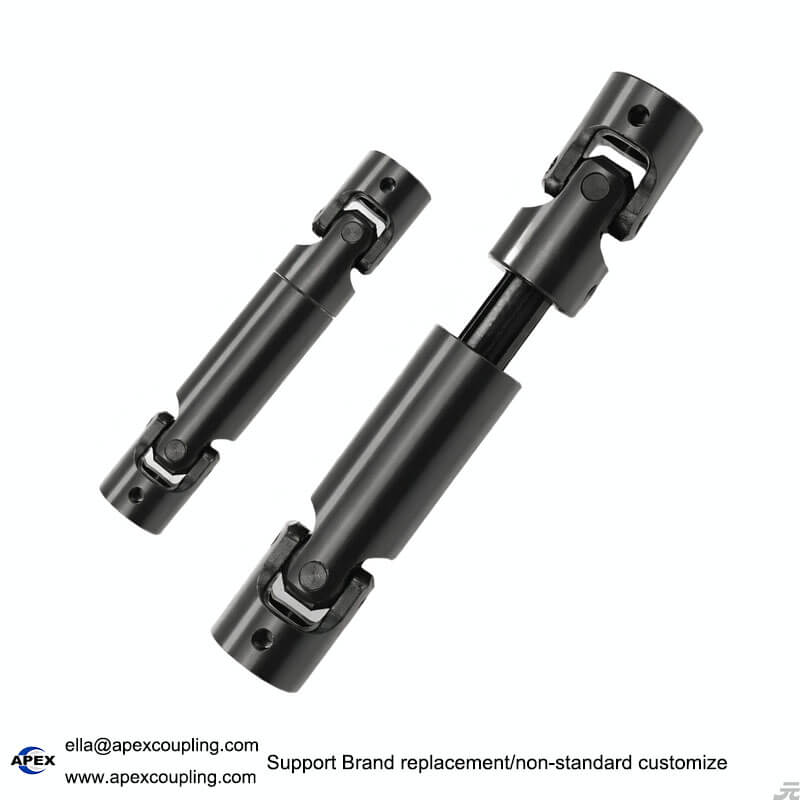
A telescopic universal shaft is a mechanical power transmission component designed to transfer torque between shafts operating at an angle while accommodating changes in shaft length. It combines universal joints with a sliding or telescopic section, making it useful for industrial machinery where alignment, installation space or operating movement requires additional flexibility.
Choosing the right telescopic universal shaft involves more than checking its overall length. Engineers and purchasing teams should also consider operating torque, rotational speed, joint angle, telescopic travel, bearing design, material and mounting dimensions.
What Is a Telescopic Universal Shaft?
A telescopic universal shaft consists of universal joint components and a length-adjustable shaft section. The universal joints allow angular movement between connected shafts, while the telescopic section accommodates axial length changes within its designed travel range.
This combination helps connect rotating components when their centerlines are not perfectly aligned or when the distance between the drive and driven components needs to change.
Depending on the design, a telescopic universal shaft may use sliding-block joints or needle roller bearing joints. The suitable configuration depends on the equipment’s torque, speed, working angle and service requirements.
How Does a Telescopic Universal Shaft Work?
The universal joint transmits rotational movement between angled shafts. As the driving shaft rotates, the joint transfers torque to the connected shaft through its joint components.
At the same time, the telescopic section allows the effective shaft length to change within the specified travel range. This helps accommodate axial movement or installation-related length adjustments without requiring the entire transmission assembly to remain at a fixed length.
The allowable joint angle, axial travel and operating speed depend on the shaft design. These limits should always be checked against the manufacturer’s technical drawing and performance data.
Key Benefits of a Telescopic Universal Shaft
1. Accommodates Changes in Shaft Length
The telescopic section provides axial adjustment within its designed range. This can simplify installation and support machinery layouts where the distance between connected components varies.
2. Transmits Torque Between Angled Shafts
Universal joints allow power transmission between shafts operating at an angle. This is particularly useful in equipment where a straight, rigid shaft connection is impractical.
3. Offers Flexible Configuration Options
Different bearing structures, bore configurations, shaft lengths and mounting interfaces can be selected to suit different mechanical systems.
4. Supports Specialized Industrial Applications
Depending on its configuration, a telescopic universal shaft can be used in packaging equipment, woodworking machinery, multi-spindle drilling machines, metallurgical equipment and other industrial transmission systems.
5. Can Be Customized for Equipment Requirements
Custom shaft lengths, bore sizes, keyways, materials and surface treatments may be available from manufacturers that support non-standard designs.
Sliding-Block vs. Needle Roller Bearing Designs
The bearing structure affects the shaft’s operating characteristics and suitability for different applications.
A sliding-block universal joint uses a sliding contact structure. It may be appropriate for applications whose speed, torque and maintenance requirements fall within the manufacturer’s specifications.
A needle roller bearing universal joint uses rolling elements and may be suitable for higher-speed applications when correctly designed and lubricated.
For the WSS series described by Apex Coupling, the supplied product information lists maximum speeds of up to 1,000 RPM for the sliding-block configuration and up to 4,000 RPM for selected needle roller configurations. These are configuration-specific figures, not universal ratings for all telescopic shafts.
How to Select the Right Telescopic Universal Shaft
Before purchasing, review the following parameters.
Shaft Length and Telescopic Travel
Determine the installed length and the amount of axial movement required. Confirm both the minimum and maximum operating lengths and ensure that sufficient telescopic engagement remains throughout the movement range.
Operating Torque
Calculate the torque required under normal operating conditions. Also consider starting loads, acceleration, shock loads and frequent forward-reverse operation.
The selected shaft must have an appropriate torque rating for the actual duty cycle, not just the average running load.
Working Angle
Determine the angle between the connected shaft centerlines. The allowable angle can depend on rotational speed, torque and joint construction.
Do not assume that a stated maximum articulation angle is suitable for continuous operation. Follow the recommended operating limits for the selected model.
Rotational Speed
Choose the bearing configuration based on the required operating speed and confirm the manufacturer’s rated limit. Higher speed may also increase sensitivity to balance, lubrication, vibration and joint angle.
Material and Surface Treatment
Material selection should account for mechanical loading, temperature, corrosion exposure and the operating environment.
The WSS series is listed with 40Cr steel as a standard material. Alternative materials, including stainless steel or selected 42CrMo configurations, should be confirmed for the specific design. Surface treatments may also be available according to the application.
Bore and Mounting Configuration
Confirm shaft diameters, bore tolerances, keyways, hexagonal bores and other connection details before ordering. A technical drawing can help prevent installation and fitment problems.
Common Applications
Telescopic universal shafts may be used in:
Packaging machinery
Woodworking machinery
Multi-spindle drilling machines
Metallurgical equipment
General industrial machinery
Specialized mechanical transmission systems
The final selection should match the equipment’s load, speed, joint angle, axial travel and environmental requirements.
Why Consider the WSS Telescopic Universal Shaft?
The WSS telescopic universal shaft from Apex Coupling is designed for industrial transmission applications requiring angular articulation and adjustable shaft length.
The series offers sliding-block and needle roller bearing configurations, standard 40Cr steel construction and customization options for selected shaft lengths and mounting interfaces. Alternative materials and surface treatments may be available depending on the required specification.
For accurate selection, provide the shaft dimensions, required telescopic travel, operating torque, speed and working angle.
Looking for a telescopic universal shaft for your machinery?
Contact Apex Coupling to discuss your application and request a quotation.
Email: ella@apexcoupling.com
WhatsApp: +86 13437856962
Frequently Asked Questions
What is the main purpose of a telescopic universal shaft?
It transmits torque between angled shafts while allowing the effective shaft length to change within a specified range.
How do I choose the correct shaft length?
Confirm the installed length, minimum and maximum operating lengths, and required telescopic travel. The manufacturer’s drawing should specify the permitted range.
Which is better: sliding-block or needle roller bearings?
Neither is universally better. The choice depends on operating speed, torque, working angle, lubrication, maintenance requirements and the specifications of the selected model.
Can a telescopic universal shaft be customized?
Depending on the manufacturer’s capabilities, shaft length, bore configuration, mounting interface, material and surface treatment may be customized.
What information should I provide when requesting a quotation?
Provide the required quantity, shaft dimensions, telescopic travel, torque, operating speed, working angle, material requirements and a technical drawing if available.