Oldham Coupling Selection Guide – Cross Slider Couplings for Precision Motion Control
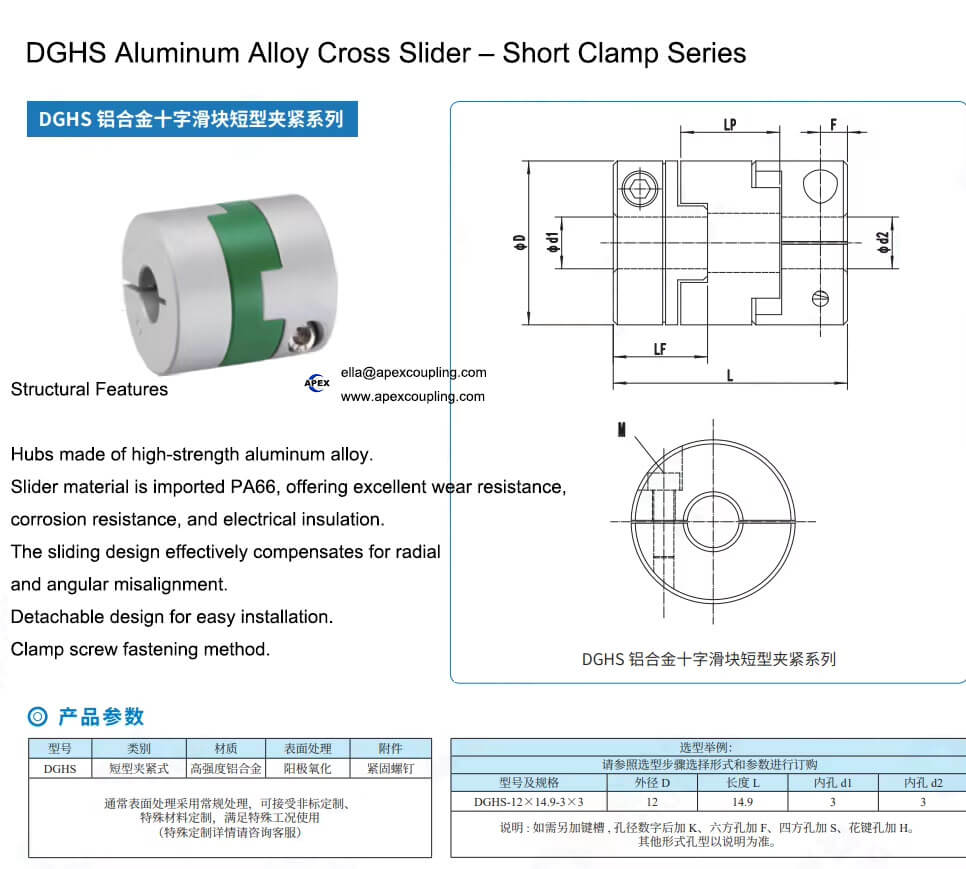
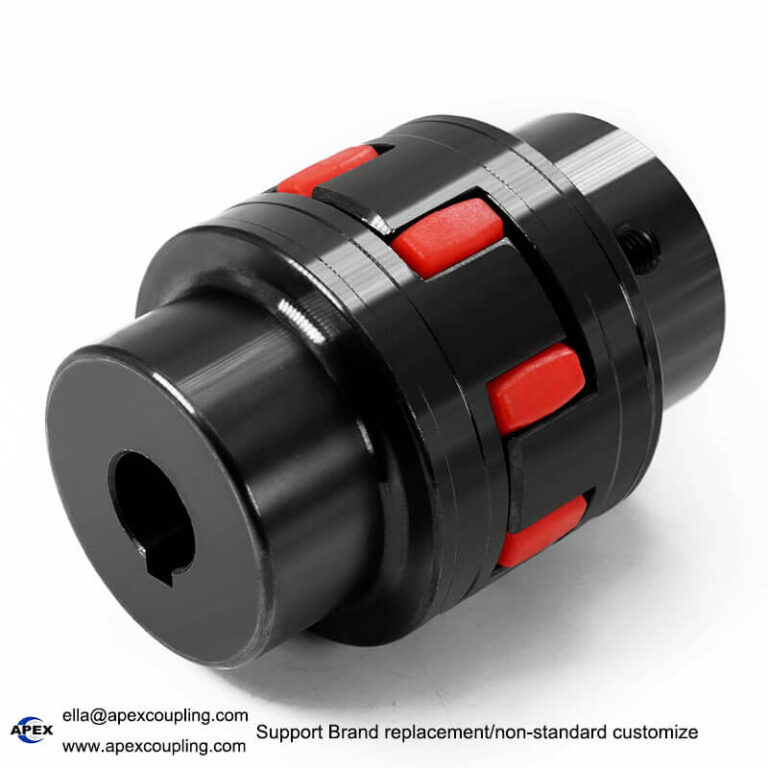
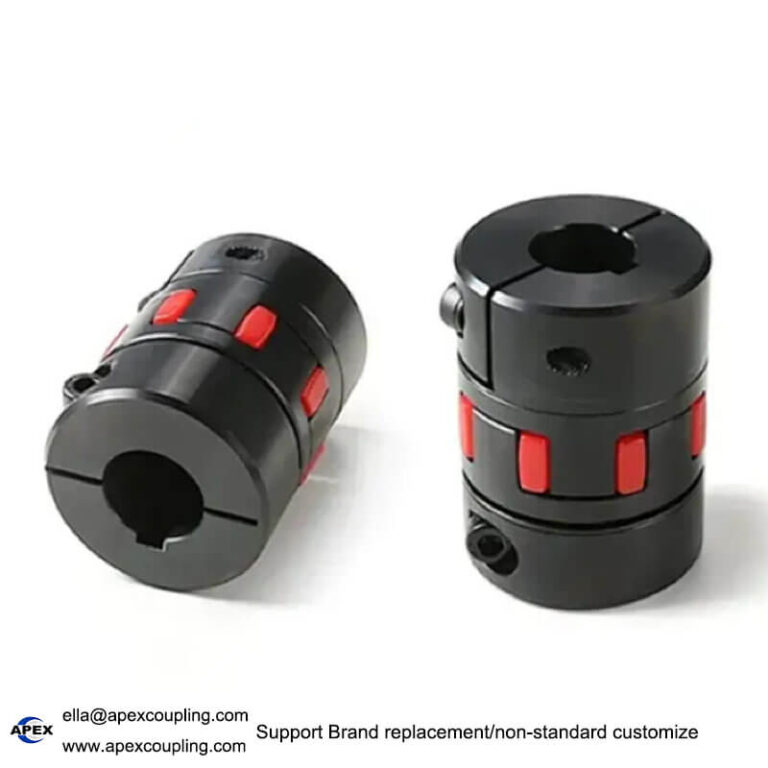
Oldham couplings (also known as cross slider couplings or sliding disc couplings) are essential for precision power transmission in applications requiring large radial misalignment compensation, low inertia, and zero backlash. With a simple three-component design – two aluminum hubs and a center slider – they offer an excellent balance of performance, reliability, and ease of maintenance.
This guide explains how Oldham couplings work, their key advantages, and how to select the right model for your application.
1. What Is an Oldham Coupling?
An Oldham coupling consists of:
Two hubs – typically aluminum alloy, with axial grooves on their inner faces
A center slider – engineering plastic (PA66) with matching slots at 90° on each side
As the coupling rotates, the center slider slides within the grooves of the hubs, accommodating radial (eccentricity) and angular misalignment while transmitting torque.
2. Key Advantages of Oldham Couplings
| Advantage | Benefit |
|---|---|
| Large radial misalignment compensation | Accommodates significant lateral shaft offset |
| Low moment of inertia | Ideal for high-speed, rapid acceleration applications |
| Zero backlash | Precision slider fit ensures accurate positioning |
| Electrical insulation | PA66 slider provides electrical isolation |
| Simple maintenance | Detachable design allows easy slider replacement |
| Maintenance-free | No lubrication required |
3. When to Choose an Oldham Coupling
Choose an Oldham coupling if your application requires:
Large radial misalignment – Shafts with significant lateral offset
Low inertia – High-speed, rapid acceleration/deceleration
Zero backlash – Precision positioning, servo systems
Electrical isolation – Between driving and driven shafts
Simple maintenance – Easy slider replacement without moving hubs
Typical applications: Servo motors, stepper motors, encoders, resolvers, tachometers, positioning slides, dosing pumps, actuators, and potentiometer drives.
4. Material Selection – Aluminum Hubs + PA66 Slider
| Component | Material | Properties |
|---|---|---|
| Hubs | Aluminum alloy | Lightweight, low inertia, corrosion-resistant, clear anodized |
| Slider | PA66 (polyacetal) | Wear-resistant, corrosion-resistant, electrically insulating, self-lubricating |
✅ The combination of aluminum hubs and PA66 slider provides the perfect balance of strength, low inertia, and long service life.
5. Short Clamping Design – Low Inertia Advantage
The DGHS series features a short clamping design that provides:
Low moment of inertia – Enables rapid acceleration and deceleration
Compact length – Saves space in tight installations
Clamping screw fastening – Secure shaft connection, easy installation
6. Misalignment Compensation – Protecting Your Equipment
The DGHS series compensates for two types of misalignment:
| Misalignment Type | Description |
|---|---|
| Radial (Eccentricity) | Shafts are offset laterally – up to 2mm (varies by model) |
| Angular | Shafts are at an angle to each other – up to 2° (varies by model) |
By absorbing these deviations, the coupling reduces stress on bearings and seals – extending equipment life.
7. Zero Backlash – Why It Matters
Zero backlash is critical for:
Servo motors – Precise positioning and speed control
Stepper motors – No lost steps
Encoders – Accurate position feedback
Precision positioning systems – Repeatable motion
8. Applications Where Oldham Couplings Excel
| Industry | Application | Why Oldham? |
|---|---|---|
| Servo Motors | Precision positioning | Zero backlash, low inertia |
| Stepper Motors | Motion control | No lost steps, low inertia |
| Encoders | Position feedback | Zero backlash, electrical insulation |
| Positioning Slides | Linear motion | Large radial misalignment |
| Pumps | Dosing, metering | Smooth operation, maintenance-free |
| Actuators | Precision actuation | Low inertia, zero backlash |
9. Real‑World Example – Servo Motor Upgrade
A machine builder was experiencing positioning errors on a servo-driven indexing table due to backlash in their existing coupling. The coupling also had high inertia, limiting acceleration.
They switched to Apex Coupling DGHS cross slider coupling (aluminum hubs, PA66 slider, short clamping, zero backlash). Results:
Positioning accuracy improved – backlash eliminated
Acceleration increased – low inertia enabled faster response
Maintenance eliminated – no lubrication required
Electrical isolation – PA66 slider prevented ground loops
10. Installation & Maintenance Tips
Clean shaft and bore – Remove oil, grease, and debris
Check alignment – Even with misalignment compensation, keep within recommended limits
Tighten clamping screws evenly – Use a torque wrench in a star pattern
No lubrication required – PA66 slider is self-lubricating
Inspect slider periodically – Replace if worn or damaged
Detachable design – Replace slider without moving hubs
11. Selection Checklist
Material: Aluminum alloy hubs + PA66 slider – standard
Design: Short clamping – low inertia
Backlash: Zero backlash – precision applications
Misalignment: Radial and angular compensation
Bore size: 3–16 mm – match your shaft diameters
Torque: 500 N·m – select based on your requirement
Speed: 1000 RPM – match your motor speed
Application: Servo, stepper, encoder, pump, positioning
12. Conclusion
The DGHS aluminum alloy cross slider coupling from Apex Coupling offers the perfect combination of large radial misalignment compensation, low inertia, zero backlash, and maintenance-free operation for precision motion control applications. With aluminum alloy hubs, imported PA66 slider, short clamping design, and OEM customization, it is the ideal solution for servo motors, stepper motors, encoders, pumps, and positioning systems.
👉 Need a cross slider coupling for your precision application? Contact us with your bore size, torque, and speed requirements.
Inquiry now:
ella@apexcoupling.com
Oldham coupling selection guide
cross slider coupling guide
low inertia coupling selection
zero backlash coupling
aluminum Oldham coupling
servo motor coupling guide