Troubleshooting Abnormal Noise in Single Diaphragm Coupling Systems
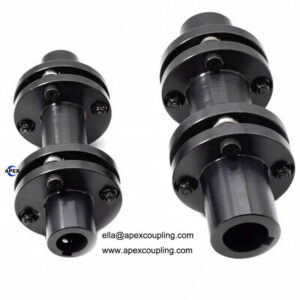
In high-precision machinery, the single diaphragm coupling is celebrated for its ability to compensate for relative displacement through the elastic deformation of metal disks. As a high-performance metallic flexible element, the single diaphragm coupling (comprising several groups of stacked diaphragms connected by alternating bolts) is designed for silent, efficient operation. However, when a single diaphragm coupling begins to emit abnormal noises, it is often a warning sign of underlying mechanical stress.
At Apexcoupling (www.apexcoupling.com), we believe that understanding these factors is key to extending the life of your transmission components.
Primary Factors Leading to Abnormal Noise
The most common cause of noise in a single diaphragm coupling is an improper installation gap. If the interval between the two coupling hubs is too wide, the diaphragms are subjected to excessive axial tension. This force leads to accelerated wear of the reamed holes and the high-strength bolts, eventually resulting in the metallic “clicking” or “clunking” sounds that indicate a failing connection.
Furthermore, even the best single diaphragm coupling has limits regarding axial and angular misalignment. If the axial offset or the deviation angle is too large, the equipment will produce significant vibration and cyclical noise during rotation. This is often caused by settling foundations or thermal expansion of the connected machinery, which pushes the single diaphragm coupling beyond its designed compensation range.
Operational Variables and Motor Stability
Noise isn’t always a result of physical alignment; it can also be dynamic. If the speeds of the active (driving) end and the passive (driven) end are not synchronized properly, the resulting inertia can cause the single diaphragm coupling to vibrate. Additionally, motor faults—specifically those involving the speed control disk—can cause the RPM to fluctuate rapidly. When the motor speed becomes unstable, the single diaphragm coupling must constantly adapt to the changing torque, which often manifests as a high-pitched humming or rattling sound.
Maintaining a High-Performance System
As a premier “Source Factory” , Apexcoupling produces single diaphragm coupling units from premium materials to minimize noise and maximize torque density. We utilize precision-ground components and high-grade stainless steel disks to ensure that our single diaphragm coupling solutions provide zero-backlash performance.
To prevent noise, it is essential to perform regular checks on bolt tightness and alignment accuracy. If noise persists, the single diaphragm coupling should be inspected for cracks or worn holes using technical diagnostic tools.
By sourcing your single diaphragm coupling from a trusted manufacturer like Apexcoupling, you gain access to expert technical support to help you diagnose and resolve these issues. Visit www.apexcoupling.com to explore our technical library and ensure your transmission system operates at peak efficiency and silence.