Paragraph 1 – Hook
When you need to connect a stepper motor or a standard electric motor to a driven shaft that is slightly misaligned or subject to shock loads, a rigid coupling can quickly damage bearings or cause missed steps. The solution is a fixed pin universal joint with an elastomeric element – a flexible coupling that combines the angular compensation of a Cardan joint with the vibration damping of a rubber‑in‑shear design. In this article, we explain why this high precision alloy steel joint is gaining popularity in industries ranging from food & beverage factories to construction works, and how to select the right single or double configuration for your torque and speed requirements.
Paragraph 2 – What Is a Fixed Pin Universal Joint?
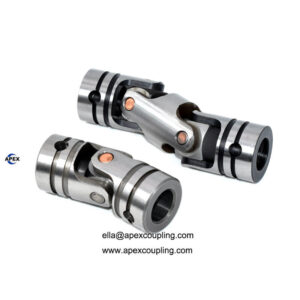
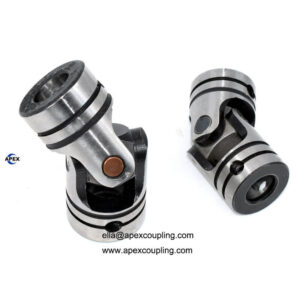
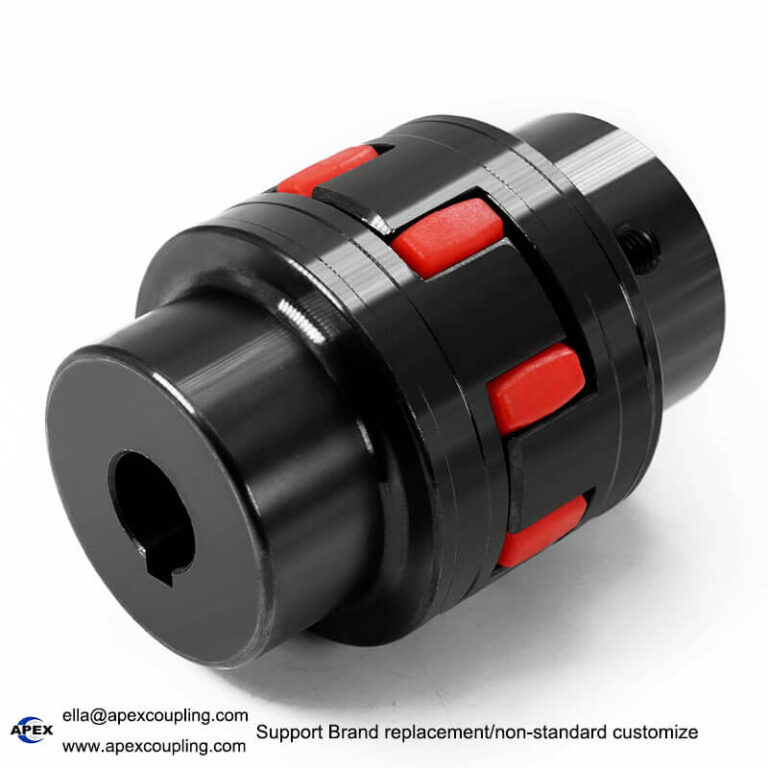
Unlike traditional universal joints that rely on a cross and bearing assembly, a fixed pin type universal joint uses hardened steel pins that lock directly into the yokes and the central elastomeric element. The elastomeric insert (typically polyurethane or Hytrel) is compression‑molded between the two metal hubs, providing a flexible connection that can accommodate angular misalignment up to 4‑5° per joint (more in double version). The pins prevent axial pull‑out and ensure that torque is transmitted even if the elastomer fails – a fail‑safe feature that is critical for safety‑related drives. The material of choice for high‑performance units is 42CrMo alloy steel, which offers excellent toughness and fatigue life under cyclic loading.
Paragraph 3 – Why Choose an Elastomeric Flexible Universal Joint Over a Rigid Coupling?
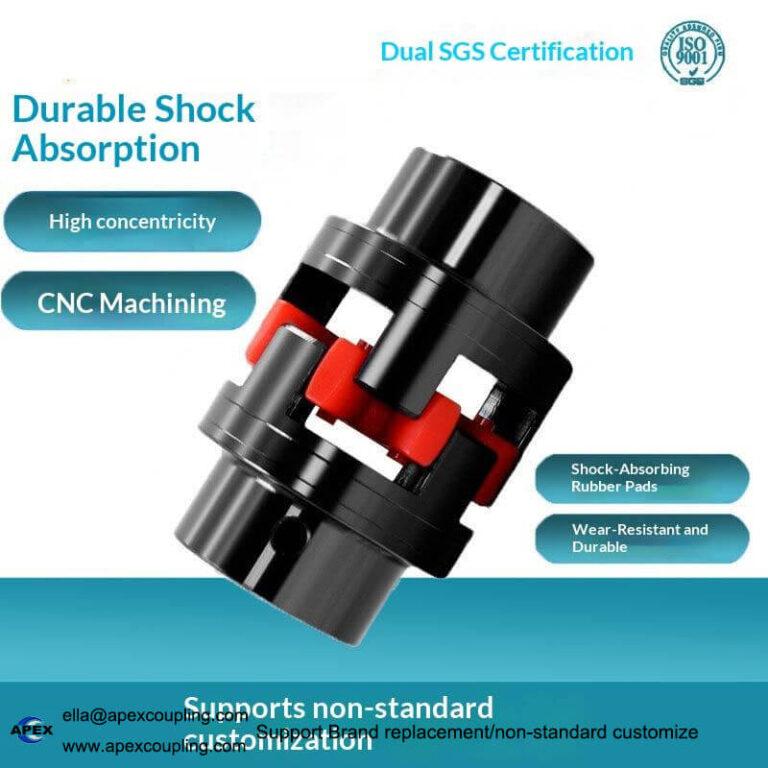
Rigid couplings (e.g., clamp‑type or flange couplings) require perfect shaft alignment and cannot absorb any shock load. If your motor drives a conveyor that starts and stops frequently, or a printing press with variable torque, a rigid coupling will transmit every torque spike directly into the motor bearings and gearbox. A flexible universal joint coupling, on the other hand, uses the elastomeric element to twist slightly under peak torque, storing and releasing energy smoothly. This reduces peak stress, extends the life of both the motor and the driven machine, and lowers audible noise. For stepper motors specifically, the elastomeric element also helps to reduce mid‑range resonance, a common cause of step loss.
Paragraph 4 – Single vs. Double Configuration: Which One Fits Your Motor?
The fixed pin universal joint is available in single and double configurations:
Single joint – Contains one elastomeric element and one set of yokes. Suitable for angular misalignments up to approx. 5°, compact and low‑cost. Ideal for direct motor-to‑shaft connections in factory automation and home use equipment.
Double joint – Uses two elastomeric elements and a center yoke. This design can accommodate larger parallel offsets and misalignment angles up to 10‑12°, while also providing constant velocity output (the input and output speeds remain equal, unlike a single Cardan joint). Choose double for applications such as printing shop conveyors or construction equipment where the motor and load move relative to each other.
Paragraph 5 – Torque, Speed & Material Specifications
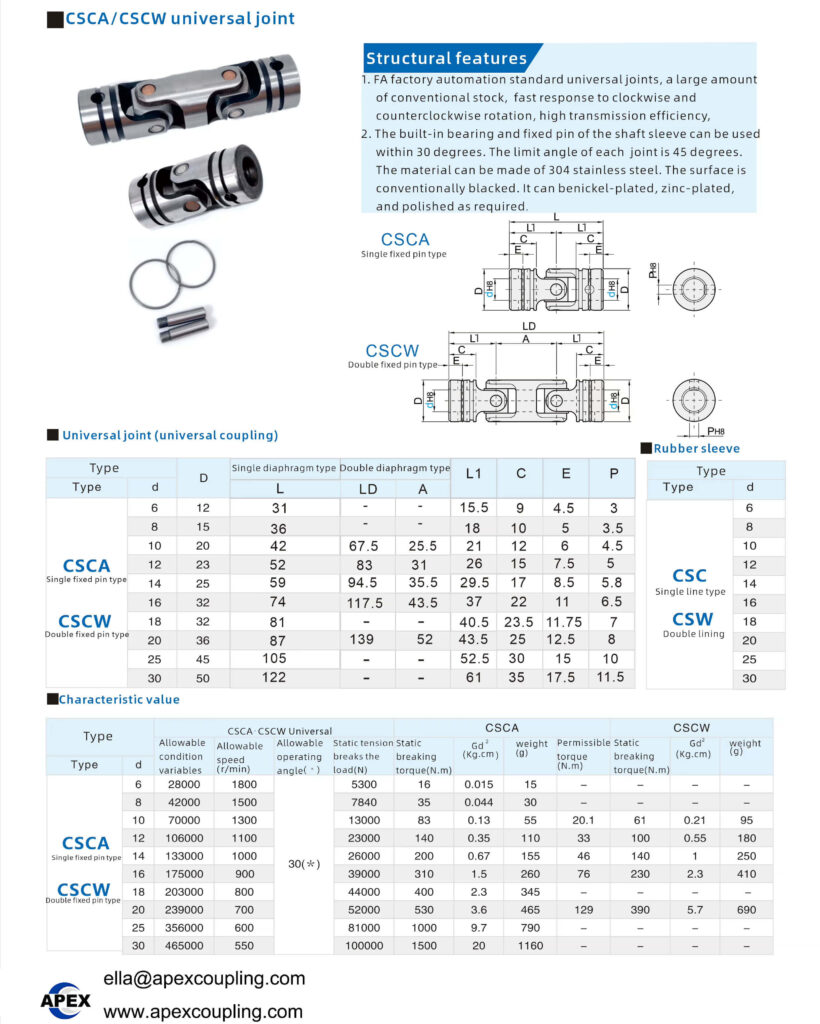
Based on our manufacturing data, the fixed pin elastomeric universal joint offers a rated torque range from 4.5 N·m up to 280 N·m, covering small stepper motors (e.g., NEMA 17/23) up to larger industrial AC motors. Maximum operating speed is 4000 rpm, but careful: speeds above 1000 rpm require custom dynamic balancing to avoid vibration. Always inform your OEM universal joint manufacturer of your exact rpm and any duty cycle variations. The alloy steel – 42CrMo – is heat‑treated to 28‑32 HRC for wear‑resistant pin surfaces, while the hubs are black oxide finished for mild corrosion protection. For wet or corrosive environments (food & beverage, outdoor mining), stainless steel or zinc‑plated finishes are available as an OEM option.
Paragraph 6 – Industries That Rely on Fixed Pin Flexible Universal Joints
Food & Beverage Factories – Conveyor drives, bottle fillers, cappers (elastomer is FDA‑compatible upon request).
Printing Shops – High‑speed paper feed rollers and plate cylinders.
Construction & Energy Mining – Crushers, vibrating screens, and portable power take‑offs.
Farm & Agriculture – Feed mixers, augers, hay balers.
Home Use & Retail – Treadmills, commercial kitchen mixers, ice makers.
Factory Automation – Pick‑and‑place units, labelling machines, palletizers.
Each industry benefits from the combination of pin‑positive torque transmission and elastomeric vibration damping.
Paragraph 7 – Customization & OEM Services
As a specialized OEM universal joint manufacturer, Apex Coupling offers extensive customization:
Bore diameter – From 6 mm up to 45 mm, metric or inch.
Overall length – short or extended to fit your assembly.
Elastomer hardness – Softer (80 Shore A) for maximum damping; harder (95A or 64D) for higher torque accuracy.
Pin material – Alloy steel standard, stainless steel for washdown environments.
Private labeling – Your brand laser‑engraved on the yokes.
With MOQ as low as 1 piece, you can prototype quickly. Sample lead time is typically 7‑10 days, and mass production orders ship within 20‑25 days after sample approval.
Paragraph 8 – Quality Certifications & Testing
All fixed pin universal joints from Apex Coupling are manufactured under ISO9001 and BV certified processes. We provide:
Material certificates (EN 10204 3.1) for 42CrMo.
Hardness test reports for pins and elastomer.
Dimensional inspection reports (CMM for critical features).
Dynamic balancing certificates for orders requiring speeds >1000 rpm.
Third‑party inspections (SGS, TÜV) can be arranged at buyer’s request. This level of transparency ensures that your flexible universal joint coupling will perform reliably from day one.
Paragraph 9 – How to Select the Right Fixed Pin Universal Joint: A Step‑by‑Step Checklist
Identify your motor type – Stepper motor or standard electric motor? Determine the peak torque (not just rated).
Measure misalignment – Angular offset (degrees) and parallel offset (mm). Single joint handles up to ~5°, double up to ~12°.
Check speed range – Under 1000 rpm: standard balancing; over 1000 rpm: request custom balancing.
Calculate torque – Allowable torque range of our joints is 4.5‑280 N·m. Always add a safety factor of 1.5‑2x.
Choose material & finish – 42CrMo with black oxide for normal environments; stainless steel or zinc plate for wet/corrosive.
Request a sample – Test the joint in your actual machine before committing to volume production.
Following this checklist will help you avoid common failures such as pin shearing, elastomer overheating, or premature bore wear.
Paragraph 10 – Conclusion & Call to Action
A fixed pin universal joint with an elastomeric flexible element offers the best of both worlds: the positive drive of a universal joint and the shock absorption of a rubber coupling. Whether you need a single or double configuration for a stepper motor, a printing press, or a farm auger, the 42CrMo alloy steel construction ensures long life and reliable torque transmission. At Apex Coupling, we combine ISO9001/BV quality with low MOQ and fast sample support – all from our factory in Guangdong, China.
Ready to get a quote or request a free engineering review?
Contact Ella directly:
📧 ella@apexcoupling.com