

CONTACT US
INQUIRY US
Apex Coupling, Our Core Expertise: Customization and Quality.
Your One-Stop Custom Coupling Manufacturer
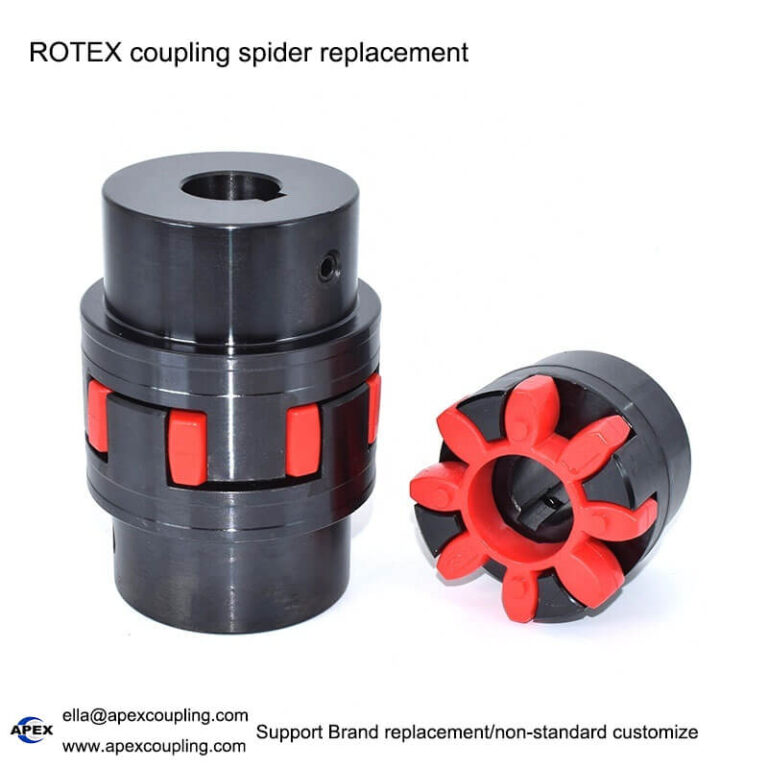
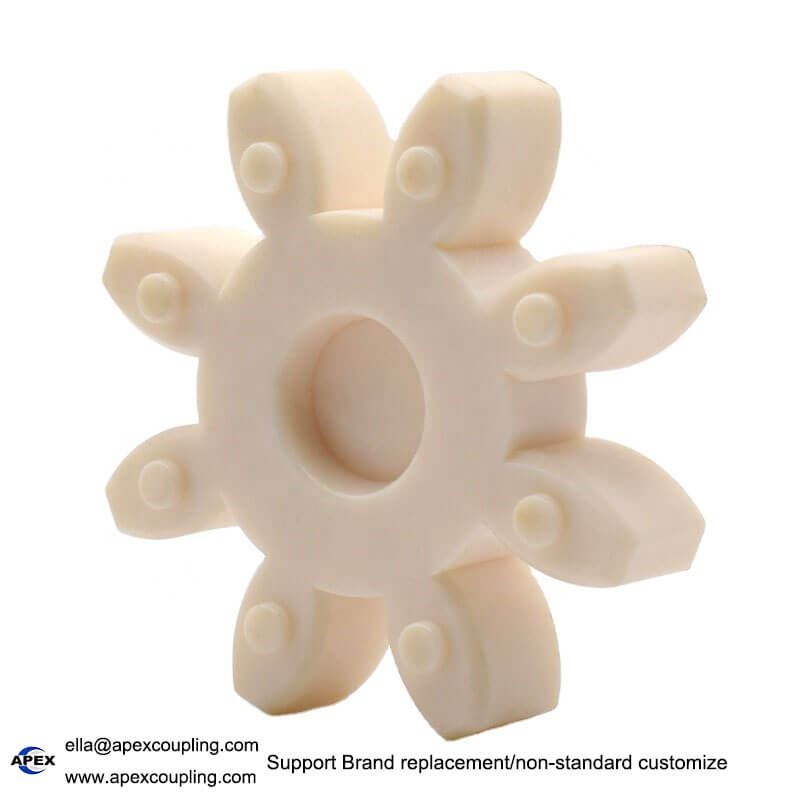
The coupling spider is a wear component in a flexible jaw coupling.
Although the metal hubs may continue working for years, the elastomeric spider can eventually wear or deteriorate.
Visible cracks are a clear indication that the spider should be inspected and potentially replaced.
If the spider has permanently deformed after operation, it may no longer provide the required flexibility.
Broken or missing spider lobes can prevent proper torque transmission.
Wear on the spider can increase the clearance between the spider and coupling jaws.
Unexpected vibration can be a sign of:
The complete system should be inspected.
Clicking, knocking or unusual coupling noise can indicate excessive clearance or deterioration of the flexible element.
If there is excessive rotational play between the two shafts, inspect the spider and coupling hubs.
Continuous exposure to unsuitable temperatures, oils or chemicals can accelerate elastomer deterioration.
There is no universal replacement interval.
Service life depends on:
Regular inspection is more reliable than replacing the spider according to a fixed calendar interval.
Apex Coupling supplies replacement spider inserts in standard and customized sizes.
Email: ella@apexcoupling.com
WhatsApp: +86 13437856962
Inquiry now:
ella@apexcoupling.com
steel vs cast iron jaw coupling, rotex spider hardness guide, flexible coupling for motor, elastic coupling maintenance.
Apex Coupling, Our Core Expertise: Customization and Quality.
Your One-Stop Custom Coupling Manufacturer