Spider Coupling Rubber: How to Choose the Right GS Hytrel Coupling Insert
Spider Coupling Rubber: How to Choose the Right GS Hytrel Coupling Insert
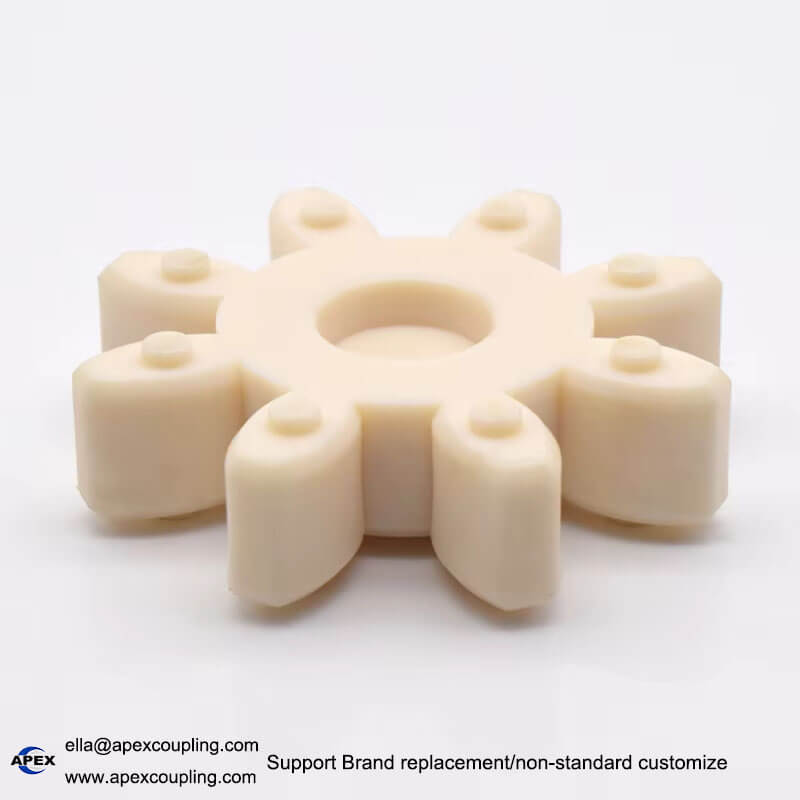
A spider coupling rubber insert is a small but critical component in a flexible jaw coupling. Although the spider is much smaller than the metal hubs, its material, hardness, size and operating temperature can directly affect the performance and service life of the entire coupling system.
For industrial applications involving electric motors, pumps, compressors, gearboxes and other rotating machinery, selecting the correct coupling spider is essential for reliable power transmission.
Among the available elastomer materials, Hytrel GS spider inserts are a popular choice for applications requiring high wear resistance, oil resistance and elevated temperature performance.
This guide explains what a spider coupling rubber insert does, how a GS coupling works and what you should consider before purchasing a replacement or OEM spider.
What Is a Spider Coupling Rubber Insert?
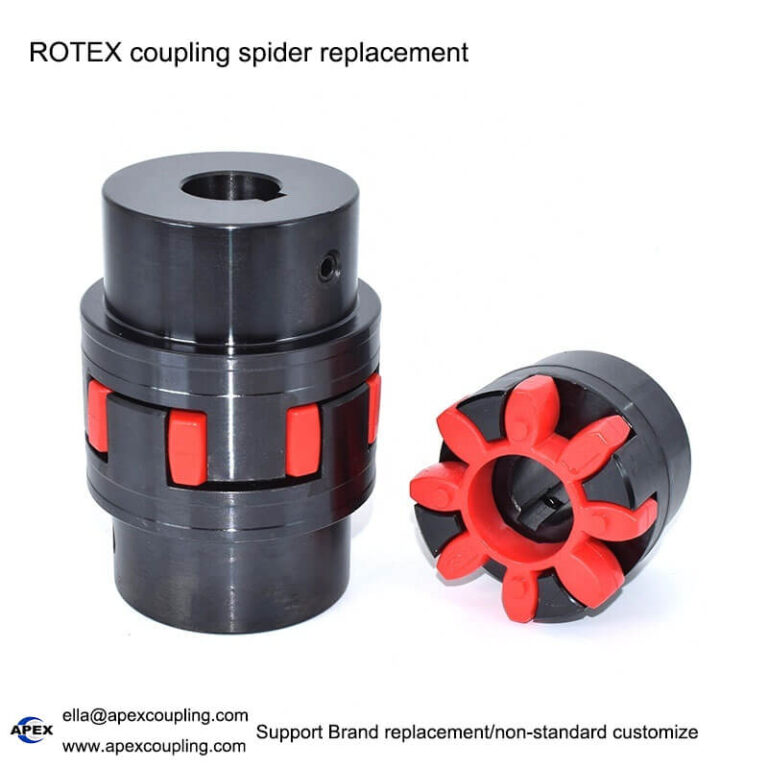
A spider coupling rubber insert is the flexible element located between two metal hubs in a jaw-type flexible coupling.
The two hubs contain curved jaws or claws. The spider insert fits between these jaws and creates the flexible connection between the driving shaft and driven shaft.
A typical flexible jaw coupling therefore consists of:
Driving Hub + Spider Insert + Driven Hub
The metal hubs transmit mechanical torque, while the flexible spider provides damping and flexibility.
This design allows the coupling to:
- Transmit rotational torque
- Absorb vibration
- Reduce torsional shock
- Compensate for limited shaft misalignment
- Protect connected machinery
- Reduce maintenance requirements
The elastomeric spider is essentially the flexible heart of the jaw coupling.
Why Does Spider Material Matter?
Not every coupling spider is made from the same material.
Common elastomer materials include:
- NBR rubber
- Polyurethane (PU)
- Hytrel
- Other engineered elastomers
The material affects:
- Temperature resistance
- Oil resistance
- Chemical resistance
- Hardness
- Wear resistance
- Vibration damping
- Torque transmission
- Service life
For general-purpose applications, PU or NBR may be sufficient.
However, if the coupling operates under high temperature, oil exposure or demanding mechanical conditions, a Hytrel spider insert can be a better solution.
What Is a GS Hytrel Spider Coupling?
The GS series uses a curved-jaw coupling design with a flexible spider element between the two hubs.
Apex Coupling’s GS spider inserts are manufactured using imported Hytrel material and are designed for demanding industrial environments.
The current GS product range includes:
GS-7, GS-10, GS-14, GS-19, GS-24, GS-28, GS-38, GS-42, GS-48, GS-55, GS-65, GS-75 and GS-90.
The standard size range allows customers to select a spider insert according to the coupling dimensions and shaft requirements.
Custom production is also available for OEM applications.
Why Choose Hytrel for a Spider Coupling Rubber Insert?
1. High Temperature Resistance
Temperature is one of the most important factors when selecting an elastomeric coupling element.
Standard rubber or PU materials may not be suitable for every high-temperature application.
Hytrel provides high-temperature performance and can operate at temperatures up to approximately 200°C, depending on the actual application conditions.
This makes Hytrel suitable for certain high-temperature industrial drive systems.
2. Oil Resistance
Industrial machinery frequently operates around:
- Lubricating oil
- Hydraulic oil
- Gear oil
- Grease
- Fuels
- Industrial chemicals
The coupling spider may be exposed to these substances during normal operation.
A Hytrel spider provides better resistance to many industrial oils and chemicals than some conventional elastomer materials.
3. Wear Resistance
The spider insert continuously interacts with the jaws of the coupling.
Under repeated torque and vibration, a low-quality elastomer can wear, deform or deteriorate prematurely.
A wear-resistant Hytrel material can help increase the service interval and reduce unplanned machinery downtime.
How to Select the Correct Spider Coupling Rubber
Before ordering a GS spider insert, buyers should check several parameters.
1. Coupling Model
The first step is to identify the coupling model.
For example:
GS-19, GS-24, GS-28, GS-38, GS-48, GS-55 or GS-90.
The spider geometry must match the coupling hubs.
2. Outside Diameter
Measure or confirm the outside diameter of the existing spider.
For example:
| Model | Approx. OD |
|---|---|
| GS-19 | 40 mm |
| GS-24 | 54 mm |
| GS-28 | 65 mm |
| GS-38 | 80 mm |
| GS-48 | 104 mm |
| GS-55 | 120 mm |
| GS-65 | 135 mm |
| GS-75 | 161 mm |
| GS-90 | 199 mm |
Always confirm the actual dimensions against the coupling drawing before placing a production order.
3. Bore and Shaft Size
The shaft dimensions are also important when selecting the complete coupling assembly.
For the spider itself, the key dimensional consideration is its compatibility with the corresponding hub jaws.
If you are unsure about the correct model, send the existing coupling dimensions or a photograph to the supplier.
4. Operating Temperature
Temperature can significantly affect elastomer performance.
For applications with elevated temperatures, the buyer should provide:
- Normal operating temperature
- Maximum operating temperature
- Continuous or intermittent operation
- Heat source near the coupling
This information helps the manufacturer recommend the correct elastomer.
5. Oil and Chemical Exposure
If the coupling operates near oil, fuel, solvents or chemicals, tell the manufacturer before selecting the spider.
Material selection should be based on the actual working environment rather than simply choosing the cheapest replacement element.
6. Speed and Load
The coupling should also be selected according to:
- Motor power
- Operating speed
- Torque
- Starting torque
- Shock load
- Working cycle
Your coupling supplier can use these parameters to confirm whether the selected spider and coupling size are appropriate.
GS Spider Coupling vs Ordinary Rubber Spider
A common mistake is to replace a high-performance spider with a low-cost generic rubber element without checking the application.
A standard rubber spider may work well under moderate operating conditions.
However, a Hytrel GS spider can be more appropriate when the application requires:
Higher temperature resistance + better wear resistance + oil resistance + long-term industrial operation.
The correct material should always be selected according to the working environment.
When Should a Spider Coupling Rubber Insert Be Replaced?
Common signs of spider deterioration include:
- Visible cracking
- Permanent deformation
- Missing spider lobes
- Excessive wear
- Increased vibration
- Abnormal coupling noise
- Excessive backlash
- Increased shaft vibration
- Reduced coupling flexibility
If the spider shows obvious damage, continuing to operate the coupling may increase stress on the motor, bearings, gearbox and connected equipment.
Replacing the elastomeric spider can often be much more economical than replacing the entire coupling assembly.
Why Buy OEM Spider Coupling Rubber Inserts?
For machinery manufacturers and distributors, standard replacement parts are not always enough.
OEM spider coupling inserts can be manufactured according to:
- Customer drawings
- Existing samples
- Coupling model
- Exact dimensions
- Material requirements
- Hardness requirements
- Operating temperature
- Application conditions
- Required quantity
Apex Coupling supports OEM, ODM and custom manufacturing for coupling components.
This is particularly useful for:
- Coupling distributors
- Machinery manufacturers
- Pump manufacturers
- Motor manufacturers
- Industrial equipment suppliers
- Maintenance companies
- Power transmission distributors
GS Spider Coupling Rubber Insert Manufacturer
Apex Coupling manufactures flexible shaft couplings and coupling components for industrial power transmission applications.
Our product range includes flexible jaw couplings, spider inserts, rubber coupling elements, universal joints, cardan shafts and other power transmission components.
For GS Hytrel spider inserts, we can provide:
- Standard GS sizes
- Imported Hytrel material
- OEM production
- ODM development
- Custom dimensions
- Sample orders
- Low MOQ
- Bulk production
- Export packaging
If you are looking for a spider coupling rubber manufacturer or GS coupling spider supplier, send us your requirements.
Conclusion
Choosing the correct spider coupling rubber insert is important for the reliability and service life of a flexible jaw coupling.
For general machinery, conventional PU or rubber spiders may be suitable. For applications involving high temperature, oil exposure and demanding mechanical conditions, a Hytrel GS spider insert can provide an excellent combination of flexibility, wear resistance and durability.
Before ordering, always confirm the coupling model, dimensions, operating speed, temperature, torque and working environment.
If you need a standard GS spider insert or a customized OEM coupling element, Apex Coupling can manufacture according to your drawings or samples.
Request a GS Spider Coupling Rubber Quote
Email: ella@apexcoupling.com
WhatsApp: +86 13437856962
Send us your coupling model, drawing, dimensions or sample to get a quotation.
For industrial applications requiring high temperature and oil resistance, our GS Hytrel spider insert provides a reliable flexible coupling solution.
Inquiry now:
ella@apexcoupling.com
steel vs cast iron jaw coupling, rotex spider hardness guide, flexible coupling for motor, elastic coupling maintenance.