What Is an Industrial Universal Joint? Complete Guide to Universal Joint Couplings
What Is an Industrial Universal Joint?
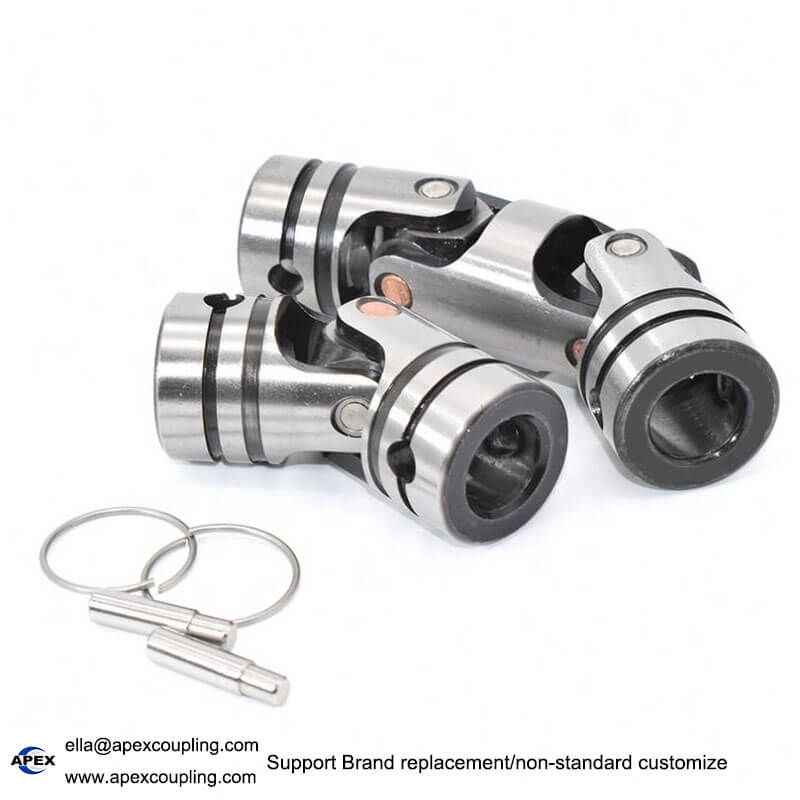
An industrial universal joint is a mechanical transmission component used to transmit rotational torque between two shafts that operate at an angle.
Unlike a standard rigid shaft connection, a universal joint allows shafts to work with angular misalignment while continuing to transfer mechanical power.
Industrial universal joints are commonly used in machine tools, automation equipment, printing machinery, packaging systems, pumps, compressors, and other power transmission applications.
How Does a Universal Joint Work?
A universal joint typically consists of a cross-shaped central component and corresponding bearing, pin, sleeve, or block structures.
When the driving shaft rotates, the universal joint transfers the rotational movement through the cross mechanism to the driven shaft.
This design allows the two shafts to operate at an angle.
The actual performance depends on:
- Joint size
- Shaft diameter
- Operating angle
- Torque
- Rotational speed
- Bearing design
- Lubrication
- Material
- Installation alignment
Therefore, selecting a universal joint should always be based on the complete operating condition rather than shaft diameter alone.
Single Universal Joint vs Double Universal Joint
Industrial universal joints are commonly available in single and double configurations.
Single Universal Joint
A single universal joint is suitable for applications where the primary requirement is angular transmission between two shafts.
It is compact and relatively simple to install.
Double Universal Joint
A double universal joint uses two joint sections together.
This configuration can provide greater flexibility when shaft alignment includes both angular and parallel offset conditions.
Apex uses G type for single-joint configurations and GD type for double-joint configurations.
Universal Joint Operating Angle
The allowable angle is one of the most important specifications.
A single universal joint can typically operate at angles up to approximately 45° depending on the design.
A double-joint configuration may provide greater total articulation.
However, maximum articulation should not automatically be treated as the recommended continuous operating angle.
For high-speed or continuous-duty applications, the operating angle should be selected together with:
- RPM
- Torque
- Bearing type
- Joint size
- Lubrication
- Duty cycle
Materials for Industrial Universal Joints
Common materials include:
- 40Cr
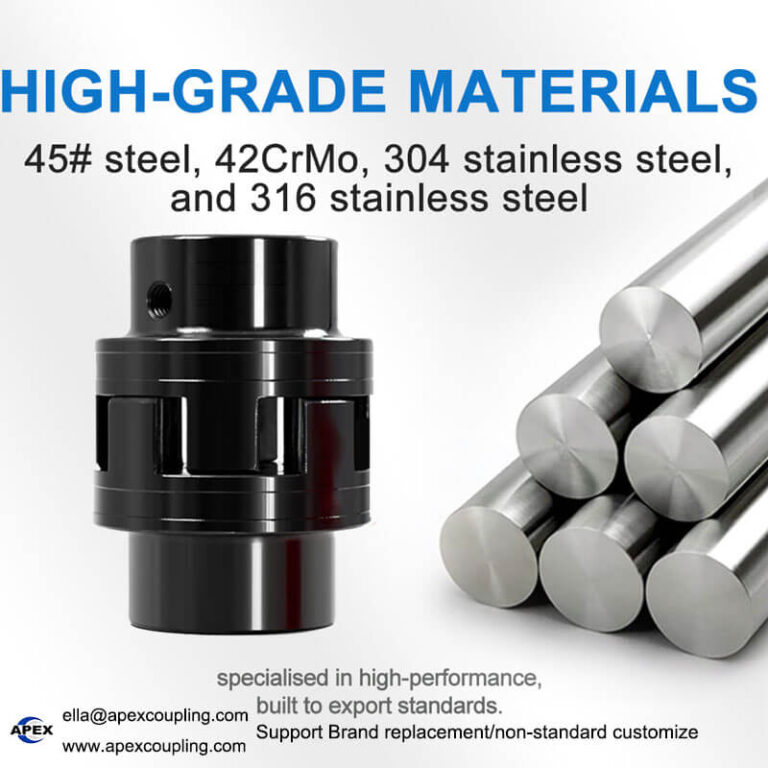
- 42CrMo
- 40CrNi
- 20CrMo
- 20CrMnVB
42CrMo is commonly selected for applications requiring high strength and durability.
For special environments, selected components can also be manufactured from SUS304 or SUS316 stainless steel.
Common Applications
Industrial universal joints can be found in:
- CNC machine tools
- Automated production equipment
- Printing machines
- Packaging machinery
- Pumps
- Compressors
- Agricultural machinery
- Construction equipment
- Energy equipment
- Mining machinery
How to Select an Industrial Universal Joint
Before ordering, check:
- Shaft diameter
- Required torque
- Operating speed
- Operating angle
- Single or double configuration
- Bearing type
- Bore type
- Keyway or spline requirement
- Installation length
- Operating environment
For custom applications, providing a drawing or shaft dimensions can significantly improve selection accuracy.
Apex Industrial Universal Joints
Apex supplies G/GD precision universal joint couplings manufactured from 42CrMo and other specified materials.
Available options include customized:
- Bore diameter
- Keyway
- Hexagonal hole
- Square hole
- Spline
- Shaft connection
- Length
- Material
- Bearing configuration
For detailed specifications, see the [Apex U Joints product page].