Flexible Jaw Coupling vs Rigid Coupling
Flexible Jaw Coupling vs Rigid Coupling: What Is the Difference?
Choosing the right shaft coupling affects the reliability, alignment and maintenance requirements of an industrial drive system. Two common options are flexible jaw couplings and rigid couplings.
Although both connect driving and driven shafts, their construction and operating characteristics are different. Understanding these differences can help engineers and purchasing teams select a suitable coupling for their equipment.
1. What Is a Flexible Jaw Coupling?
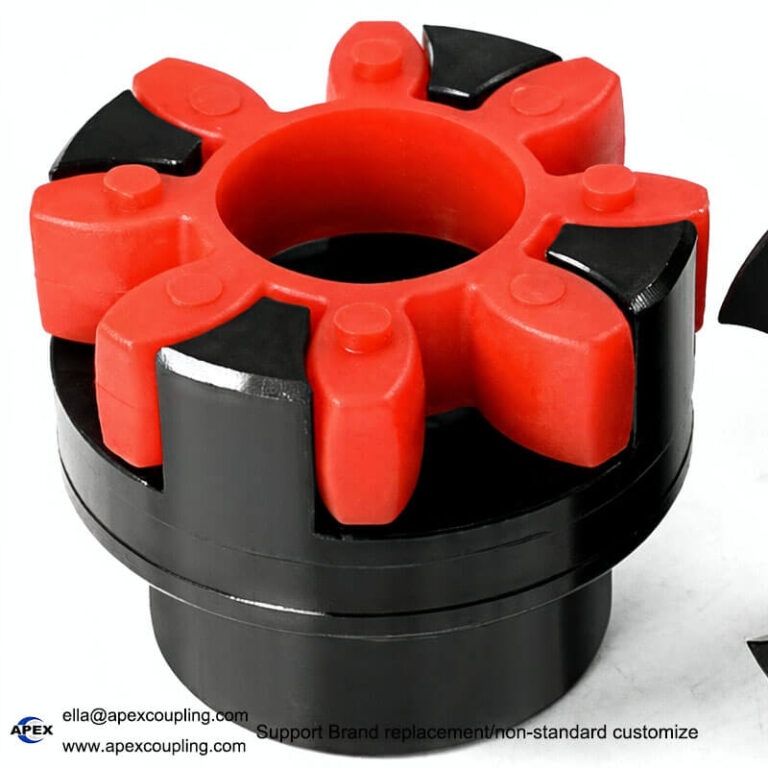
A flexible jaw coupling typically consists of two hubs with mating jaws and an intermediate elastic element. The element transmits torque while providing some cushioning and accommodating limited shaft misalignment.
Depending on the design and elastomer, a flexible jaw coupling can help reduce the transmission of certain vibration and shock loads.
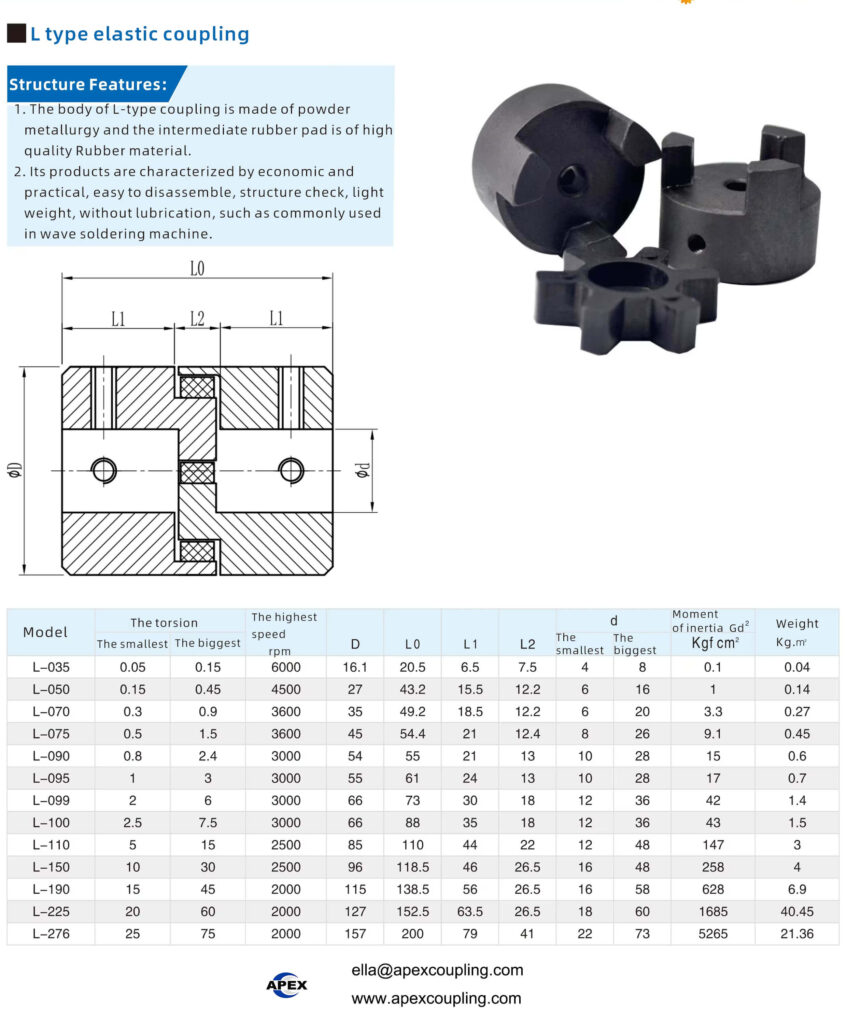
An L-type flexible jaw coupling is one example used in selected industrial drive applications. Its compact structure and replaceable elastic element can make inspection and maintenance convenient.
2. What Is a Rigid Coupling?
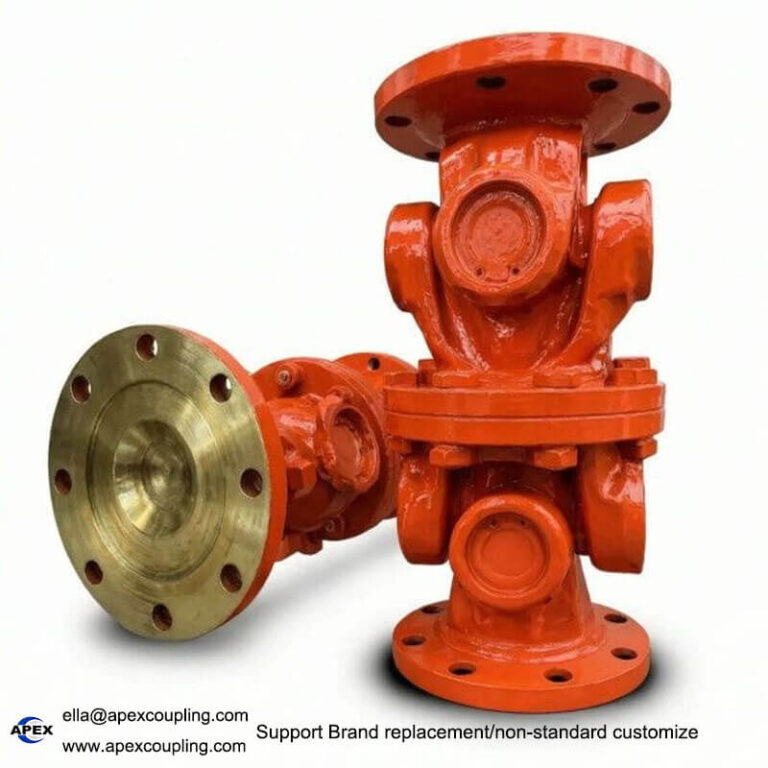
A rigid coupling connects two shafts without an elastic element intended to provide flexibility.
It is generally selected when the shafts can be accurately aligned and a rigid connection is required. Because it does not provide the same elastic cushioning as a flexible jaw coupling, installation accuracy is especially important.
Rigid couplings are available in different designs, including sleeve, clamp and flange configurations.
3. Key Differences Between Flexible Jaw and Rigid Couplings
Misalignment Compensation
A flexible jaw coupling can accommodate limited radial, angular and axial misalignment within its specified limits.
A rigid coupling generally provides little or no intentional misalignment compensation. Shaft alignment must therefore meet the coupling and equipment requirements.
Neither type should be used to compensate for excessive misalignment.
Vibration and Shock
The elastic element in a flexible jaw coupling can cushion certain vibration and shock loads. The amount of damping depends on the elastomer and operating conditions.
A rigid coupling does not have this elastic element, so it does not provide the same type of cushioning.
Torsional Behavior
The elastic element in a jaw coupling deforms under load, so its torsional behavior differs from that of a rigid connection.
A rigid coupling provides a direct mechanical connection, but the complete system’s torsional behavior still depends on the shafts, mounting structure and connected machinery.
For precise motion control, evaluate the required torsional stiffness and positioning performance rather than assuming that one coupling type is always better.
Installation and Maintenance
Flexible jaw couplings require correct installation of the hubs and elastic element. The element should be inspected for wear and replaced when necessary.
Rigid couplings require accurate alignment and secure fastening. Their maintenance requirements depend on the coupling design and operating environment.
The correct choice depends on the machine’s operating conditions and maintenance strategy.
4. Comparison Table
| Feature | Flexible Jaw Coupling | Rigid Coupling |
|---|---|---|
| Connection | Hubs with elastic element | Rigid mechanical connection |
| Misalignment compensation | Limited, model-specific | Generally minimal |
| Vibration cushioning | Possible through the elastic element | No equivalent elastic cushioning |
| Torsional behavior | Depends on elastomer and design | More directly rigid |
| Alignment requirements | Must remain within rated limits | Accurate alignment is especially important |
| Maintenance | Inspect the elastic element and fastening | Check alignment and fastening as required |
| Typical use | Suitable drives needing flexibility and cushioning | Drives requiring a rigid shaft connection |
Actual performance depends on the specific coupling design and operating conditions.
5. When Should You Choose a Flexible Jaw Coupling?
Consider a flexible jaw coupling when the application requires:
A compact shaft connection
Some tolerance for limited shaft misalignment
Elastic cushioning of certain shocks and vibrations
Convenient inspection or replacement of the elastic element
A practical connection for compatible motor-driven machinery
Before choosing a model, confirm its torque rating, speed limit, bore dimensions, temperature range and allowable misalignment.
6. When Should You Choose a Rigid Coupling?
A rigid coupling may be suitable when:
The shafts can be accurately aligned
A rigid mechanical connection is required
The application does not require elastic cushioning from the coupling
The selected design meets the required torque and installation conditions
The equipment manufacturer’s requirements should guide the final decision.
7. How to Choose the Correct Coupling for Your Machine
Regardless of coupling type, review the complete application before ordering.
Torque and Speed
Confirm normal operating torque, starting loads and rotational speed. The selected coupling must meet the required operating limits.
Shaft Dimensions
Measure both shaft diameters and confirm the bore tolerance, keyway and fastening method.
Alignment
Determine expected radial, angular and axial misalignment. Select a coupling with sufficient rated capacity for the actual installation.
Environment
Check temperature, moisture, oil exposure, dust and other environmental conditions that could affect materials or service life.
Maintenance
Consider access for inspection, replacement of wear components and the consequences of equipment downtime.
8. Consider an L-Type Flexible Jaw Coupling
For suitable industrial drive systems, an L-type flexible jaw coupling offers a compact construction with an intermediate rubber element.
The L035–L276 series described by Apex Coupling includes different sizes for different installation requirements. However, torque ratings, speed limits and bore dimensions must be confirmed for the selected model.
Review our L-type flexible jaw coupling and provide your application parameters to help identify a suitable configuration.
Conclusion
Flexible jaw couplings and rigid couplings serve different purposes. A flexible jaw coupling offers elastic cushioning and limited misalignment compensation, while a rigid coupling is intended for a more direct connection between accurately aligned shafts.
The best option depends on torque, speed, alignment, operating environment and equipment requirements. Compare these factors before making a final selection, and confirm the model-specific technical specifications with the manufacturer.
Inquiry now:
ella@apexcoupling.com
steel vs cast iron jaw coupling, rotex spider hardness guide, flexible coupling for motor, elastic coupling maintenance.