Jaw Coupling Spider Selection: Material, Hardness and Temperature
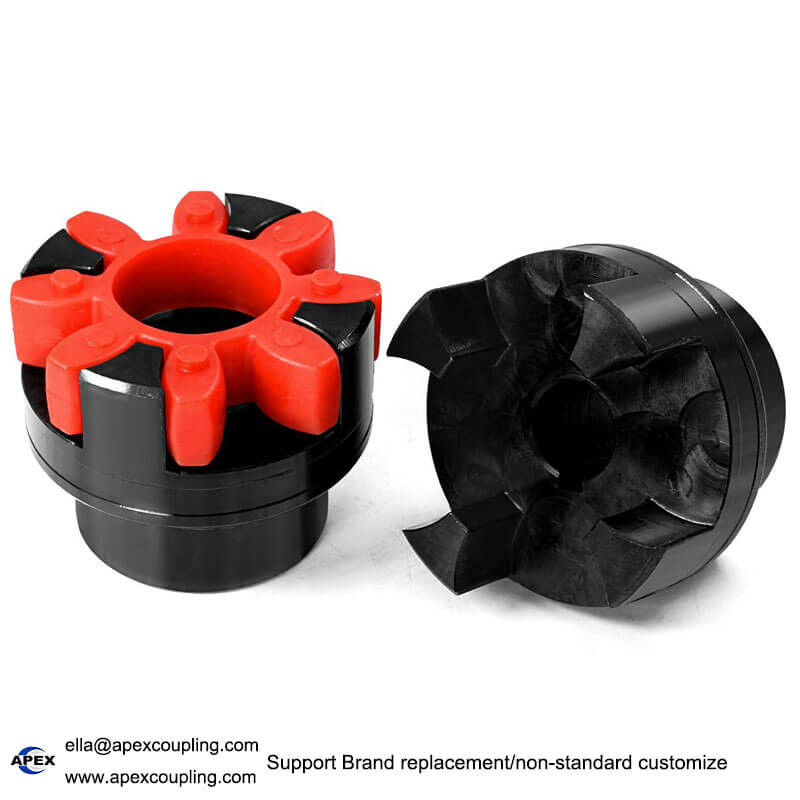
The elastomeric spider is a key component of a flexible jaw coupling. It transfers torque between the metal hubs while providing a degree of flexibility that can help reduce shock transmission and accommodate limited misalignment.
Choosing the right spider requires more than matching its shape or hardness. Material properties, operating loads, temperature and compatibility with the coupling hubs all affect performance.
1. Match the Spider to the Coupling Size
Begin by identifying the coupling model and size. Confirm the spider’s dimensions and geometry against the manufacturer’s specifications.
A spider that looks similar may not fit correctly or provide the required contact with the hubs. Do not assume that elastomers from different coupling designs are interchangeable.
2. Consider Torque Requirements
The spider transfers torque between the driving and driven hubs. Its suitability depends on the coupling size, material properties and application loads.
Provide continuous torque and peak torque when requesting a replacement. Starting, stopping, reversing and impact loads may influence the selection.
The coupling’s torque rating should be confirmed for the complete assembly rather than inferred from the spider’s hardness alone.
3. Understand Hardness
Elastomer hardness is commonly expressed using a Shore scale. Hardness can influence deformation and torsional behavior, but it is not the only property that determines performance.
Two spiders with the same nominal hardness may differ in material formulation, temperature behavior and durability.
The supplied Apex Coupling product information lists 98 Shore A for a spider specification. Confirm that value, the applicable material and the corresponding coupling model before ordering.
4. Check the Operating Temperature
Elastomer properties can change with temperature. A material suitable for one environment may not be suitable for another.
Consider the surrounding temperature and any heat generated by the drive system. Ask the supplier to confirm the allowable range for the exact spider material.
The supplied product information lists -35°C to +80°C for the stated elastomer specification. This range should be verified for the selected configuration before use.
5. Evaluate Chemical and Environmental Exposure
Oil, moisture, cleaning agents and other chemicals can affect elastomer performance. If the coupling operates in a food-processing or washdown environment, identify the actual cleaning procedure and chemical exposure.
Do not assume that a spider is compatible with a chemical merely because it is described as an engineering plastic or elastomer. Request material compatibility information when exposure is significant.
6. Consider Vibration and Torsional Stiffness
Some applications prioritize damping, while others require a stiffer connection for more precise torque transmission.
The appropriate spider depends on the machine’s dynamic behavior and control requirements. If the system is sensitive to torsional vibration, provide details of the operating speed, load changes and performance requirements.
7. Verify the Complete Coupling
Before ordering a replacement spider, confirm:
Coupling model and size
Spider dimensions and geometry
Material and hardness
Continuous and peak torque
Rotational speed
Operating temperature
Environmental exposure
Permitted shaft misalignment
Inspect the metal hubs as well. Damaged or worn jaws can affect the performance of a new spider.
Apex Coupling Spider and Jaw Coupling Options
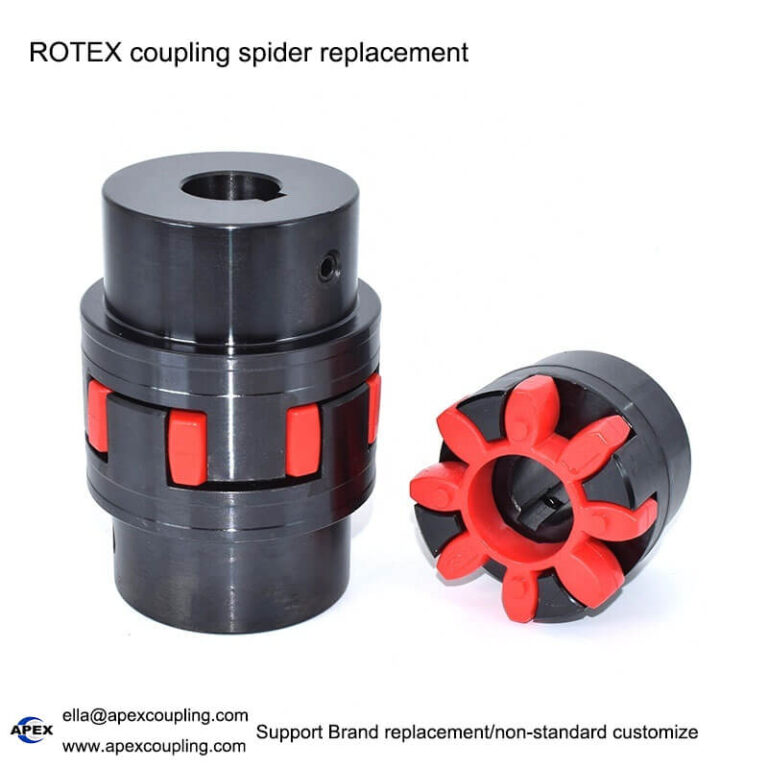
Apex Coupling supplies ROTEX-compatible flexible jaw coupling options and supports inquiries about replacement components and customization.
To identify a suitable spider or complete coupling, provide the coupling model, dimensions, operating torque, speed, temperature and application environment.
Email: ella@apexcoupling.com
WhatsApp: +86 13437856962
Frequently Asked Questions
Is 98 Shore A suitable for every jaw coupling application?
No. Suitability depends on the coupling design, torque, temperature and required torsional behavior. Confirm the specification for the selected model.
Can I replace only the spider?
Potentially, if the hubs are undamaged and the replacement spider is confirmed to be compatible. Inspect the complete assembly before reusing existing components.
Why does a spider wear prematurely?
Possible causes include excessive torque, misalignment, unsuitable material, excessive temperature, incorrect installation or damaged hubs. Investigate the operating conditions before fitting a replacement.
Does spider hardness determine the coupling’s torque rating?
No. The rated torque depends on the complete coupling design and its specified operating conditions.
Inquiry now:
ella@apexcoupling.com
steel vs cast iron jaw coupling, rotex spider hardness guide, flexible coupling for motor, elastic coupling maintenance.