How Flexible Jaw Couplings Work in Industrial Drives
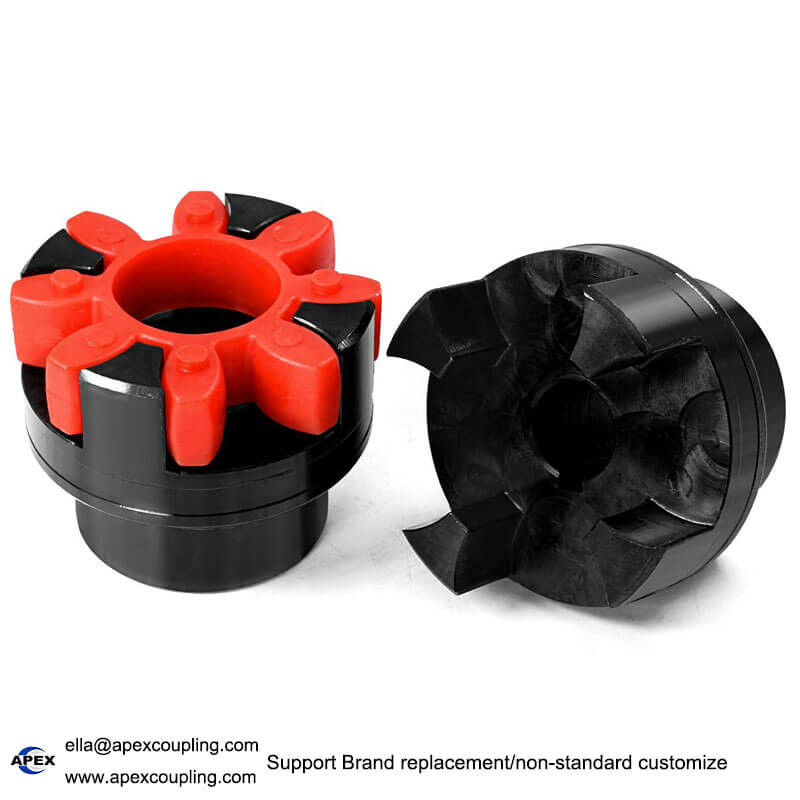
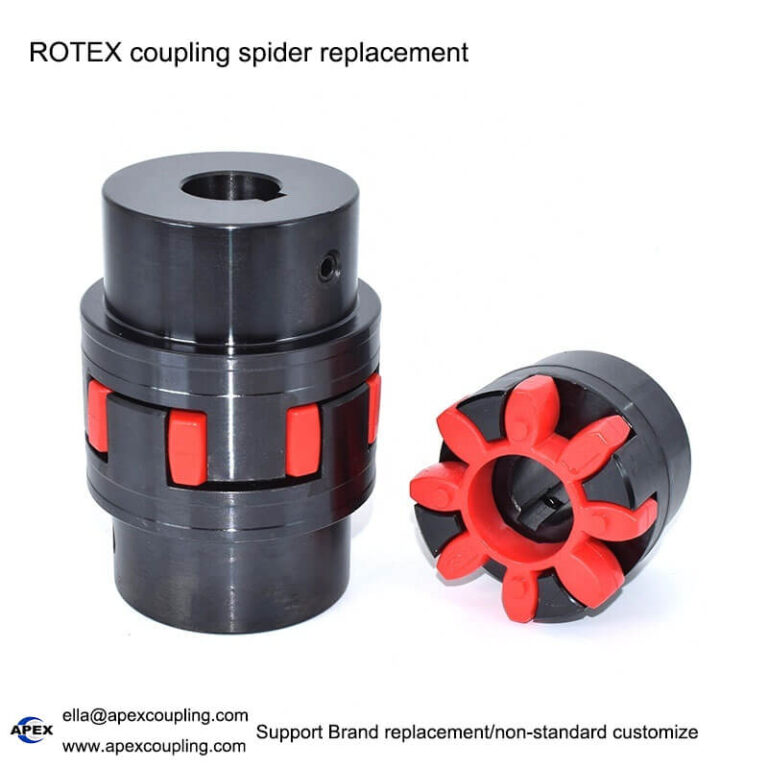
Flexible jaw couplings are commonly used to connect rotating shafts in industrial drive systems. Their construction combines two metal hubs with an elastomeric element, often called a spider.
The design provides a practical way to transmit torque while introducing flexibility between the connected hubs. Understanding how the components work helps engineers select the right coupling for the application.
Main Components of a Flexible Jaw Coupling
Metal Hubs
Each hub connects to one shaft. The hubs have interlocking jaws that engage with the elastomeric spider.
Hub material, bore size, keyway dimensions and overall geometry must match the machine’s requirements.
Elastomeric Spider
The spider fits between the jaws of the hubs. It transmits torque while providing elastic deformation under load.
The selected elastomer affects torsional stiffness, vibration damping, temperature suitability and torque capacity. Its properties should be checked against the operating conditions.
Shaft Connections
The hubs must be secured to the shafts using the specified connection method. Bore diameter, keyway and fastening details should be confirmed before installation.
How Torque Is Transmitted
When the driving shaft rotates, its hub engages the spider. The spider transfers the load to the driven hub, causing the second shaft to rotate.
Because the spider is elastic, it can deform slightly under load. This flexibility can help accommodate limited misalignment and reduce the transmission of certain shocks and vibrations.
The coupling still has defined limits. Excessive misalignment or overload can increase stress and wear.
Why Spider Material Matters
Different elastomer formulations can have different mechanical and thermal properties. Hardness is one selection factor, but it does not describe all performance characteristics.
When choosing a spider, consider:
Continuous and peak torque
Torsional stiffness requirements
Vibration and shock conditions
Operating temperature
Exposure to oil, moisture or chemicals
Expected service life and maintenance needs
Always confirm that the spider is designed for the specific coupling size and operating conditions.
Common Applications
Flexible jaw couplings may be used in pumps, general industrial drives, packaging machinery, printing equipment, manufacturing systems and machinery maintenance.
The correct selection depends on the torque, speed, shaft alignment and environmental conditions. High-speed or demanding applications may require additional checks for balance and installation accuracy.
Installation and Maintenance Tips
Before installation, inspect the hubs and spider for damage. Confirm the shaft dimensions and follow the manufacturer’s instructions for assembly and alignment.
During operation, investigate unusual vibration, noise, temperature or visible elastomer deterioration. These symptoms can indicate misalignment, overloading, incorrect installation or an unsuitable spider.
Replace worn components with parts confirmed to be compatible with the coupling design.
Apex Coupling Flexible Jaw Couplings
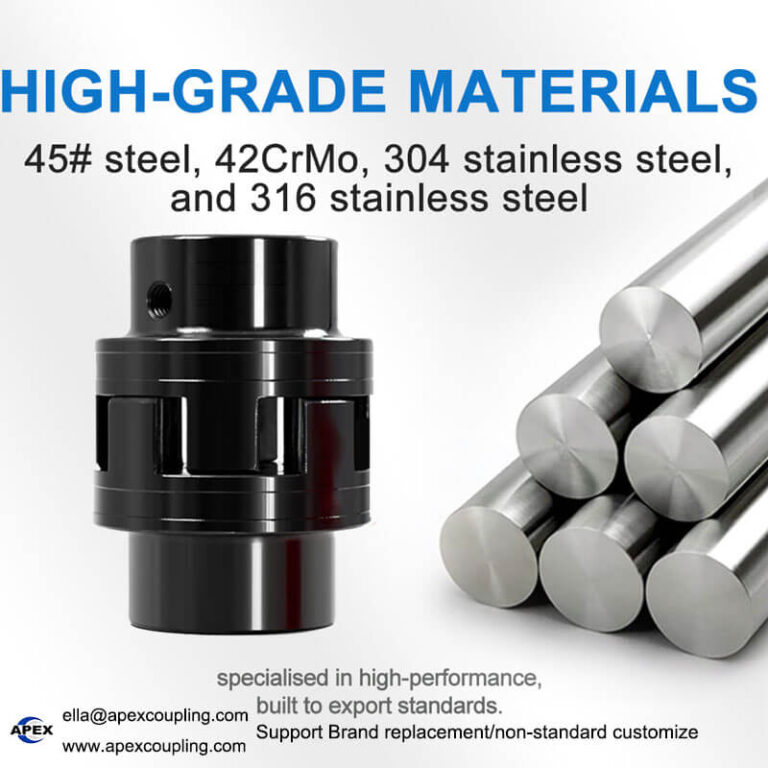
Apex Coupling offers ROTEX-compatible jaw coupling options in a range of sizes. The supplied product data lists steel hubs and several potential material options, subject to model and availability.
For product selection, provide the shaft diameters, required torque, speed, operating temperature and coupling dimensions.
Email: ella@apexcoupling.com
WhatsApp: +86 13437856962
Frequently Asked Questions
Does a flexible jaw coupling eliminate all vibration?
No. It can reduce the transmission of some vibration and shock loads, but the result depends on the system and elastomer properties.
Can a jaw coupling compensate for any shaft misalignment?
No. It has limited permitted misalignment. Confirm the applicable limits for the selected model.
Is a harder spider always better?
No. Hardness affects coupling behavior, but the correct choice depends on torque, stiffness, damping, temperature and other application requirements.
When should the spider be replaced?
Replace it when inspection shows deterioration or when performance indicates a problem. Follow the supplier’s maintenance guidance and investigate the underlying cause of wear.
Inquiry now:
ella@apexcoupling.com
steel vs cast iron jaw coupling, rotex spider hardness guide, flexible coupling for motor, elastic coupling maintenance.