ROTEX Coupling Spider Replacement: How to Identify the Correct Size
PU vs Other Elastomers: How to Choose the Right Coupling Spider Material
The elastomer is one of the most important components of a flexible jaw coupling.
A PU coupling spider connects the two coupling hubs while transmitting torque and absorbing vibration.
However, polyurethane is not the only elastomer used for flexible coupling elements. Depending on the application, manufacturers may use different materials and hardness grades.
Understanding the differences can help engineers select the appropriate coupling spider material.
What Is a PU Coupling Spider?
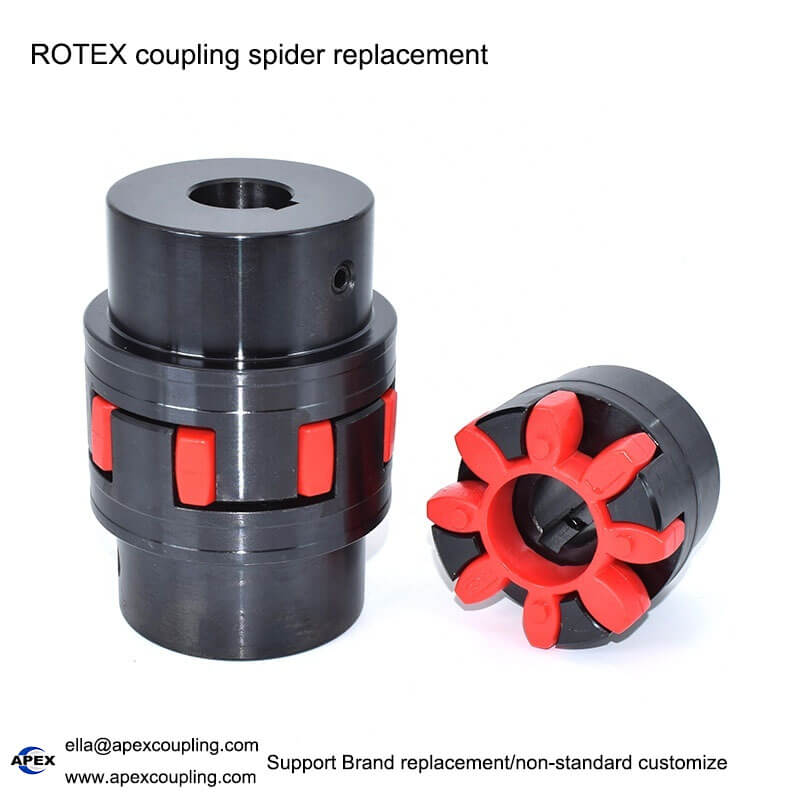
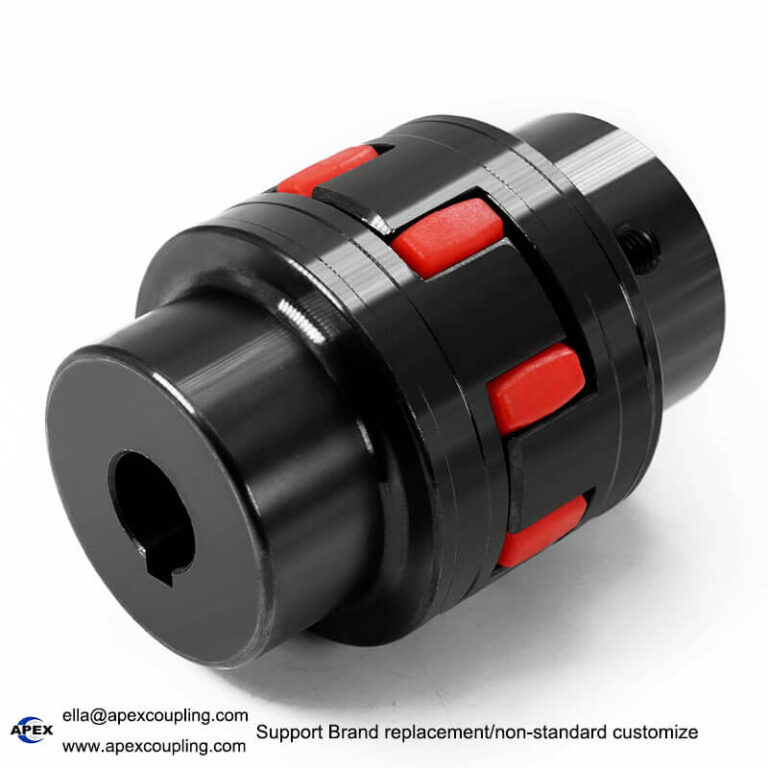
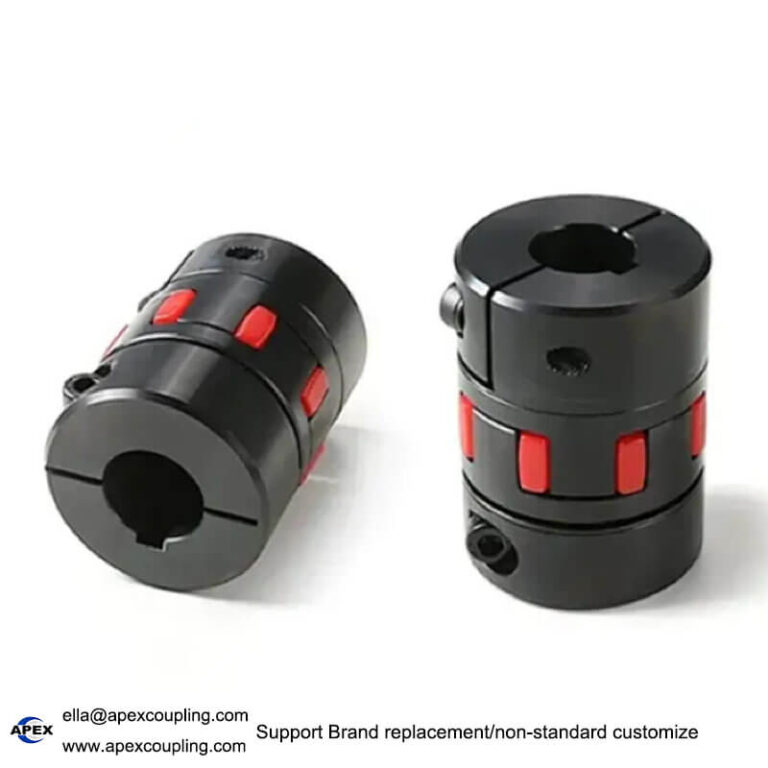
A PU coupling spider is a polyurethane elastomer insert designed to fit between the jaws of a flexible jaw coupling.
Polyurethane is often selected because it provides a useful balance between:
- Wear resistance
- Elasticity
- Mechanical strength
- Vibration damping
- Fatigue resistance
The exact characteristics depend on the polyurethane formulation and hardness.
Why Is Polyurethane Used in Coupling Spiders?
A coupling spider operates under repeated mechanical loading.
During operation, the spider is compressed and deformed as torque passes from one hub to the other.
A suitable polyurethane formulation can withstand repeated deformation while maintaining its mechanical properties.
For this reason, polyurethane coupling spiders are widely used in industrial power transmission applications.
PU vs NBR Coupling Spiders
NBR is another elastomer commonly used in industrial applications.
A simplified comparison is:
| Property | PU | NBR |
|---|---|---|
| Wear resistance | Generally high | Good |
| Elasticity | High | High |
| Oil resistance | Formulation dependent | Generally good |
| Mechanical strength | High | Good |
| Damping | Good | Good |
| Application suitability | General industrial use | Oil-related environments may be suitable |
Actual performance depends on material formulation and operating conditions.
PU vs Hytrel Coupling Spiders
Hytrel-type elastomers can provide a different balance of stiffness, temperature resistance and mechanical performance.
For demanding applications, the choice between PU and Hytrel should consider:
- Operating temperature
- Torque
- Speed
- Chemical exposure
- Required damping
- Expected service life
This is particularly important when selecting a spider for high-temperature or chemically demanding equipment.
98 Shore A PU Coupling Spider
Apex Coupling supplies 98 Shore A polyurethane coupling spiders for compatible GR / ROTEX-type jaw couplings.
The harder elastomer provides a relatively firm coupling response.
However, the correct hardness should always be selected according to the coupling manufacturer’s specifications and the actual application.
PU Jaw Coupling Spider Applications
Depending on the coupling and operating conditions, PU jaw coupling spiders can be used in:
- Electric motors
- Pumps
- Compressors
- Gearboxes
- Conveyors
- Fans
- Industrial automation
- Manufacturing equipment
- General mechanical drives
How Material Affects Coupling Performance
The spider material influences several important characteristics.
Torque Transmission
The elastomer deforms when torque is transmitted.
Material stiffness therefore affects the coupling’s torsional response.
Vibration Damping
The elastomer can absorb some mechanical vibration and torsional shock.
Misalignment Compensation
The flexible element permits limited shaft misalignment.
Wear
The material’s resistance to mechanical wear influences service life.
Temperature
Operating temperature can affect elastomer hardness and mechanical properties.
Therefore, material selection should consider the complete operating environment rather than material name alone.
How to Select the Right Coupling Spider Material
Ask the following questions:
What torque is being transmitted?
Determine the normal and peak torque.
What is the operating speed?
High-speed applications require careful evaluation of the coupling assembly.
What is the operating temperature?
Temperature can significantly affect elastomer performance.
Is oil or chemical exposure present?
Confirm material compatibility with the operating environment.
What level of vibration damping is required?
Different elastomer grades provide different torsional characteristics.
What hardness is required?
The correct hardness should be selected according to the coupling design.
Why Choose a PU Replacement Spider?
For compatible GR and ROTEX-type jaw couplings, a PU replacement spider can offer a practical maintenance solution.
Instead of replacing the complete coupling assembly, the elastomer can be replaced when the metal hubs remain in usable condition.
Apex Coupling provides:
- 98 Shore A PU spiders
- Multiple ROTEX-type sizes
- GR-compatible designs
- OEM manufacturing
- ODM support
- Custom production
Conclusion
A PU coupling spider can provide a strong combination of flexibility, wear resistance and mechanical durability for many industrial coupling applications.
However, PU should not automatically be considered the best material for every application.
Material, hardness, torque, speed, temperature and environment should all be considered when selecting a coupling spider.
Contact Apex Coupling for PU, GR and ROTEX-type coupling spider replacement and OEM manufacturing.
Inquiry now:
ella@apexcoupling.com
steel vs cast iron jaw coupling, rotex spider hardness guide, flexible coupling for motor, elastic coupling maintenance.