GR/GS Spider Insert Selection Guide – Polyurethane Elastomer Cushion Pads for ROTEX Couplings
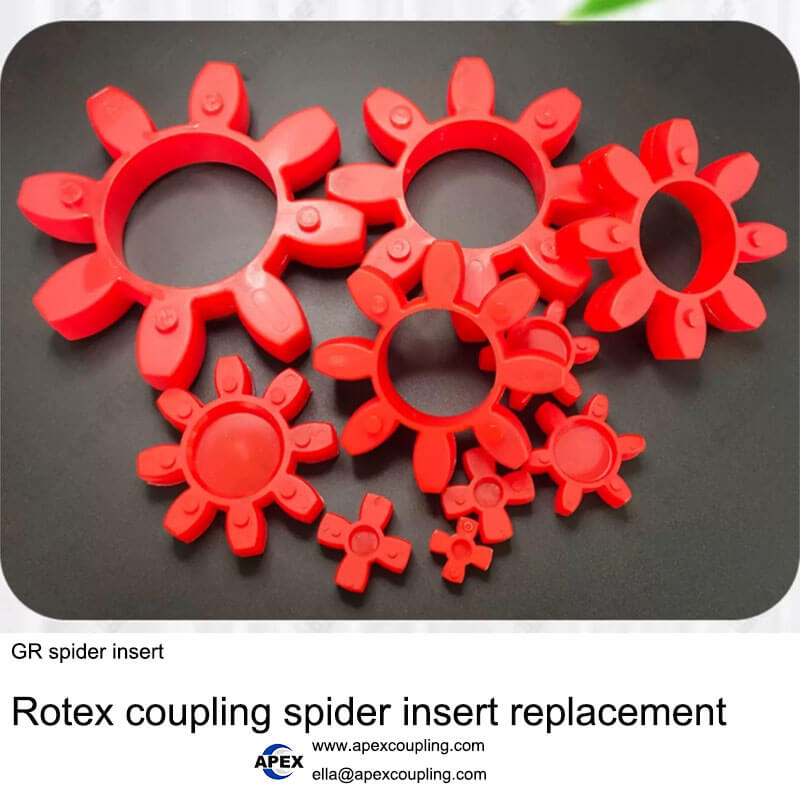
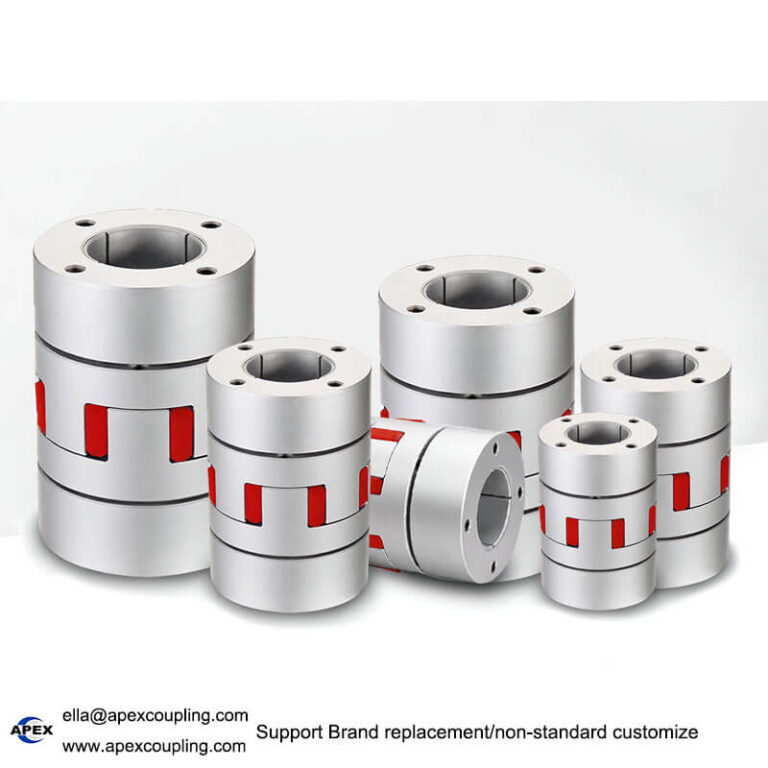
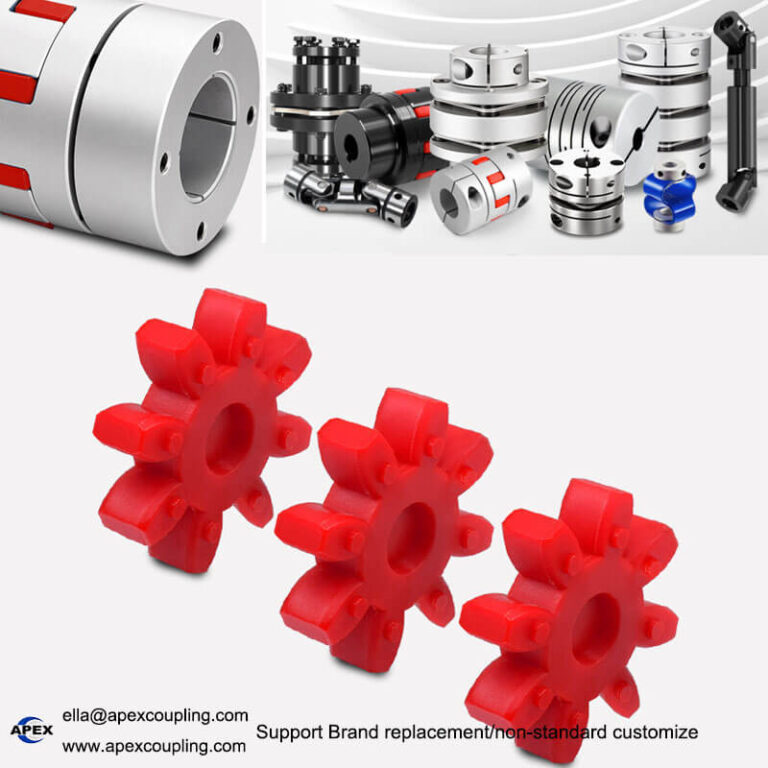
Spider inserts (also known as elastomer cushion pads, buffer pads, or star elastomers) are the heart of jaw couplings – transmitting torque, absorbing shock, dampening vibration, and compensating for misalignment [9†L15-L17]. The GR/GS series from Apex Coupling offers a comprehensive range of polyurethane spiders that are fully interchangeable with KTR ROTEX® [7†L10-L11].
This guide explains how GR/GS spiders work, the differences between GR and GS series, how to select the right Shore hardness, and key factors to consider for your application.
1. What Is a GR/GS Spider Insert?
A GR/GS spider insert is a polyurethane elastomer element that fits between the two hubs of a jaw coupling. It:
Transmits torque from one hub to the other through the spider teeth
Absorbs shock loads and dampens vibration
Compensates for misalignment – angular, radial, and axial
Eliminates backlash through press-fit design [9†L17-L18]
Defines the characteristics of the entire drive system [9†L16-L17]
The spider is the wear element – designed for easy and cost-effective replacement without moving the hubs or disconnecting the shafts.
💡 GR/GS spiders are manufactured using premium imported polyurethane and German KTR-ROTEX inspired manufacturing processes – not an ordinary product, but a premium replacement that matches or exceeds original KTR ROTEX quality [5†L7-L8][11†L5-L6][4†L6].
2. GR vs GS – Which Series Do You Need?
| Feature | GR Series (Standard Star) | GS Series (Solid-Core Servo) |
|---|---|---|
| Design | Standard star-shaped elastomer | Solid-core geometry for high reversing torque [5†L9-L10] |
| Backlash | Zero (press-fit) | Zero (pre-stressed) [12†L3] |
| Primary Application | General industrial, pumps, compressors [8†L12-L13] | Servo drives, precision positioning, high reversing torque [12†L6-L9] |
| Torsional Stiffness | Good | Higher – optimized for dynamic drives [2†L18-L19] |
| Hardness Options | 92 ShA, 98 ShA, 64 ShD [3†L7-L9] | 92 ShA, 98 ShA, 64 ShD, 52 ShD [2†L8] |
| Temperature Range | -40°C to +100°C (up to 120°C transient) [4†L5][11†L6-L7] | -50°C to +120°C [2†L8-L9] |
| Best for | Pumps, compressors, conveyors, general machinery [8†L12-L13] | Servo hydraulics, test benches, CNC machines, automation [12†L21-L23] |
💡 Choose GR series for standard industrial applications like air compressors, pumps, and conveyors. Choose GS series for servo drives, precision positioning, and applications requiring enhanced temperature resistance and torsional stiffness [2†L16-L19].
3. Spider Hardness Selection – Why It Matters
The elastomer spider defines the characteristics of the entire drive system [9†L16-L17]. Through variation of the Shore hardness, the coupling system can be optimized for the ideal torsional characteristics [9†L18-L20].
| Hardness | Color | Torsional Stiffness | Damping | Best For |
|---|---|---|---|---|
| 92 Shore A | Yellow / Orange [3†L7] | Moderate | High | Standard general-purpose applications, good vibration damping [7†L25] |
| 95 Shore A | Blue [9†L25] | High | Moderate | High torque, higher stiffness |
| 98 Shore A | Red / Purple [3†L7-L8] | Very High | Moderate | Maximum torque, demanding drives, air compressors [7†L26] |
| 64 Shore D | Green [3†L8] | Highest | Low | Precision applications, maximum torque, servo drives [7†L26-L27] |
| 52 Shore D | – | Extreme | Lowest | ROTEX-GS only – extreme torsional stiffness for servo applications [2†L8] |
Selection guide:
92 Shore A – Best for applications requiring vibration damping and general-purpose performance [7†L25].
98 Shore A – Best for high-torque applications requiring greater torsional stiffness. Standard for air compressors [4†L13-L15][7†L26].
64 Shore D – Best for precision applications requiring maximum torque capacity and stiffness [7†L26-L27].
52 Shore D – Best for ROTEX-GS servo applications requiring extreme stiffness [2†L8].
4. Temperature Range – What You Need to Know
The operating temperature range is a critical factor when selecting a spider insert:
| Material | Temperature Range | Max Instantaneous |
|---|---|---|
| Standard TPU (GR) | -40°C to +100°C [4†L5][11†L6-L7] | 120°C [4†L5] |
| High-Performance TPU (GS) | -50°C to +120°C [2†L8-L9] | 150°C |
✅ The high-performance TPU used in ROTEX-GS series significantly increases the performance level with regard to temperature resistance and pressure resistance [2†L5-L9].
5. Key Benefits of Polyurethane Spiders
| Benefit | Why It Matters |
|---|---|
| Zero Backlash | Press-fit design eliminates clearance – precise torque transmission [9†L17-L18] |
| Oil & Ozone Resistance | Resistant to oils, greases, ozone, and UV – suitable for harsh environments [4†L15] |
| Wear Resistance | <0.05 cm³ / 1.61 km – long service life [9†L24] |
| Wide Temperature Range | -40°C to +120°C – suitable for extreme conditions [4†L5][11†L6-L7] |
| Vibration Damping | Absorbs shock and reduces vibration – protects equipment |
| Misalignment Compensation | Compensates angular, radial, and axial displacements |
| Maintenance-Free | No lubrication required – reduces operating costs |
| KTR ROTEX Interchangeable | Direct replacement – no design changes required [7†L10-L11] |
6. Applications Where GR/GS Spiders Excel
| Industry | Application | Recommended Series | Recommended Hardness |
|---|---|---|---|
| Air Compressors | Compressor drives [8†L12-L13] | GR | 98 Shore A [4†L13-L15] |
| Pumps | Centrifugal, gear pumps [8†L12-L13] | GR | 92-98 Shore A |
| Servo Motors | Precision positioning [12†L6-L9] | GS | 64 Shore D / 52 Shore D [2†L8] |
| Machine Tools | CNC, milling machines [12†L22] | GS | 64 Shore D |
| Packaging | Wrapping, sealing machines | GR | 92 Shore A |
| Automation | Pick-and-place systems [12†L22] | GS | 64 Shore D |
| Test Benches | Precision testing [12†L21] | GS | 64 Shore D |
7. Real‑World Example – Air Compressor Upgrade
An industrial air compressor manufacturer was experiencing premature failure of rubber spider inserts due to oil contamination and high operating temperatures. The rubber spiders degraded and required replacement every 2-3 months.
They switched to Apex Coupling GR polyurethane spiders (98 Shore A, high-temperature polyurethane). Results:
Service life extended to 18+ months – 6x longer than rubber
Oil degradation eliminated – polyurethane’s oil resistance [4†L15]
High temperature tolerance – withstood operating temperatures up to 100°C [4†L5]
Downtime reduced – fewer replacements
Maintenance costs reduced – no lubrication required
8. Installation & Maintenance Tips
Inspect the spider – Check for cracks, wear, or deformation at planned maintenance intervals
Clean the hubs – Remove debris before installing a new spider
Install the spider – Fit between the two hub jaws – ensure proper engagement
Press-fit engagement – The spider should fit tightly – backlash is eliminated by the press fit [9†L17-L18]
No lubrication required – Spider is self-lubricating
Replace when worn – Don’t wait for complete failure
Match hardness to application – Softer for damping, harder for torque
9. Selection Checklist
- □
Series: GR (standard) or GS (servo/precision)
- □
Model: GR14 to GR180 / GS7 to GS90 – match your coupling size
- □
Material: Premium imported polyurethane – oil & wear resistant, 3-5x longer life than rubber [11†L5]
- □
Hardness: 92 ShA (damping), 95 ShA (high torque), 98 ShA (max torque), 64 ShD (precision), 52 ShD (GS extreme stiffness) [3†L7-L9][2†L8]
- □
Temperature: -40°C to +120°C – verify operating range [4†L5][11†L6-L7]
- □
KTR ROTEX® replacement: Direct interchangeability [7†L10-L11]
10. Conclusion
The GR/GS polyurethane spider inserts from Apex Coupling offer superior performance compared to rubber spiders – with excellent wear resistance, oil resistance, and wide temperature range. With multiple hardness grades, comprehensive model coverage, direct KTR ROTEX® interchangeability, and German-inspired manufacturing quality, there is a spider to suit every jaw coupling application [5†L7-L8][7†L10-L11].
👉 Need a GR/GS spider insert for your coupling? Contact us with your series, model, and hardness requirements.
Inquiry now:
ella@apexcoupling.com
GR GS spider insert selection guide
ROTEX elastomer cushion selection
polyurethane coupling pad guide
KTR ROTEX replacement guide
air compressor coupling elastomer
jaw coupling spider hardness selection
GR19 GR24 GR28 GR38 GR42 GR48 GR55 GR65 GR75 GR90