Keyless Locking Assembly vs Traditional Keyway – 7 Reasons to Switch
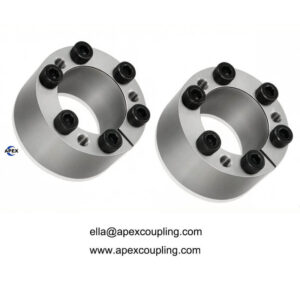
For decades, keyways have been the standard method for connecting shafts and hubs. But keyless locking assemblies (shrink discs) offer significant advantages in precision, maintenance, and design flexibility. This article compares both methods and explains why the TLK400/PL-ADN series is a superior choice for modern machinery – especially servo motors with reversing loads.
1. Quick Comparison: Keyless Locking Assembly vs Keyway
| Feature | Keyless Locking Assembly (TLK400) | Traditional Keyway |
|---|---|---|
| Backlash | ✅ Zero | ❌ Clearance → backlash |
| Coaxial accuracy | High (H7 bore, no keyway runout) | Lower (keyway creates imbalance) |
| Machining required | None (smooth shaft & bore) | Keyway in shaft + hub |
| Design change flexibility | High – no keyway commitment | Low – re‑machining needed |
| Installation | Tighten screws – no special tools | Align key, may require hammering |
| Disassembly | Easy – loosen screws | May require pullers |
| Reusability | ✅ Yes – multiple times | ❌ Keyway wears, shaft damaged |
| Stress concentration | None – uniform pressure | High – at keyway corners |
| Suitable for reversing loads | Excellent | Poor (backlash and wear) |
| Cost | Higher initial | Lower initial, but higher lifecycle cost |
2. Reason #1: Zero Backlash – Critical for Servo Motors
In a keyway connection, there is always clearance between the key and the keyway. Under forward/reverse rotation, this clearance causes backlash – lost motion that degrades positioning accuracy.
A keyless locking assembly achieves zero backlash because the friction fit has no gaps. This is essential for:
Servo motor drives
CNC positioning axes
Indexing tables
Any application requiring precise reversibility
3. Reason #2: Higher Coaxial Accuracy (H7 Bore)
Keyways introduce runout because the key forces the hub to one side. Even with precision machining, concentricity suffers.
With a TLK400 locking assembly:
The shaft and bore are smooth (no keyway)
H7 bore tolerance ensures high concentricity
Result: longer bearing life, less vibration, better surface finish in machined parts
4. Reason #3: Reusability – Lower Long‑Term Cost
A keyway connection damages both the shaft and hub over time. After a few disassembly/reassembly cycles, the keyway becomes loose – requiring shaft replacement or costly repair.
A keyless locking assembly can be removed and reinstalled multiple times with no damage. Parts are fully reusable. The higher upfront cost pays off quickly in reduced downtime and spare parts.
5. Reason #4: No Special Tools – Easy Installation & Removal
Keyway installation:
Align key with keyway (sometimes requires filing)
May need hammering to seat the hub
Disassembly often requires a puller or torch
Keyless locking assembly (TLK400):
Slip the assembly onto the shaft and into the hub
Tighten screws progressively with a hex wrench (no special tools)
Disassembly: loosen screws, remove by hand
No hammering, no heating, no pullers
6. Reason #5: Design Flexibility – Last‑Minute Changes Allowed
With a keyway design, you must specify keyway dimensions early. If you need to change shaft diameter or torque later, you must re‑machine the shaft and hub – costly and time‑consuming.
With a keyless locking assembly, you can adjust the design at any time because no keyway machining is required. This is a huge advantage for prototype and custom machinery.
7. Reason #6: No Stress Concentration – Stronger Connection
Keyways create sharp corners that act as stress risers. Under high torque or shock loads, cracks can start at the keyway corner.
A keyless locking assembly applies uniform radial pressure around the entire circumference – no stress concentration. The shaft and hub remain stronger.
8. Reason #7: Ideal for Harsh Environments (Electroless Nickel Plating)
Our TLK400 series comes with electroless nickel plating as standard – uniform, hard, and corrosion‑resistant. For extreme environments, we offer stainless steel material.
Keyways, even on plated shafts, are vulnerable to corrosion at the keyway edges.
9. Real‑World Example – Servo Motor on a Printing Press
A printing press manufacturer was experiencing register errors (positioning inaccuracy) due to keyway backlash on servo motor shaft connections. The error appeared every time the motor reversed direction.
They switched to Apex Coupling TLK400 keyless locking assemblies (PL-ADN type, 45# steel, electroless nickel plating). Results:
Zero backlash – register errors eliminated
Higher concentricity – reduced vibration, better print quality
Faster assembly – no keyway alignment, just tighten screws
Reusable – maintenance became simpler and cheaper
10. When to Choose a Keyless Locking Assembly Over Keyway
| Application | Recommended |
|---|---|
| Servo motor with reversing loads | ✅ Keyless locking assembly |
| High precision positioning (CNC, printing) | ✅ Keyless locking assembly |
| Frequent assembly/disassembly | ✅ Keyless locking assembly |
| Last‑minute design changes | ✅ Keyless locking assembly |
| Low initial cost priority | ❌ Keyway (but higher lifecycle cost) |
| Very low torque, non‑critical | ❌ Keyway |
11. Installation Tips for TLK400 Locking Assemblies
Clean shaft and hub – remove oil, grease, burrs
Apply light oil to screws (not to tapered surfaces)
Tighten screws progressively in a star pattern to 30% → 60% → 100% of final torque
Check axial runout – should be within specification
Retighten after first few operating hours (normal bedding-in)
12. Conclusion
The TLK400 / PL-ADN keyless locking assembly offers clear advantages over traditional keyways: zero backlash, higher concentricity, reusability, easy installation, design flexibility, and no stress concentration. For servo motors, CNC machines, and any precision reversing drive, it is the superior choice.
👉 Ready to eliminate keyway problems? Contact Apex Coupling for a free sizing calculation and quote.
keyless locking assembly vs keyway
TLK400 advantages
keyless bushing vs key
servo motor shaft connection
backlash-free shaft hub connection