Universal Joint Coupling Selection Guide: Single vs Double Joint, Angle & Material Choices
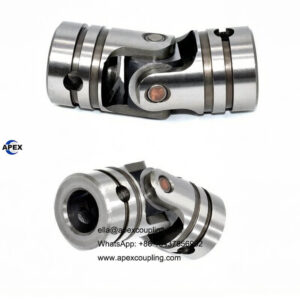
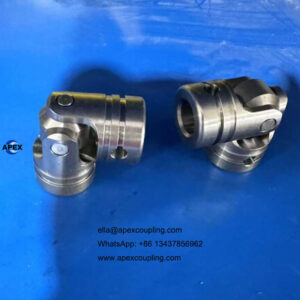
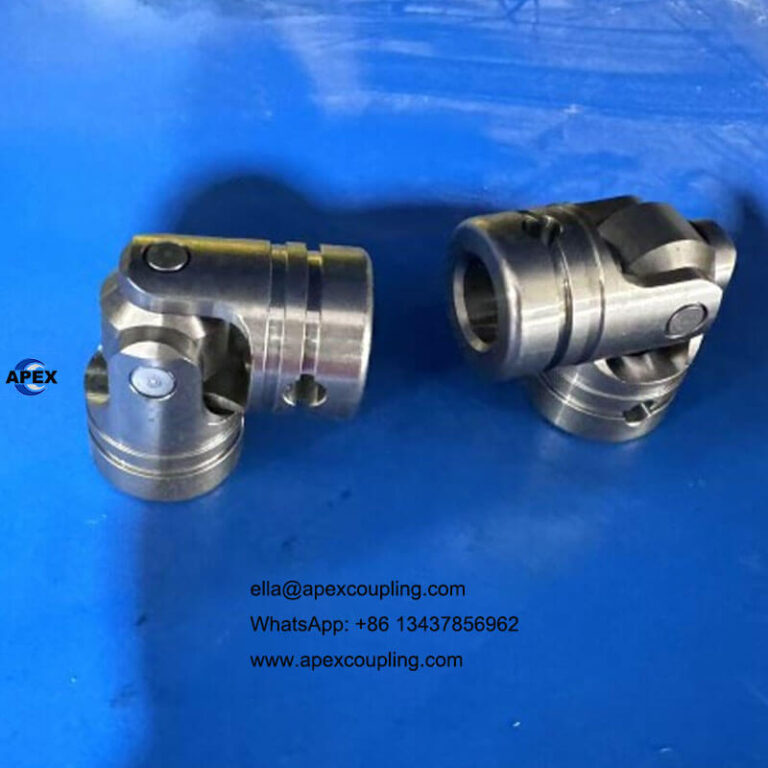
Universal joint couplings (also called cardan joints) are essential for transmitting torque between non‑aligned shafts. But choosing the right type – single or double, material, finish, and angle rating – can be confusing. This guide explains everything you need to know, using the UNCA/UNCW series as a practical example.
1. Single Joint (UNCA) vs Double Joint (UNCW)
| Feature | Single Joint (UNCA / CSCA) | Double Joint (UNCW / CSCW) |
|---|---|---|
| Number of cross shafts | 1 | 2 |
| Angular misalignment only | ✅ Up to 40° | ✅ Up to 40° per joint |
| Parallel offset | ❌ No | ✅ Yes (via two joints) |
| Smoothness at high angle | Acceptable | Very smooth |
| Length | Short | Longer |
| Typical use | Direct angular correction | Offset + angle, longer spans |
Rule of thumb: Use single joint when shafts intersect at an angle but are on the same plane. Use double joint when shafts are both angled and offset.
2. Maximum Working Angle – Why 40° Matters
Many universal joints are rated for 25‑30°. The UNCA series allows up to 40° per joint under normal operation. This gives you:
More design flexibility – steeper angles without extra joints
Fewer components – simpler, cheaper system
Lower inertia – shorter transmission chain
⚠️ Operating near the absolute limit (45°) will reduce bearing life. We recommend staying ≤40° for continuous operation.
3. Material Selection: 42CrMo Alloy Steel vs 304 Stainless Steel
| Material | 42CrMo Alloy Steel | 304 Stainless Steel |
|---|---|---|
| Strength | Very high (heat treated) | Moderate |
| Toughness & fatigue resistance | Excellent | Good |
| Wear resistance | High | Medium |
| Corrosion resistance | Low (needs coating) | Excellent |
| Cost | Lower | Higher |
| Best for | General industry, heavy loads | Food, medical, marine, clean rooms |
Our recommendation: Use 42CrMo with black oxide for most industrial applications. Switch to 304SS when moisture, chemicals, or hygiene standards are critical.
4. Precision Matters – H7 Bore Tolerance
The H7 tolerance ensures:
High concentricity – reduces vibration at high speeds
Accurate fit – no wobble or fretting on the shaft
Lower noise – smooth rotation
When mating with shafts, ensure your shaft diameter is also machined to h6 or h7 for best results.
5. Surface Finish Options
| Finish | Appearance | Corrosion protection | Cost |
|---|---|---|---|
| Black oxide (standard) | Black, matte | Moderate | Low |
| Nickel plated | Silver, shiny | Good | Medium |
| Zinc plated | Silver, slightly blue | Good | Medium |
| Polished (磨光) | Bright, reflective | Low (cosmetic) | Medium |
Choose nickel or zinc plating for humid or mildly corrosive environments. Polished is mainly for appearance.
6. Real‑World Example – Packaging Line Upgrade
A packaging machine manufacturer was experiencing premature wear on standard universal joints (25° max angle, lower grade steel). They switched to Apex Coupling UNCA single joints with 42CrMo steel, H7 bore, black oxide finish. The result:
Operating angle increased from 22° to 38° – eliminated a second joint
Service life tripled (heat‑treated 42CrMo)
Noise level reduced by 40%
No stock issues – we supply from our FA automation inventory
7. Summary – Quick Selection Checklist
Single or double? – Angular only → single; offset + angle → double.
What max angle? – Up to 40° continuous → UNCA/UNCW is suitable.
Material? – Heavy duty & wear → 42CrMo; corrosion → 304SS.
Bore tolerance? – Always request H7 for precision.
Finish? – Black oxide (standard), nickel/zinc for extra protection.
Custom? – Bore size, length, special finishes available.
8. Conclusion
A well‑chosen universal joint coupling reduces downtime, simplifies your machine design, and lowers total cost of ownership. The UNCA/UNCW series from Apex Coupling offers 42CrMo strength, 40° angle capacity, H7 precision, and multiple finish options – all from a factory‑direct source.
👉 Need a universal joint coupling for your automation project? Contact us with your angle, torque, and bore requirements.
single vs double universal joint
large angle universal coupling
precision universal joint
UNCA coupling guide
42CrMo universal joint