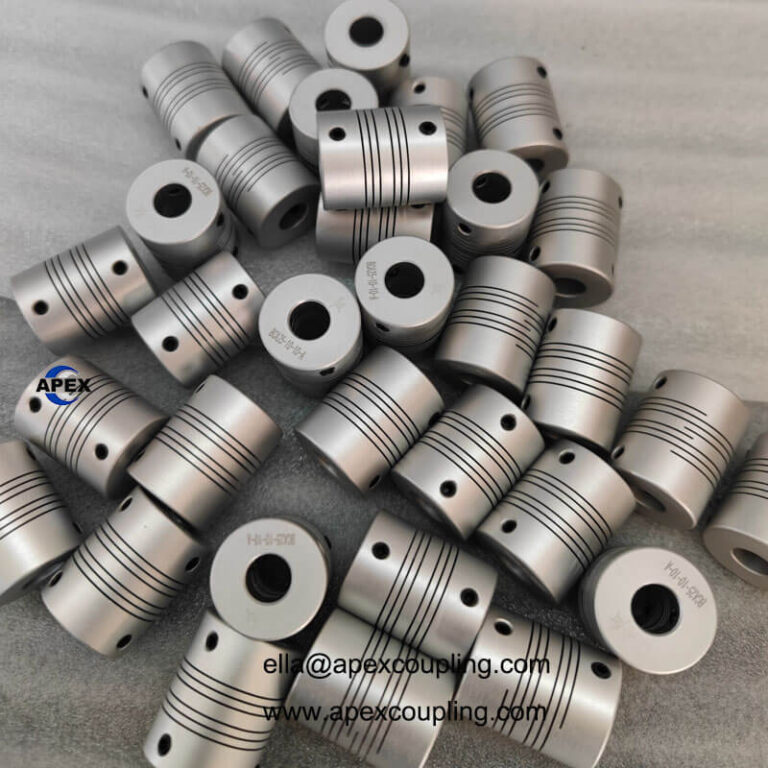
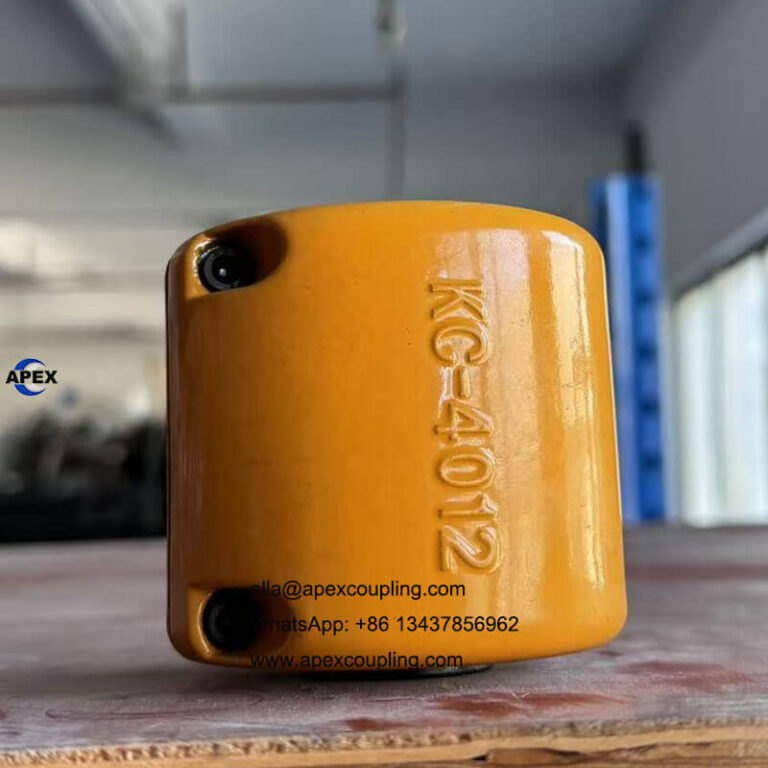
In the world of precision motion control, the connection between a motor and an encoder is critical. Any misalignment or backlash can lead to data errors or mechanical failure. This guide explores why the DIC Parallel Line (Slit) Coupling is the preferred choice for engineers seeking reliability and accuracy.
Core Content Sections:
I. The Science of the Parallel Line Design
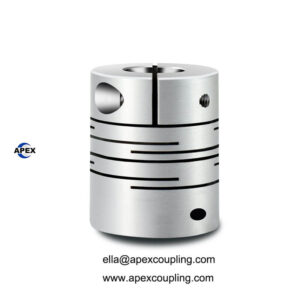
Unlike standard bellows or jaw couplings, the DIC series uses a specialized “slit” pattern. This integrated structure allows the coupling to remain rigid under torque while remaining flexible enough to absorb vibrations and correct misalignments.
II. Precision Engineering: The H7 Advantage
Most generic couplings suffer from loose fits. At Apex Coupling, our DIC series features H7 standard bore tolerances. This ensures a snug fit on the shaft, eliminating “play” and reducing run-out during high-speed operations.
III. Optimized for Encoders and Stepper Motors
Low Inertia: The lightweight aluminum alloy ensures rapid response times.
Zero Backlash: Essential for applications requiring frequent starts, stops, and reversals (e.g., CNC machines or robotic arms).
Durability: Anodized surfaces and high-grade materials ensure a long service life with zero maintenance.
IV. Technical Specification Overview
(Note: Use the table below for Google to index your specific models)
| Model | Dimensions (D*L) | Bore Range (mm) | Rated Torque (N.m) | Max Speed (RPM) |
| DIC-12 | 12 * 18.5 | 3 – 5 | High | 9500 |
| DIC-20 | 20 * 26 | 4 – 8 | High | 9500 |
| DIC-40 | 40 * 56 | 8 – 14 | High | 9500 |
encoder coupling selection, flexible shaft coupling benefits, industrial motor connectors, DIC series coupling features.