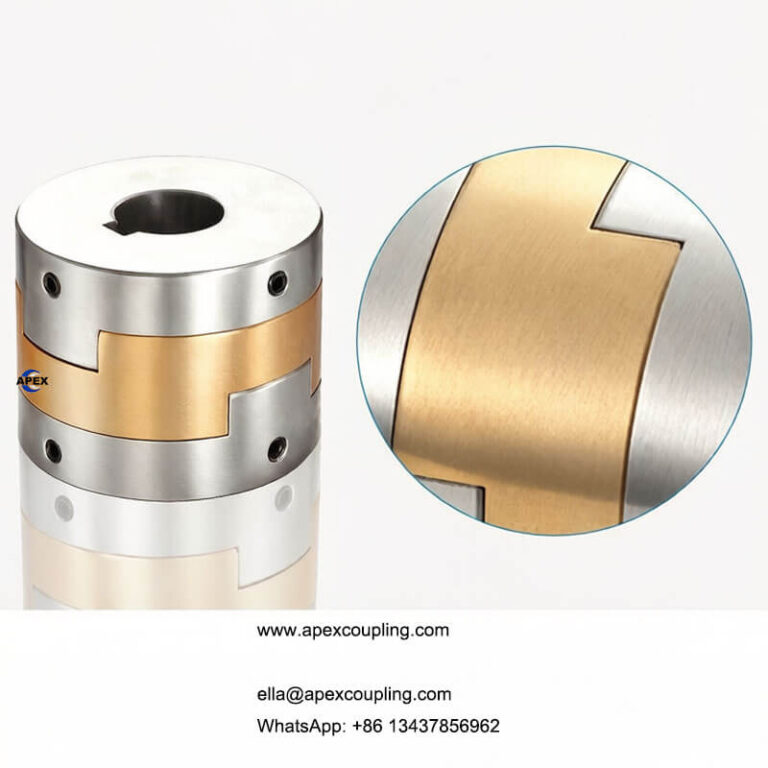
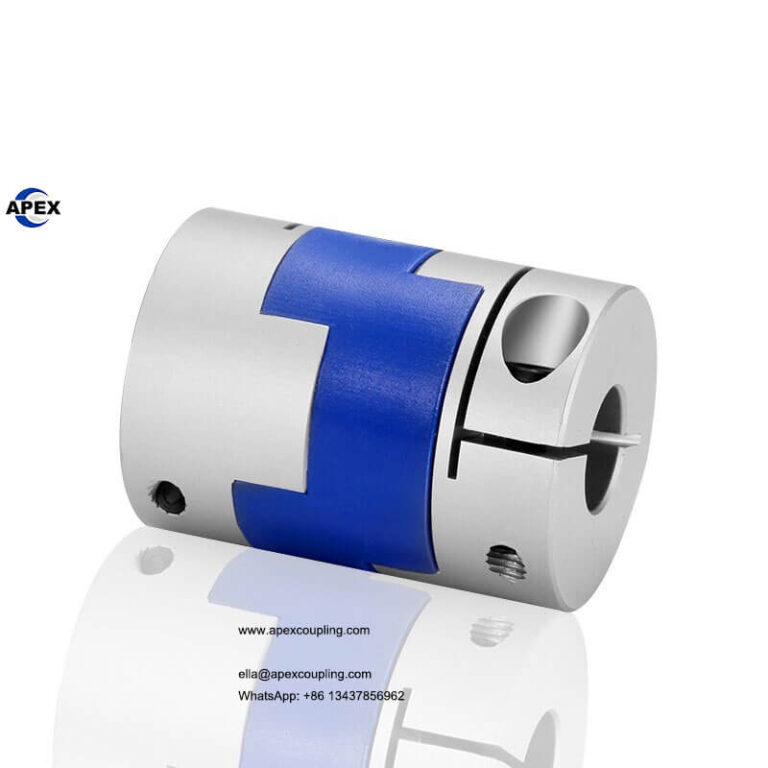
Model Specifications, Dimensions, and Structural Composition of Serpentine Flexible Spring Flexible Grid Couplings
I. Model Types
Serpentine spring couplings come in nine standard structural forms, classified by function and application scenario as follows:
JS Housed Radial Mounting Type (Basic Type)
Applicable Scenario: General mechanical transmission, easy installation.
JSB Housed Axial Mounting TypeApplicable Scenario: Shaft system connections where space is limited.
JSS Double Flange Connection TypeApplicable Scenario: Transmission systems requiring flange butt-joints.
JSD Single Flange Connection TypeApplicable Scenario: Light-duty transmission with one-sided flange fixation.
SJS With Intermediate Shaft TypeApplicable Scenario: Long-distance shaft system transmission requiring intermediate shaft support.
JSG High-Speed TypeApplicable Scenario: High-speed applications (e.g., fans, compressors).
JSZ With Brake Wheel TypeApplicable Scenario: Equipment requiring emergency braking (e.g., cranes).
JSP With Brake Disc TypeApplicable Scenario: Disc brake systems (e.g., elevators).
JSA Safety TypeApplicable Scenario: Applications with overload protection requirements (e.g., conveyors).
II. Structural Composition
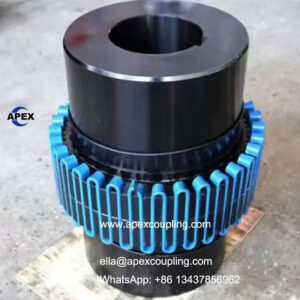
The core structure of the serpentine spring coupling consists of the following components:
Half-Coupling (Hub)
One for the driving end and one for the driven end. Shaft bore dimensions are customized according to user requirements.
Serpentine Spring LeafA spring leaf with a trapezoidal cross-section, made of high-quality spring steel (e.g., 60Si2Mn). It undergoes heat treatment and sandblasting for a long service life.
Number of leaves: 2-8 (depending on model). Outer diameter: 80-900mm. Thickness: 2.5-20mm.
Outer Cover (Housing)Composed of two semi-circular shells. The enclosed design prevents the spring from being thrown out.
Sealing ElementsIncludes two sealing rings and two sealing gaskets to prevent lubricant leakage.
Tension Sleeve Assembly (Optional)Adjusts the spring preload to ensure transmission stability.
III. Main Dimensional Parameters
The dimensions of serpentine spring couplings vary by model. The following are typical parameter ranges:
Nominal Torque: 45-800,000 N·m (increasing with model type).
Shaft Bore Diameter: 40-300mm (common specifications include 41mm, 136mm).
Outer Diameter: 80-900mm (matching the outer diameter of the spring leaf).
Length: 100-500mm (adjusted based on model and shaft bore length).
Allowable Misalignment:
* Radial displacement: 0.5-3mm.
* Axial displacement: 4-20mm.
* Angular displacement: 1°15′.
Operating Temperature: -30°C to +150°C (adaptable to extreme environments).
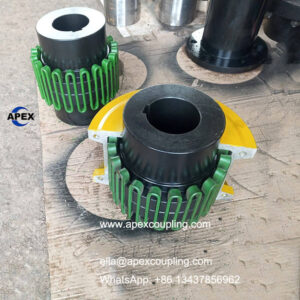
IV. Industry Applications and Selection Recommendations
Metallurgical Equipment: Select the JSG High-Speed type or increase the spring cross-sectional thickness (h/b ratio) to enhance torque capacity.
Lifting Machinery: Prioritize the JSZ With Brake Wheel type to simplify the connection between the drum and the reducer shaft system.
Belt Conveyors: Recommend the SJS With Intermediate Shaft type to accommodate long-distance transmission needs.
Installation Tip: During installation, remove impurities from the tooth sleeve, assemble in sequence, and ensure misalignment is within the allowable range.