
Flexible Coupling Knowledge Sharing: A Comprehensive Guide
Introduction to Couplings
A coupling is one of the most commonly used connecting components in mechanical power transmission systems. Its primary functions are to connect two shafts for co-rotation to transmit torque and motion, compensate for relative displacement between connected shafts, and improve the dynamic characteristics of the transmission system. With applications spanning numerous fields in the national economy, couplings represent a fundamental component category with extensive variety and usage.
As technology advances and production develops, mechanical products continue to diversify, demanding increasingly higher performance standards. To meet various operational requirements, different types of flexible coupling solutions are essential for achieving optimal results.

Coupling Classification and Functional Requirements
A typical machine consists of four main components: power source – transmission system – working machine – controller. A flexible shaft coupling serves as a universal component for connecting two shafts or a shaft to a rotating body, with the basic function of transmitting motion and torque.
Couplings can be broadly classified into several categories:
Rigid Couplings
Flanged couplings
Sleeve couplings
Split clamp couplings
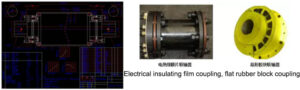
Flexible Coupling Types
Couplings without elastic elements: Gear, Oldham, chain, slider, universal joint types
Couplings with metallic elastic elements: Diaphragm coupling, serpentine spring, leaf spring, flexible link, bellows types
Couplings with non-metallic elastic elements: Elastic pin, elastic sleeve pin, segmented block, tyre types
Safety couplings: Steel ball, steel shot, friction, hydraulic, shear pin types
Hydrodynamic couplings
Magnetic couplings
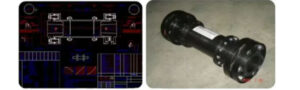
Understanding Flexible Shaft Coupling Types
Among these varieties, flexible shaft coupling solutions deserve special attention for their ability to accommodate misalignment while transmitting torque efficiently.
Diaphragm Coupling Characteristics
The diaphragm coupling represents a premium category within flexible shaft coupling types, featuring:
High torque transmission capacity
Compensation for angular, parallel, and axial misalignment
Maintenance-free operation with no moving parts
Excellent high-speed capability
Long service life without lubrication
Other Flexible Coupling Variants
PVC flexible coupler: Ideal for chemical and corrosive environments where metal couplings might fail
Metallic elastic element couplings: Suitable for high-temperature applications
Non-metallic elastic element couplings: Excellent vibration damping characteristics
Key Selection Factors for Flexible Shaft Coupling
Choosing the appropriate flexible coupling requires careful consideration of several factors:
Shaft Misalignment Compensation
The ability to compensate for relative shaft misalignment is crucial. While rigid couplings only suit precisely aligned shafts, flexible shaft coupling solutions accommodate varying degrees of radial, axial, and angular displacement. The diaphragm coupling particularly excels in handling complex misalignment conditions.
Load Characteristics
Transmission systems experience different load patterns based on the power source and driven equipment. For applications with severe impact loads or long-term fluctuating loads, flexible coupling solutions with effective vibration damping characteristics are essential to reduce peak loads and torsional vibrations.
Operational Speed Requirements
The operational speed directly influences coupling selection through centrifugal forces and elastic element behavior. High-speed applications demand couplings with precise balancing, such as the diaphragm coupling, while PVC flexible coupler options might suit lower-speed corrosive environments.
Why Choose ApexCoupling for Your Flexible Coupling Needs?
At ApexCoupling, we understand that selecting the right coupling significantly impacts your system’s performance, reliability, and maintenance requirements. Our comprehensive product range includes:
High-performance diaphragm coupling solutions for demanding applications
Various flexible shaft coupling types to match your specific requirements
Specialized PVC flexible coupler options for corrosive environments
Complete flexible coupling portfolio covering all industrial needs
Our engineering team leverages extensive expertise to recommend the optimal flexible shaft coupling based on your operational parameters, ensuring maximum efficiency and minimal downtime.
Ready to optimize your power transmission system? Explore ApexCoupling’s extensive range of flexible coupling solutions today. Contact our technical experts for personalized recommendations tailored to your specific application requirements.
.