The Ultimate Guide: How to Choose the Right Coupling in One Article
Selecting the appropriate coupling for your mechanical power transmission system is a critical decision that impacts performance, reliability, and maintenance costs. Whether you’re replacing an existing coupling or designing a new system, this comprehensive guide will walk you through the complete selection process to ensure you choose the optimal flexible coupling for your specific application.
Why Proper Coupling Selection Matters
A well-chosen coupling:
Extends equipment service life
Reduces vibration and noise
Minimizes maintenance requirements
Protects connected equipment from shock loads
Compensates for unavoidable misalignment
Improves overall system efficiency
Conversely, improper coupling selection can lead to premature failure, unexpected downtime, and costly damage to motors, pumps, and other critical components.
Step 1: Analyze Your Application Requirements
Begin by thoroughly understanding your specific application. Different applications demand different coupling characteristics.
Common Application Categories:
Pump Systems: Require couplings that accommodate both parallel and angular misalignment while providing some vibration damping. Specialized couplings like the J/B Industries PR-208 Flexible Vacuum Pump Coupler are designed specifically for demanding vacuum applications.
Motor to Gearbox Connections: Often need to handle high torque and moderate misalignment.
High-Speed Machinery: Requires precisely balanced couplings with minimal windage.
Corrosive Environments: Need chemically resistant materials like flexible PVC coupling options for water treatment or chemical processing applications.
Step 2: Determine Key Performance Parameters
Torque Requirements
Calculate both normal and peak torque values:
Rated Torque: Continuous operating torque under normal conditions
Peak Torque: Maximum torque during startup, shutdown, or sudden load changes
Service Factor: Multiply rated torque by an appropriate service factor (typically 1.5-2.5) to account for shock loads and variable conditions
Speed Considerations
Maximum operating speed (RPM)
Critical speed considerations for long shaft systems
Centrifugal forces on coupling components at high speeds
Misalignment Compensation
Quantify the expected misalignment in your system:
Parallel Misalignment: Offset distance between shaft centerlines
Angular Misalignment: Angle between shaft centerlines
Axial Movement: End float or shaft elongation during operation
Flexible shaft coupling products vary significantly in their misalignment capabilities, so accurate measurement is essential.
Step 3: Evaluate Environmental Factors
Temperature Range
Consider both ambient and operating temperatures:
Standard flexible couplings typically operate between -40°C to +100°C
Special materials may be required for extreme temperatures
Temperature affects elastomer performance and metal properties
Chemical Exposure
Identify potential exposure to:
Oils, greases, and solvents
Acids, alkalis, and other chemicals
Water, steam, or humidity
For corrosive environments, flexible PVC coupling options offer excellent chemical resistance.
Other Environmental Factors
Dust, dirt, and abrasive particles
UV exposure for outdoor applications
Sanitation requirements for food processing applications
Step 4: Consider Installation and Space Constraints
Available Space
Radial Space: Distance from shaft centerline to nearest obstruction
Axial Space: Distance between shaft ends
Assembly/Disassembly Requirements: Some designs require axial shaft movement for installation

Ease of Maintenance
Lubrication Requirements: Some couplings need regular lubrication while others are maintenance-free
Component Replacement: Consider how easily worn elements (like elastomers) can be replaced
Inspection Access: Can the coupling be easily inspected without disassembly?
Step 5: Select the Appropriate Coupling Type
Based on your analysis from Steps 1-4, narrow down your coupling options:
For General Purpose Applications:
Standard flexible shaft coupling designs offer good all-around performance with moderate misalignment capabilities and vibration damping.
For High Misalignment Applications:
Consider couplings specifically designed to handle significant parallel and angular misalignment.
For Vacuum and Specialized Pump Applications:
Products like the J/B Industries PR-208 Flexible Vacuum Pump Coupler are engineered for specific challenging environments.
For Corrosive or Wet Environments:
Flexible PVC coupling products provide excellent corrosion resistance and durability in harsh conditions.
For High-Torque Applications:
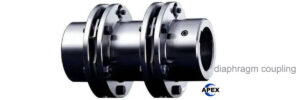
Gear couplings or disc couplings might be more appropriate than standard flexible couplings.
Step 6: Verify Technical Specifications
Before finalizing your selection, confirm:
Torque Capacity: The coupling’s rated torque exceeds your calculated requirements
Speed Rating: Maximum RPM exceeds your operating speed with safety margin
Misalignment Capabilities: Verified against your measured misalignment values
Bore Sizes: Available to match your shaft diameters
Material Compatibility: Suitable for your operating environment
Step 7: Consider Total Cost of Ownership
Look beyond initial purchase price to consider:
Installation Costs: Including alignment time and any special tools required
Maintenance Costs: Lubrication, component replacement, and inspection requirements
Energy Efficiency: Some coupling designs offer better efficiency than others
Expected Service Life: Higher quality couplings often provide better long-term value
Common Selection Mistakes to Avoid
Oversizing: Larger isn’t always better; oversized couplings can be less flexible and transmit more vibration
Ignoring Environmental Factors: Failing to consider temperature, chemicals, or moisture can lead to premature failure
Underestimating Misalignment: Assuming perfect alignment often leads to problems once the system operates
Focusing Only on Price: The cheapest option often costs more in maintenance and downtime
Neglecting Installation Requirements: Some couplings require special tools or procedures for proper installation
ApexCoupling: Your Partner in Coupling Selection
At ApexCoupling, we understand that choosing the right coupling involves balancing multiple technical and practical considerations. Our expertise can help you navigate these decisions with confidence.
Our Selection Support Services:
Application Analysis: Our engineers help identify your specific requirements
Product Recommendations: We suggest the most suitable flexible coupling from our extensive range
Technical Validation: We verify that selected couplings meet all your performance criteria
Custom Solutions: For unique applications, we develop tailored coupling solutions
Our Product Range Includes:
Standard and specialized flexible shaft coupling designs
Alternatives to popular models like the J/B Industries PR-208 Flexible Vacuum Pump Coupler
Durable flexible PVC coupling options for harsh environments
Comprehensive flexible couplings for virtually every industrial application
Conclusion
Selecting the right coupling doesn’t need to be complicated when you follow a systematic approach. By thoroughly analyzing your application requirements, accurately determining performance parameters, carefully evaluating environmental factors, and considering installation constraints, you can identify the optimal coupling solution for your specific needs.
Remember that the most expensive coupling isn’t necessarily the best for your application, and the cheapest option often proves costly in the long run. The ideal coupling balances performance, durability, maintainability, and total cost of ownership.
Need Expert Guidance in Coupling Selection?
Contact ApexCoupling’s technical team today for personalized assistance in choosing the perfect flexible coupling for your application. Let us help you optimize your power transmission system for maximum reliability and efficiency.