- oem coupling
What is a universal joint? Understanding Universal Joints: Function, Types, and Applications for Machinery
Introduction:
Universal joints, commonly known as U-joints, are critical components in many mechanical systems that require flexible transmission of rotational power between shafts. They allow for the transfer of torque and rotational movement across angles, ensuring smooth operation in machinery. This article explains the function, types, and uses of universal joints, highlighting the benefits of Apex Coupling’s high-quality U-joints for industrial applications.
What is a Universal Joint?
A universal joint is a mechanical connection between two shafts, typically used to transmit rotary motion and torque while compensating for misalignment between the shafts. The joint allows for changes in the angle between the connected shafts and is commonly used in applications where the shafts are not in a straight line. By absorbing the angular misalignment, universal joints prevent damage to other parts of the machinery and ensure smoother, more efficient power transfer.
Universal joints are found in numerous applications, including vehicles, construction machinery, agricultural equipment, and manufacturing plants, playing a crucial role in the functionality of these machines.
Function of a Universal Joint
The primary function of a universal joint is to transmit power and rotational motion between shafts that are not aligned. Whether the shafts are at an angle or not in a direct line, the universal joint adjusts and accommodates this misalignment, maintaining smooth motion without putting excessive stress on the components.
Key functions of a universal joint include:
Torque Transmission: Transmits rotational force between two shafts at varying angles.
Misalignment Compensation: Absorbs misalignments, ensuring smooth operation without wear and tear.
Shock Absorption: Reduces shock and vibration, which is critical in high-speed machinery.
Flexible Movement: Allows for changes in angle between connected shafts without loss of power or efficiency.
Types of Universal Joints
There are various types of universal joints, each designed for specific applications and machinery needs. The most common types include:
Cardan Joint:
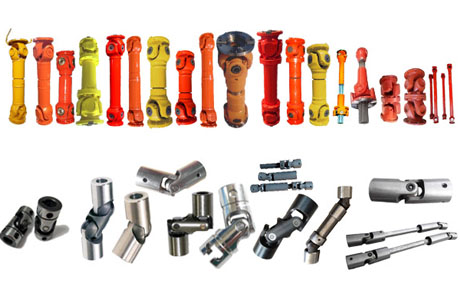
The most widely used type of universal joint. It is used in many mechanical applications to connect shafts at right angles and accommodate angular movement. These joints are typically seen in drive shafts of vehicles and machinery.Single Universal Joint:
Used in simpler mechanical setups, this joint connects two shafts at a single point. It’s ideal for low-torque, low-speed applications.Double Universal Joint:
This joint connects two shafts with two universal joints placed at each end, offering better flexibility and higher efficiency. It’s used in high-torque applications where larger angles are involved.Hooke Joint:
Commonly used in the automotive industry, the Hooke joint is a type of universal joint with a large angular range, commonly found in drive shafts.Slip Joint:
The slip joint allows for the extension and retraction of shafts, providing length flexibility for applications like hydraulic systems.
Applications of Universal Joints
Universal joints are essential in various industries, performing critical tasks in the following areas:
Automotive Industry:
Universal joints are used in the drive shafts of vehicles to transfer torque from the engine to the wheels. They allow the axle to move smoothly despite changes in the angle between the drivetrain components.Industrial Machinery:
In manufacturing plants, universal joints are used in conveyors, machine drives, and other rotating equipment, helping to transfer motion in systems with non-parallel shafts.Construction Equipment:
Universal joints are used in heavy construction equipment like cranes, bulldozers, and excavators, where high torque and flexibility are required.Agricultural Equipment:
U-joints are often found in farm equipment like tractors, harvesters, and irrigation systems, transmitting power to various components.Energy & Mining:
U-joints are employed in energy and mining equipment, such as drilling rigs and conveyor systems, to ensure efficient operation even under heavy loads.
Why Choose Apex Coupling’s Universal Joints?
At Apex Coupling, we specialize in manufacturing high-quality universal joints designed for industrial machinery, automotive, and construction applications. Our universal joints are engineered to provide:
Durability: Made from high-grade materials, our joints are built to withstand high torque and extreme conditions.
Flexibility: We offer both single and double universal joints to meet the specific needs of your machinery.
Customization: Our universal joints can be customized to fit various shaft sizes and configurations, ensuring a perfect fit for your system.
Reliability: With a focus on precision engineering, our universal joints ensure smooth and efficient power transmission, reducing maintenance and downtime.
Conclusion:
Universal joints are essential for machinery that requires flexible torque transmission across angled shafts. Whether you’re in the automotive, industrial, agricultural, or energy sector, Apex Coupling provides high-quality, durable universal joints that meet your specific needs. If you’re looking for customized, reliable solutions for your machinery, contact us today for a quote and discover how we can help optimize your equipment’s performance.
Call to Action:
Ready to enhance your machinery with high-quality universal joints? Visit Apex Coupling or contact us today to discuss your specific needs. Get a custom solution that keeps your machinery running smoothly!